 English
 русский
 Español
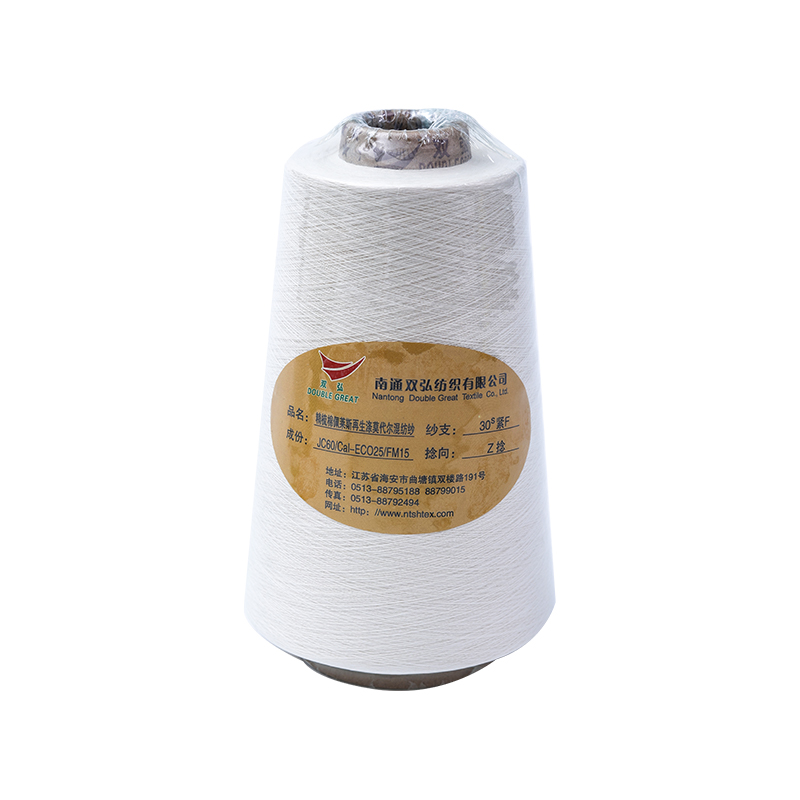
In the current landscape of global textile manufacturing, the pursuit of high-quality development and precision processing has made the upgrading of fiber raw materials a key factor for enterprises to enhance their core competitiveness. Cotton Bioregeneration Yarn, a new type of fiber that combines ecological attributes with excellent physical indicators, is increasingly becoming the focus of high-end knitting and weaving fabric manufacturers. This yarn, obtained through molecular-level reconstruction of waste cotton fibers or plant cellulose using cutting-edge biotechnology, not only overcomes the defects of high short-fiber rates and insufficient strength found in traditional recycled fibers but also achieves significant improvements in yarn evenness and dyeing performance.
Technical Analysis: Biological Modification Mechanism of Cotton Bioregeneration Yarn
Traditional mechanical recycling methods for cotton often damage the length and polymerization degree of the fibers, leading to a significant drop in breaking strength and an increase in hairiness after spinning. In contrast, Cotton Bioregeneration Yarn adopts an advanced molecular-level biological reconstruction process.
The process first utilizes specific biological enzyme preparations to selectively degrade cellulose in the raw materials, removing impurities and optimizing the molecular chain structure of the cellulose, followed by directional rearrangement and spinning. This biological modification mechanism allows Cotton Bioregeneration Yarn to maintain the excellent hydrophilicity and breathability of natural cotton fibers while achieving a more rational distribution of crystalline and amorphous regions. During the actual spinning process, this optimization of the microstructure translates directly into macro-level processing advantages, significantly reducing the breakage rate during spinning and improving weaving efficiency.
Core Parameters: Physical Performance Comparison
To provide textile engineers and technical personnel with a more intuitive understanding of the technical advantages, the following lists the comparison of core physical performance parameters between Cotton Bioregeneration Yarn, traditional primary combed cotton, and traditional mechanical recycled cotton:
| Physical Performance Index | Cotton Bioregeneration Yarn (32S/1) | Traditional Combed Cotton (32S/1) | Traditional Recycled Cotton (32S/1) |
| Single Yarn Breaking Strength (CN) | ≥ 520 | ≈ 540 | ≤ 360 |
| Yarn Unevenness (CV%) | ≤ 11.5% | ≤ 11.0% | ≥ 15.5% |
| Harmful Thick Places per 100km | ≤ 15 | ≤ 12 | ≥ 80 |
| Hairiness Index (≥ 3mm) | ≤ 1.8 | ≤ 1.5 | ≥ 4.5 |
| Moisture Regain (%) | ≈ 8.5% | ≈ 8.5% | ≈ 7.8% |
| Dyeing First-Class Rate (%) | ≥ 98.5% | ≥ 98.0% | ≤ 85.0% |
From the experimental data, it is clear that Cotton Bioregeneration Yarn is extremely close to primary combed cotton in terms of breaking strength and yarn evenness, far surpassing recycled cotton prepared by traditional mechanical methods. This means that when using this yarn on high-speed air-jet looms or circular knitting machines, it can withstand greater warp tension and significantly reduce downtime for warping and adjustment.
Solving Weaving Challenges: Improving Fabric Quality with Cotton Bioregeneration Yarn
During the fabric production process, enterprises often face troublesome problems such as fabric barring, uneven dyeing (pinholes, color spots), and pilling due to unstable raw material quality. The introduction of Cotton Bioregeneration Yarn provides practical solutions:
Eliminating Fabric Barring and Unevenness: Because Cotton Bioregeneration Yarn undergoes strict homogenization during the biological reconstruction process, the fluctuation of its linear density (Tex) is minimal. In subsequent weaving, because the yarn evenness (CV%) performs excellently, it effectively avoids fabric defects such as thin or dense reed marks and horizontal bars caused by uneven yarn thickness, making it particularly suitable for producing high-quality plain jersey and high-density twill fabrics.
Improving Dye Uptake and Color Brilliancy: Thanks to the optimization of the cellulose microporous structure by biological modification technology, the proportion of the amorphous region in Cotton Bioregeneration Yarn is increased, providing more active adsorption sites for dye molecules. Whether using reactive dyes, direct dyes, or vat dyes, the yarn demonstrates excellent leveling and fixation rates. Color matching is less prone to chromatic aberration, and the batch-to-batch consistency is superior, which can significantly reduce the rework rate for dyeing and printing enterprises.
Excellent Anti-Pilling Performance: Traditional recycled yarns often have a high content of short fibers, which easily migrate to the surface and form pills during friction. The filament-like characteristics and high polymerization degree of Cotton Bioregeneration Yarn, combined with advanced compact spinning or siro spinning technology, control the number of harmful hairs (≥ 3mm) at a very low level. After being made into fabric, the anti-pilling test usually reaches grade 4 or above, extending the service life of the finished garment.
Industrial Processing Adaptability and Application Fields
In actual textile processing, Cotton Bioregeneration Yarn demonstrates strong processing adaptability. It can be spun pure or blended with silk, wool, Tencel, and functional synthetic fibers. In the sizing process, the yarn shows good compatibility with modified starch and polyvinyl alcohol (PVA) size, with firm film adsorption and clear yarn separation.
Currently, Cotton Bioregeneration Yarn is widely used in high-end business shirt fabrics, skin-friendly infant knitwear, high-end home textile bedding, and sports apparel that requires strict hydrophilicity and breathability. It not only meets the harsh standards of high-end textiles in terms of physical performance but also endows products with unique ecological technical connotations at the fiber source, making it an ideal raw material choice for textile enterprises to optimize product structures and increase added value.