 English
 русский
 Español
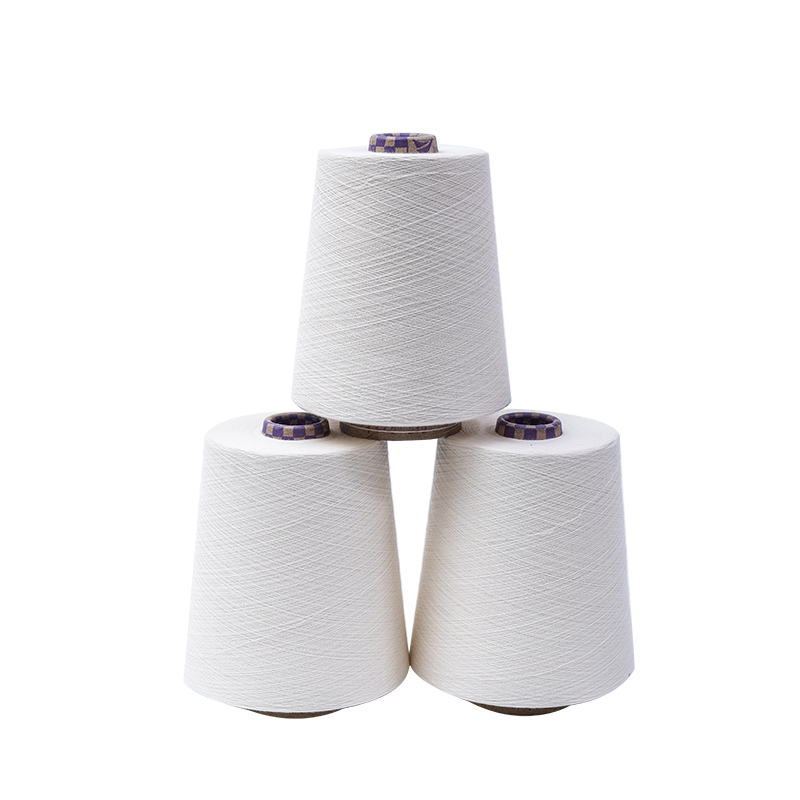
In modern textile manufacturing and industrial applications, polyester fiber yarn has become one of the synthetic fiber materials with the highest demand due to its excellent physical structure and chemical stability. To achieve the desired quality standards in subsequent weaving, dyeing, and garment processing, a deep understanding of the core technical parameters and physical modification mechanisms of polyester fiber yarn is the key to solving common quality problems such as fabric deformation, insufficient strength, and uneven dyeing.
Core Physical Parameters and Quality Indicators Comparison
The final physical properties of polyester fiber yarn are mainly determined by the orientation and crystallinity of its macromolecular chains. Under different spinning and drawing processes, the yarn exhibits distinctly different mechanical characteristics. The following is a direct comparison of core specifications and physical parameters of common types of polyester fiber yarn in industrial manufacturing:
| Physical Parameter | Partially Oriented Yarn (POY) | Fully Drawn Yarn (FDY) | Drawn Textured Yarn (DTY) | High Tenacity Industrial Yarn |
| Breaking Tenacity | 2.0 - 2.5 gpd | 4.0 - 5.5 gpd | 3.5 - 4.8 gpd | 6.5 - 8.5 gpd |
| Breaking Elongation | 60% - 80% | 20% - 35% | 18% - 30% | 12% - 16% |
| Boiling Water Shrinkage | 30% - 50% | 5% - 8% | 2% - 4% | 1% - 3% |
| Crimp and Bulkiness | None | None | High (with intermingle points) | None |
| Main Application | Raw material for DTY | Warp/weft knitting smooth fabrics | Woven and knitted wool-like fabrics | Tyre cords, webbing, geotextiles |
As shown in the parameter comparison, breaking tenacity and elongation directly affect the yarn breakage rate during weaving. High tenacity industrial yarn, with its ultra-high breaking tenacity (greater than 6.5 gpd) and extremely low thermal shrinkage, can effectively meet the requirements of industrial filtration and skeleton materials under high load and high friction. On the other hand, DTY processed by texturing possesses excellent elastic recovery and bulkiness, which can significantly improve the wrinkle resistance and dimensional stability of fabrics.
Structural Stability and Deformation Control Mechanism
In actual textile processing, fabric or tape deformation caused by heat is a major reason for the increase in defect rates. polyester fiber yarn has a clear glass transition temperature (around 80 to 90 degrees Celsius) and a melting point (around 250 to 260 degrees Celsius).
When polyester fiber yarn is exposed to high-temperature environments, the polymer chains in the amorphous region, which were originally in a stretched state, tend to curl, resulting in thermal shrinkage macroscopically. Therefore, in subsequent processing, internal residual stress must be eliminated through a strict heat-setting process (usually controlled at 180 to 200 degrees Celsius). The boiling water shrinkage of the heat-set yarn can be reduced to a minimum, thereby ensuring that the finished fabric can still maintain perfect flatness and dimensional stability after repeated washing and high-temperature ironing.
Moisture Regain and Micro-pore Dyeing Technology
The molecular structure of polyester fiber yarn is extremely tight and lacks hydrophilic groups, so its standard moisture regain is only 0.4% to 0.8%. Although this natural hydrophobic characteristic gives the yarn excellent quick-drying, mildew resistance, and stain resistance properties, it also increases the difficulty of dyeing.
The technical path to solve the problems of incomplete dyeing and poor color fastness of polyester fiber yarn lies in controlling the dye liquor temperature. Disperse dyes must be used, and dyeing must be carried out in a high-temperature and high-pressure environment of 130 degrees Celsius. At this temperature, the gaps between polyester molecular chains increase, allowing tiny disperse dye particles to smoothly diffuse into the fiber. In order to further optimize moisture absorption and sweat elimination performance, profile cross-section spinning technology (such as cross or Y-shaped cross-sections) is currently widely used to use the capillary effect of fine tubes to achieve rapid moisture conduction and dissipation without changing the hydrophobic nature of the yarn.
Physical Parameters and Industrial Application Analysis of High-Specification polyester fiber yarn
In modern textile manufacturing and industrial applications, polyester fiber yarn has become one of the synthetic fiber materials with the highest demand due to its excellent physical structure and chemical stability. To achieve the desired quality standards in subsequent weaving, dyeing, and garment processing, a deep understanding of the core technical parameters and physical modification mechanisms of polyester fiber yarn is the key to solving common quality problems such as fabric deformation, insufficient strength, and uneven dyeing.
Core Physical Parameters and Quality Indicators Comparison
The final physical properties of polyester fiber yarn are mainly determined by the orientation and crystallinity of its macromolecular chains. Under different spinning and drawing processes, the yarn exhibits distinctly different mechanical characteristics. The following is a direct comparison of core specifications and physical parameters of common types of polyester fiber yarn in industrial manufacturing:
| Physical Parameter | Partially Oriented Yarn (POY) | Fully Drawn Yarn (FDY) | Drawn Textured Yarn (DTY) | High Tenacity Industrial Yarn |
| Breaking Tenacity | 2.0 - 2.5 gpd | 4.0 - 5.5 gpd | 3.5 - 4.8 gpd | 6.5 - 8.5 gpd |
| Breaking Elongation | 60% - 80% | 20% - 35% | 18% - 30% | 12% - 16% |
| Boiling Water Shrinkage | 30% - 50% | 5% - 8% | 2% - 4% | 1% - 3% |
| Crimp and Bulkiness | None | None | High (with intermingle points) | None |
| Main Application | Raw material for DTY | Warp/weft knitting smooth fabrics | Woven and knitted wool-like fabrics | Tyre cords, webbing, geotextiles |
As shown in the parameter comparison, breaking tenacity and elongation directly affect the yarn breakage rate during weaving. High tenacity industrial yarn, with its ultra-high breaking tenacity (greater than 6.5 gpd) and extremely low thermal shrinkage, can effectively meet the requirements of industrial filtration and skeleton materials under high load and high friction. On the other hand, DTY processed by texturing possesses excellent elastic recovery and bulkiness, which can significantly improve the wrinkle resistance and dimensional stability of fabrics.
Structural Stability and Deformation Control Mechanism
In actual textile processing, fabric or tape deformation caused by heat is a major reason for the increase in defect rates. polyester fiber yarn has a clear glass transition temperature (around 80 to 90 degrees Celsius) and a melting point (around 250 to 260 degrees Celsius).
When polyester fiber yarn is exposed to high-temperature environments, the polymer chains in the amorphous region, which were originally in a stretched state, tend to curl, resulting in thermal shrinkage macroscopically. Therefore, in subsequent processing, internal residual stress must be eliminated through a strict heat-setting process (usually controlled at 180 to 200 degrees Celsius). The boiling water shrinkage of the heat-set yarn can be reduced to a minimum, thereby ensuring that the finished fabric can still maintain perfect flatness and dimensional stability after repeated washing and high-temperature ironing.
Moisture Regain and Micro-pore Dyeing Technology
The molecular structure of polyester fiber yarn is extremely tight and lacks hydrophilic groups, so its standard moisture regain is only 0.4% to 0.8%. Although this natural hydrophobic characteristic gives the yarn excellent quick-drying, mildew resistance, and stain resistance properties, it also increases the difficulty of dyeing.
The technical path to solve the problems of incomplete dyeing and poor color fastness of polyester fiber yarn lies in controlling the dye liquor temperature. Disperse dyes must be used, and dyeing must be carried out in a high-temperature and high-pressure environment of 130 degrees Celsius. At this temperature, the gaps between polyester molecular chains increase, allowing tiny disperse dye particles to smoothly diffuse into the fiber. In order to further optimize moisture absorption and sweat elimination performance, profile cross-section spinning technology (such as cross or Y-shaped cross-sections) is currently widely used to use the capillary effect of fine tubes to achieve rapid moisture conduction and dissipation without changing the hydrophobic nature of the yarn.