 English
 русский
 Español

Polyester-Cotton vs Polyester-Viscose: Start with the Fabric's Job
A 30s/1 65/35 polyester-cotton ring-spun yarn and a 30s/1 65/35 polyester-viscose ring-spun yarn can share the same count, twist direction and cone weight, yet they ask for different knitting tensions, dye routes, garment finishes and inspection limits.
The blend name is not a generic label. It is a set of fiber-level behaviors that appear later as hand, shrinkage, color depth, pilling, seam stability, moisture comfort and cost. Polyester contributes strength, shape retention and fast drying. Cotton contributes a dry, crisp surface, stable wet performance and a familiar natural touch. Viscose contributes drape, softness, luster and good color uptake, but it also brings higher moisture regain, lower wet strength and greater care sensitivity.
Polyester-Cotton, Usually 65/35 or 50/50
- Stronger dry and wet performance than viscose blends in many apparel structures.
- Crisper hand, better crease recovery and more predictable heat setting.
- Good fit for uniforms, shirting, workwear, jersey tops and home textiles.
- Dyeing usually needs a clear polyester and cotton color strategy.
- Pilling risk rises when short-staple cotton and low twist meet abrasion.
Polyester-Viscose, Usually 65/35 or 50/50
- Softer drape, smoother surface and deeper apparent color in many finishes.
- Higher moisture regain than polyester-cotton, which can improve coolness at low stress.
- Lower wet strength and higher shrinkage sensitivity than cotton blends.
- Good for dresses, blouses, linings, soft knit tops and fashion jersey.
- Care labels and finishing routes need more attention to water, heat and tension.
Choose polyester-cotton when the garment needs dimensional discipline, abrasion resistance, repeated washing and a dry, clean surface. Choose polyester-viscose when the fabric needs movement, a softer fall, color richness and a smoother next-to-skin feel. The correct choice is rarely decided by fiber price alone. It is decided by the failure mode the fabric cannot afford: excessive growth, pilling, shade variation, wet-strength loss, seam grin or a hand that feels wrong on the shelf.
Fiber-by-Fiber: Why the Two Blends Develop Different Personalities
Polyester fiber is strong, hydrophobic and thermoplastic. Cotton is a natural cellulose fiber with moderate strength, good wet stability and a moisture regain typically around 7% to 8.5%. Viscose is regenerated cellulose with a soft hand, high moisture regain often around 12% to 14%, and lower wet strength. In a blend, the majority fiber controls the platform, while the minority fiber changes comfort, dye response, luster and failure behavior.
| Property | Polyester-Cotton | Polyester-Viscose |
|---|---|---|
| Moisture regain of the blend | Often about 3.5% to 5.0% | Often about 5.5% to 7.5% |
| Dry tenacity direction | Higher and more consistent in many apparel counts | Moderate, with more dependence on viscose quality and twist |
| Wet strength retention | Relatively stable because cotton keeps useful wet strength | Lower because viscose loses strength when wet |
| Hand and surface | Crisp, dry, clean, sometimes slightly rough before finishing | Smooth, soft, fluid, with higher natural luster |
| Dimensional stability | Generally easier to control with heat setting and resin finishing | More sensitive to relaxation shrinkage, wet processing and tension |
| Dyeing route | Disperse dye for polyester plus reactive or vat dye for cotton | Disperse dye for polyester plus reactive or direct dye for viscose |
| Pilling pattern | Can pill from short cotton fibers and low-twist soft spins | Can fuzz and pill through viscose surface abrasion, especially in loose knits |
| Main cost drivers | Cotton grade, combing, twist, dyeing complexity and shade control | Viscose grade, softness target, dye depth, shrinkage control and finishing |
The practical difference is not that one blend is better. It is that each blend gives the mill a different lever. Polyester-cotton gives a longer, more disciplined performance envelope in washing and wearing. Polyester-viscose gives a shorter, softer, more expressive performance envelope that rewards careful preparation and finishing. A buyer who asks only for “65/35 polyester-viscose” without defining viscose grade, twist, shrinkage and colorfastness is not buying a specification. That buyer is buying a range of possible outcomes.
Moisture, Comfort and Drying: The Difference Wearers Notice Later
In a 65/35 blend, the minority cellulose fiber has an outsized effect on moisture behavior. Polyester-viscose usually feels cooler and smoother in still air because viscose takes up moisture and gives the surface a softer, less dry touch. Polyester-cotton usually feels drier and crisper. Neither blend should be described as high-performance moisture management unless the yarn structure, knit density, finish and test method support that claim.
These bars are planning indicators, not product guarantees. The numbers shift with blend ratio, fiber denier, yarn twist, fabric construction and finishing.
The comfort story becomes clearer in garment form. A polyester-viscose jersey with a soft twist may drape well and feel smooth against the skin, but it can cling after light perspiration and lose shape in a wet wash if the fabric has not been relaxed and dried under control. A polyester-cotton poplin may feel drier and stay flatter, but it can look harsh if the cotton is under-combed or the twist is too high. The right question is not “which is more comfortable?” The better question is “which comfort profile fits the wearing occasion, and what test proves it?”
Strength, Elongation and Abrasion: Where the Blends Diverge on the Floor
Polyester-cotton generally offers a stronger, stiffer rope for the same count. It resists deformation and tearing well in woven shirting, uniforms, workwear and home textiles. Polyester-viscose generally offers lower tenacity and higher extension, which helps softness and drape but can make the yarn less forgiving under high tension, needle heat and repeated abrasion. In fine knits, viscose's lower wet strength can also show up as hole formation, spirality or growth after laundering.
The gap is manageable when the yarn is specified correctly. A compact-spun polyester-viscose with controlled hairiness and a balanced twist can run cleanly on circular knitting machines. A soft-twist version may feel better but can be more prone to fuzz, snagging and pilling. For polyester-cotton, the main risk often moves to cotton neps, short-fiber content and pilling after abrasion. For polyester-viscose, the main risk tends to be deformation and surface fuzz after repeated washing and wearing. Detailed notes on polyester-viscose durability can help teams compare the blend against a pure viscose option without assuming that all soft blends behave alike.
PC failure to watch
Pilling at cuffs, collars and underarm abrasion points; excessive stiffness when twist and resin finish are pushed too far.
PV failure to watch
Wet-strength loss, growth after laundering, seam slippage in soft woven fabrics and fuzz in loose knits.
Shared failure to watch
Shade variation between lots, count drift, thick and thin places and moisture-related package defects.
Polyester-Cotton Blended Yarn: A Stable, Crisp and Cost-Predictable Platform
Polyester-cotton is the more stable platform when the finished fabric must hold a shape. Common ratios include 65/35, 50/50 and 80/20. A 65/35 blend usually balances durability, cost and a dry hand. A 50/50 blend moves closer to cotton comfort and absorbency while keeping polyester's strength and quick-drying behavior. An 80/20 blend leans toward polyester economics and shape retention but can feel less natural if the cotton component is not carefully selected.
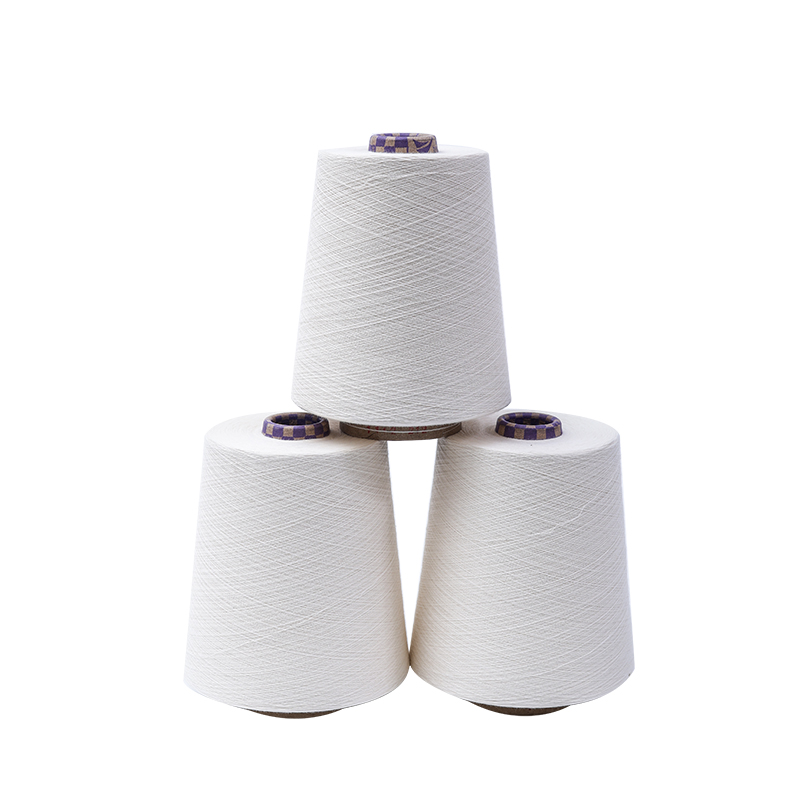 Polyester/Combed Cotton Blended Yarn for Shirting and WorkwearAvailable in 21S–60S with T65/JC35, this combed blend offers evenness, strength and a clean surface for shirting, jersey and lightweight workwear.View Product →
For woven shirting, uniform fabric and lightweight workwear, combed cotton in the blend improves yarn evenness and reduces short-fiber pilling. For circular knits and jersey, the twist level and hairiness matter as much as the fiber ratio. A well-controlled polyester-combed-cotton yarn can deliver a clean surface, good stitch definition and predictable dyeing when the polyester and cotton components are matched for shade and processing shrinkage.
The practical advantages are easy to state. The fabric resists creasing, dries faster than an all-cotton fabric, holds color well when polyester is dyed to the target shade, and tolerates repeated industrial washing better than many soft cellulose blends. The trade-off is hand. If the design brief calls for a fluid, silky fall, polyester-cotton will usually need more finishing effort and may still feel crisper than the target. If the brief calls for a shirt that keeps its collar shape after twenty washes, polyester-cotton is often the lower-risk starting point.
Polyester-Viscose Blended Yarn: Drape, Color Depth and a Softer Surface
Polyester-viscose is selected for appearance and touch. Viscose gives the blend a smoother surface, a cooler initial feel and better color depth in many dye recipes. Polyester gives the yarn enough strength and shape memory to compensate for viscose's lower wet strength. The combination works well in dresses, blouses, soft separates, linings, scarves and fine-gauge knit tops where movement and surface are more important than heavy abrasion resistance.
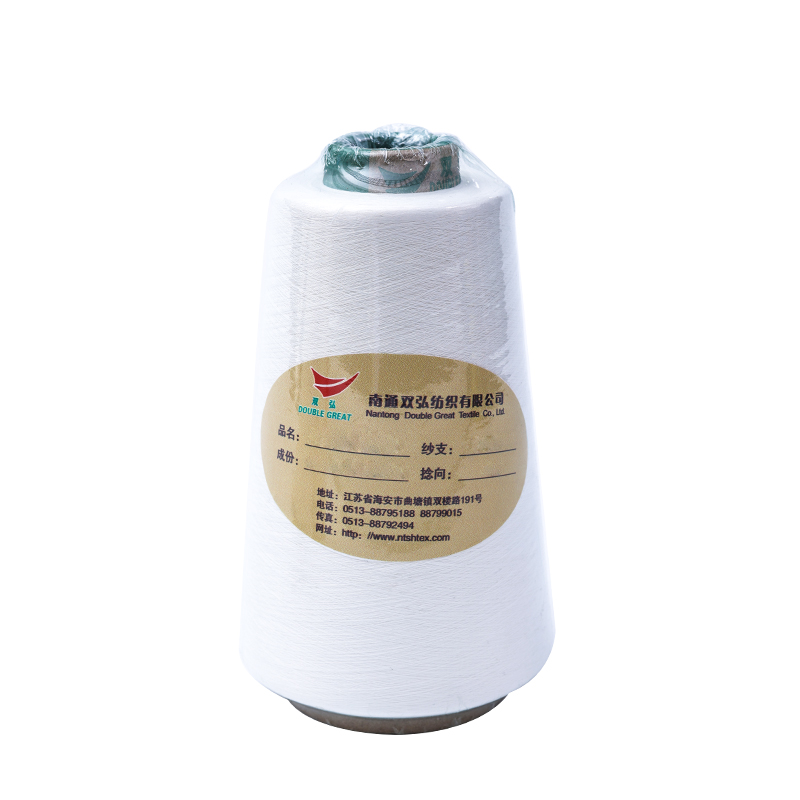 Polyester/Viscose Blended Yarn for Soft Apparel FabricsOffered in T65/R35 and T50/R50, 21S–60S, this blend combines polyester strength with viscose softness, drape and color depth for dresses, blouses and linings.View Product →
Viscose quality matters. A brighter, cleaner viscose with consistent denier and low defects gives a more uniform yarn and fewer dye barré problems. A lower-grade viscose may cost less per kilogram but can raise downstream losses through yarn breaks, shade rework and excessive shrinkage. The blend ratio also changes the story. A 65/35 polyester-viscose leans toward polyester strength and cost control. A 50/50 blend leans toward softness and moisture uptake but becomes more sensitive to wet processing and care conditions.
Finishing is where polyester-viscose earns its reputation. Relaxation drying, controlled tension and the right softener can produce a fluid hand with good shade richness. Poor tension control can create skew, moiré, uneven shrinkage and seam instability that only appear after the garment is washed. For that reason, a polyester-viscose sample should always be evaluated after a defined wash and dry cycle, not only on the flat table.
Dyeing and Finishing: Two Fiber Systems, Two Sets of Process Risks
Both blends contain polyester and a cellulose fiber, but the cellulose fiber is not interchangeable in the dyehouse. Cotton dyes with reactive, vat or direct dyes and tolerates alkaline preparation well when controlled. Viscose dyes readily but is more sensitive to tension, wet strength and shrinkage during preparation and washing. Polyester in both blends requires disperse dyeing and careful heat setting. The shade match depends on getting both components to the target tone without a metallic or cloudy cast.
| Process area | Polyester-Cotton | Polyester-Viscose |
|---|---|---|
| Preparation | Alkaline scouring and bleaching are common for cotton; control polyester strength loss. | Lower tension and gentler wet handling are important because viscose loses wet strength. |
| Polyester color | Disperse dye selected for the target fastness and heat-setting route. | Disperse dye selected for the target shade and to avoid thermal migration. |
| Cellulose color | Reactive dye is common for cotton; shade build and washing must be controlled. | Reactive or direct dye can work; viscose's high uptake can create deep shade quickly. |
| Union shade risk | Polyester and cotton can drift apart under different light sources. | Viscose luster and dye uptake can create a brighter or cloudier cast. |
| Thermal setting | Polyester stabilization is useful, but over-setting can harden the hand. | Heat must be balanced against viscose softening, shrinkage and yellowing risk. |
| Common defects | Cotton neps, polyester migration, shade unevenness and crease marks. | Shrinkage, skew, wet creasing, surface fuzz and shade barré. |
A good dyehouse does not simply match the lab dip. It controls the process window that produces the same result on the fifth lot. For polyester-cotton, that often means tight control of cotton preparation and disperse dye selection. For polyester-viscose, it means gentle wet handling, low tension and a finishing route that locks the fabric dimensions without over-polishing the surface. The buyer should ask for colorfastness after washing, light, perspiration and rubbing, plus a recheck after the intended garment wash.
Shrinkage, Pilling and Dimensional Control: What to Ask for in a Sample
Shrinkage is the most common reason a promising blend fails in production. Polyester-cotton usually has a narrower shrinkage window because cotton provides wet stability and polyester provides heat-set memory. Polyester-viscose can shrink more during relaxation and washing because viscose absorbs water, softens and reorganizes under tension. The difference is not only total shrinkage. It is shrinkage direction, recovery, skew and the change after repeated cycles.
Before sampling
Define count, twist, blend ratio, fiber grade, target fabric weight, wash cycle and acceptable shrinkage direction.
On the yarn
Check count CV, twist CV, tenacity, elongation, IPI, hairiness and moisture content before knitting or weaving.
On the fabric
Test after relaxation, after the garment wash and after repeated home laundering; record length, width and skew.
On the surface
Use pilling, abrasion and snag tests that match the end use rather than a single generic test.
- Ask for shrinkage after a defined wash temperature, drying method and number of cycles.
- Ask for pilling results after a stated abrasion time, not only a pass or fail label.
- Ask for colorfastness to washing, rubbing, light and perspiration on the final fabric.
- Ask for count and twist reports for each lot if the fabric is sensitive to barré.
- Ask whether the sample was heat set, compacted or resin finished, because the hand and shrinkage may not repeat without that step.
For polyester-viscose, request a wet-strength and seam-slippage check in addition to shrinkage. For polyester-cotton, request pilling and abrasion data at the collar, cuff and underarm zones. These are not paperwork exercises. They are the earliest signals of whether the blend can survive the garment's real use.
Stretch and Core-Spun Options: When Neither Plied Blend Is Enough
Some designs need stretch recovery that a simple plied blend cannot provide. Core-spun yarns place an elastane core inside a sheath of polyester-viscose, polyester-cotton or another blend. The sheath controls hand, dyeability and surface, while the core supplies stretch and recovery. This structure is common in close-fitting knits, denim-look woven fabrics, shaped tops and comfort waistbands.
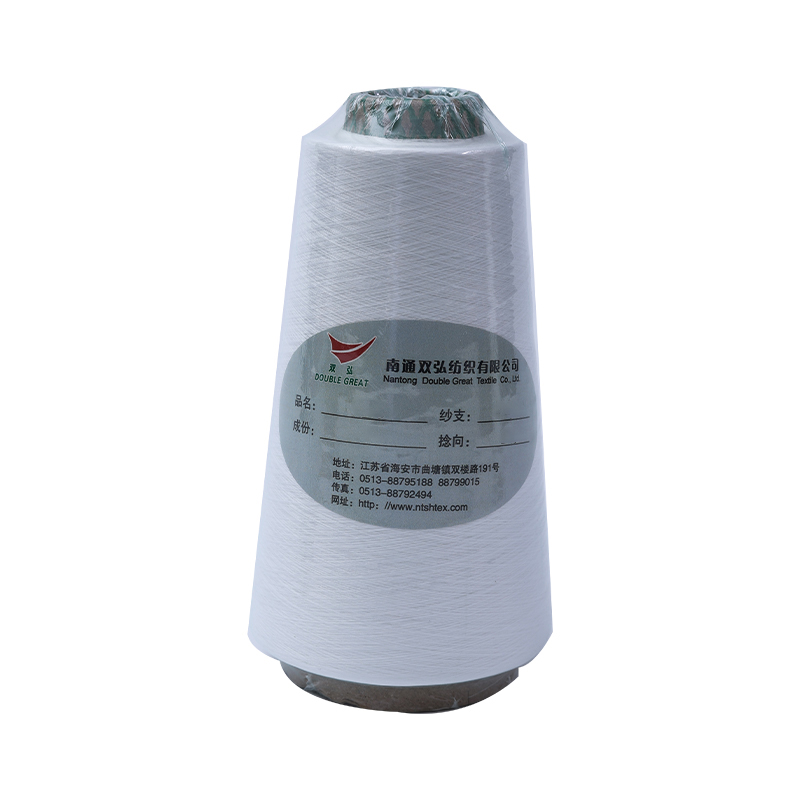 Polyester/Viscose Spandex Core Spun Stretch YarnIn T70/R30 from 16S to 60S, this core-spun yarn pairs a polyester core with viscose cover and spandex for stretch knits, jeans and sportswear.View Product →
A polyester-viscose-spandex core yarn can combine the drape and color depth of viscose with the strength of polyester and the recovery of elastane. The process risk moves to core placement, sheath coverage, heat setting and dye penetration. If the core is exposed or unevenly covered, the fabric may show grin, barré or dye defects. If the heat setting is too weak, the fabric may grow. If it is too strong, the hand may become tight and less fluid.
For stretch programs, specify the elastane denier, draft, core position, sheath ratio, target stretch and recovery after wash. Test the greige yarn for core eccentricity and the finished fabric for growth, recovery and shrinkage. A core yarn is not a shortcut around blend selection. It adds another variable, so the polyester-cotton or polyester-viscose sheath still needs the same fiber, twist and evenness discipline.
Applications That Reward the Right Blend
The same blend can succeed in one garment and fail in another because the use case changes the priority. A uniform shirt values shape and wash durability. A soft blouse values drape and shade depth. A jersey top values surface smoothness and recovery. The table below translates those priorities into blend choices and inspection points.
| End use | Usually stronger fit | Why it fits | Inspection focus |
|---|---|---|---|
| Uniform shirting | Polyester-cotton | Crisp hand, crease recovery and repeated-wash stability | Shrinkage, pilling, colorfastness and seam strength |
| Workwear and light industrial wear | Polyester-cotton | Abrasion resistance and dimensional control | Tear strength, pilling, shade after wash and moisture management claims |
| Soft blouses and dresses | Polyester-viscose | Drape, luster, smooth surface and color depth | Shrinkage, skew, seam slippage and wet creasing |
| Fine-gauge knit tops | Polyester-viscose | Soft hand and fluid movement | Pilling, spirality, growth and hole resistance after wash |
| Linings and lightweight separates | Polyester-viscose | Smooth surface and good drape at low fabric weight | Friction, seam grin and dimensional stability |
| Bed linen and home textiles | Polyester-cotton | Wash durability, shape retention and cost control | Shrinkage, pilling, colorfastness and hand after repeated wash |
Yarn Specification Sheet: Numbers That Prevent Disputes
A blend comparison becomes useful only when it turns into numbers. The following specification points should be written into the yarn approval sheet, not left to verbal understanding. The exact limits depend on count, end use and process route, but the categories should not be omitted.
Count and count CV
State the nominal count, tolerance and test method. A small count drift can change fabric weight, cover and cost.
Twist and twist CV
Define twist direction, turns per meter or inch, and tolerance. Twist controls hand, strength, pilling and skew.
Tenacity and elongation
Set minimum tenacity and an elongation band. Polyester-viscose usually needs a closer look at wet performance.
Evenness and IPI
Use USTER or equivalent evenness data. Thin places, thick places and neps affect knitting stops and surface defects.
Hairiness
Hairiness influences pilling, waxing, needle wear and the clarity of the finished surface, especially in fine knits.
Moisture content
Agree on conditioning and moisture limits. Package weight and dye uptake can shift when moisture is not controlled.
Shrinkage and growth
Test after the intended wash and dry cycle. Record length, width, skew and recovery, not only a single percentage.
Colorfastness
Include washing, rubbing, light and perspiration where relevant. Test the final fabric, not only the greige yarn.
For polyester-cotton, pilling and cotton nep counts deserve early attention. For polyester-viscose, wet strength, shrinkage and surface fuzz deserve early attention. A specification that lists only blend ratio and count is incomplete because it does not control the variables that determine whether the fabric feels right and survives the wash.
Purchasing and Mill-Trial Protocol: A Practical Sequence
A disciplined trial sequence saves more money than a lower yarn price. The goal is to separate a good cone from a repeatable lot. Run the sequence below before committing a bulk order, especially when the fabric will be garment-washed, heat set or dyed to a tight shade.
- Define the fabric target: weight, hand, drape, shrinkage, pilling, colorfastness and care claim.
- Select the blend and ratio, then confirm fiber grade, count and twist rather than accepting a generic blend name.
- Request a pilot lot with lot-specific test data for count, twist, tenacity, elongation, evenness and hairiness.
- Knit or weave a sample under production tension, then finish it on the intended route.
- Test after relaxation, after the garment wash and after repeated washing where the end use requires it.
- Check shade under more than one light source and review the dye recipe with the dyehouse before bulk.
- Compare the pilot lot against the next lot for count, twist, shrinkage and shade before scaling.
- Record the approved process window, including heat-setting temperature, tension and drying method.
Use the mill's quality systems as part of the decision, not as a substitute for lot data. A specialized spinner with controlled fiber selection, USTER-style testing and a documented laboratory route can reduce the risk of hidden variation. The yarn mill's quality systems should be reviewed alongside the actual test report, because a certificate without lot-level traceability does not protect the fabric program.
Cost Logic Without Guesswork: What Really Moves the Price
Polyester-cotton and polyester-viscose can appear close in yarn price and still differ widely in landed fabric cost. The cheaper cone may need more rework, more dye adjustment or more seconds. A fair comparison includes fiber grade, combing, twist, evenness, certification, packing and the cost of controlling the specific failure mode that matters to the garment.
Fiber grade
Cleaner cotton, consistent viscose and controlled polyester denier reduce breaks, neps and shade variation.
Combing and preparation
Combed cotton and well-opened viscose improve evenness and surface, but add process cost.
Twist and count
Finer counts and higher twist require more spindle time and tighter process control.
Dyeing complexity
Union shades, deep colors and high fastness can add more than the yarn price difference.
Shrinkage control
Polyester-viscose may need more relaxation and finishing attention to reach the same dimensional target.
Certification and traceability
Recycled content, restricted substances and chain-of-custody records add administrative and testing cost.
A useful purchasing habit is to compare cost per acceptable finished meter, not cost per kilogram of yarn. If a polyester-viscose lot has a higher shrinkage spread, the cutter may need more allowance, and the garment may need more washing trials. If a polyester-cotton lot has inconsistent cotton neps, the knitter may face more stops and the finished surface may need more clearing. Those costs are real even when they do not appear on the yarn invoice.
Quality Signals from a Specialized Yarn Mill
Blend performance is ultimately a manufacturing discipline. Fiber selection, opening, blending, carding, combing where required, spinning, winding and laboratory verification all shape the final yarn. A mill that produces both polyester-cotton and polyester-viscose should be able to explain how it controls cross-contamination, shade-sensitive fiber lots, count drift and package moisture.
Nantong Double Great Textile operates as a cotton spinning manufacturer with a product system that includes polyester-combed-cotton, polyester-viscose, recycled polyester blends, soft-sensation yarns, core-spun yarns and functional protective yarns. Its public quality claims include USTERIZED quality system certification, USTER laboratory equipment, a CNAS-accredited central laboratory and recognition as a China Cotton Textile Association yarn testing center. These signals matter when the fabric program requires repeatable test data, not only a good first sample.
The company also describes national bases for quality chemical-fiber blended yarn, knitting yarn development and differentiated green yarn development, along with more than four decades of focus on yarn manufacturing. For a polyester-cotton or polyester-viscose program, those capabilities should be translated into specific questions: Which fiber lots are qualified? How is viscose wet strength checked? How is cotton nep count controlled? What is the lot traceability route? Which tests are performed in-house and which are sent out? The answers reveal whether the mill can hold the blend within the window the fabric needs.
FAQ: Polyester-Cotton vs Polyester-Viscose Blended Yarn
Which blend is stronger, polyester-cotton or polyester-viscose?
Polyester-cotton is usually stronger in dry and wet conditions at the same count and twist because cotton retains useful wet strength and polyester adds durability. Polyester-viscose can be strong enough for many apparel uses, but viscose loses strength when wet, so wet processing and laundering deserve more attention.
Which blend feels softer?
Polyester-viscose usually feels softer and smoother because viscose gives drape and a cooler initial touch. Polyester-cotton feels drier and crisper. Finishing can narrow the gap, but the underlying fiber character remains different.
Is polyester-viscose better for hot weather?
It can feel cooler in light, loose fabrics because viscose takes up moisture and drapes softly. That does not automatically make it better for every hot-weather garment. Fabric weight, openness, finish and fit often matter more than the blend name.
Which blend shrinks more?
Polyester-viscose generally has a higher shrinkage risk, especially after wet processing and repeated washing. Polyester-cotton is usually easier to stabilize, although cotton relaxation and polyester heat setting still need control.
Which blend pills more?
Both can pill, but the pattern differs. Polyester-cotton can pill from short cotton fibers and low twist. Polyester-viscose can fuzz and pill through viscose surface abrasion, especially in loose knits. Twist, fiber length, hairiness and finishing decide the outcome.
Can both blends be dyed to deep shades?
Yes, but the routes differ. Polyester-cotton usually combines disperse dye for polyester with reactive dye for cotton. Polyester-viscose also uses disperse dye for polyester, while the viscose component often takes reactive or direct dye. Union shade control and fastness testing are essential in both cases.
Which blend is better for workwear?
Polyester-cotton is usually the lower-risk choice for workwear because it balances abrasion resistance, shape retention and wash stability. Polyester-viscose can work in lighter fashion-led workwear, but it needs a tighter specification for shrinkage, wet strength and seam stability.
What should be tested before bulk production?
Test count, twist, tenacity, elongation, evenness, hairiness, shrinkage after the intended wash, pilling, colorfastness and seam performance. For polyester-viscose, add wet-strength and skew checks. For polyester-cotton, add nep and pilling checks at the abrasion zones. Approve the process window as well as the sample.