 English
 русский
 Español
Core Spun Yarn Structure: Three Components, Three Different Jobs
A core spun yarn is built from three cooperating parts rather than one fibre type: a continuous filament core running down the centre, a staple fibre sheath twisted around it, and the twist itself, which locks the sheath onto the core so the two do not separate during knitting, weaving or washing. The core carries tensile load and supplies elastic recovery. The sheath decides how the yarn feels, how it absorbs moisture, how it takes dye, and how the surface looks under light. The moment either part is missing, the yarn stops being core spun and becomes an ordinary single yarn.
This division of labour is why the same spinning frame can produce a soft 70D spandex core yarn for light jersey and a stiff 140D version for rigid-looking stretch denim. The machine does not change much. What changes is the specification sheet: core denier, sheath count, twist level, core pre-draft and core percentage by weight.
The Filament Core
Usually spandex for stretch, or polyester, PBT, nylon 6.6 for strength and dimensional stability. The core is fed under controlled tension so it stays centred and keeps a small reserve of stretch after the fabric is finished.
The Staple Sheath
Combed cotton, modal, lyocell, viscose, polyester, wool or blends. This is the layer the wearer actually touches, so it controls softness, moisture handling, pilling behaviour and the depth of dyed shades.
The Twist
Twist converts two parallel components into one composite. Too little and the core flashes through the surface as a hard point; too much and the yarn stiffens, loses elongation and becomes harsh against the skin.
Designers sometimes ask for a dual core, where spandex and a filament polyester sit side by side inside the sheath. That structure buys both elasticity and dimensional stability, and it is common in performance denim where the garment must recover after a full day of wear without bagging at the knee.
| Design variable | What it governs | What changes on the finished fabric |
|---|---|---|
| Core denier (D or dtex) | Elastic recovery, tensile strength, fabric support | 70D gives a light, soft hand; 140D gives a firmer, more sculpted stretch |
| Core pre-draft | Residual stretch left in the finished cloth | Excess pre-draft pulls the fabric tight after dyeing and shows as puckering or seam grin |
| Twist level (TPM) | Sheath binding, hairiness, surface smoothness | Low twist lets the core peek through; high twist reduces stretch and increases boardiness |
| Sheath yarn count | Hand feel, drape, moisture absorption | Fine sheath covers thinly but feels softer; coarse sheath covers well and suits webbing |
| Core ratio (% by weight) | Balance of strength, stretch and cost | Higher ratio raises strength and cuts cost per kilo, but stiffens the hand and reduces dye uptake |
How Core Spun Yarn Is Made: Four Spinning Routes with Different Economics
Nearly all core spun yarn sold commercially comes from one of four routes. They differ in how the filament enters the drafting zone and how quickly the frame can run, and those two details decide which route suits a given order.
Ring Spinning with a Filament Core
The filament is fed through the front roller alongside the drafted roving, and the twist inserted by the traveller wraps the staple fibres around the filament as the yarn forms. The critical control point is core tension: if it varies, the core migrates off-centre, the sheath covers unevenly, and the finished cone shows a visible rhythm of thick and thin spots. Ring spun core yarn is the standard choice for stretch apparel and for sewing thread because yarn evenness and strength are both high.
Hollow Spindle Covering
Here the core passes straight through a hollow spindle while a supply bobbin of cover yarn rotates around it at high speed. The result is a dense, tightly wrapped structure from very few moving parts. Output per spindle is low compared with ring spinning, so the route earns its place on narrow fabrics: lanyards, elastic tape, medical bandage, safety webbing and braided cord.
Siro Spinning and Sirofil
Siro spinning drafts two rovings in parallel and lets them twist together, which reduces hairiness because stray fibres are trapped between the strands. Sirofil adds a filament to that pair. The combination yields a strong, low-hairiness yarn with a soft surface, though it demands clean rovings and tight control of the strand spacing; poor roving quality shows up quickly as unevenness.
Friction Spinning (DREF Type)
Fibres are opened, delivered into a rotating drum and rolled onto the filament by friction rather than by a traveller. Speeds are high and the yarn is wrapped rather than truly twisted, which suits coarse counts for protective workwear, industrial fabrics and rope. Fine counts are not practical, so the route stays in heavier territory.
| Route | How the core is fed | Best fit | Practical limitation |
|---|---|---|---|
| Ring spinning | Filament passes through the front roller with the roving | Stretch apparel, sewing thread, fine knitwear | Spindle speed limited; core tension must be actively controlled |
| Hollow spindle covering | Core runs straight through, cover yarn rotates around it | Webbing, tape, cord, bandage | Low output per spindle; firmer, less textile hand |
| Siro / Sirofil | Two rovings, optionally with an added filament | Low-hairiness yarns for knitting and shirting | Sensitive to roving quality and strand spacing |
| Friction spinning | Opened fibres wrapped onto the filament by drum rotation | Coarse industrial and protective fabrics | Limited to heavier counts; wrapper structure instead of true twist |
Matching Core and Sheath: Where Most Quality Problems Begin
Most complaints about core spun yarn trace back to a material pairing that was never going to work, not to a spinning fault. Spandex under a coarse cotton sheath behaves differently from polyester filament under the same sheath, and the finishing route must be chosen to suit the pair.
| Core filament | What it contributes | What to watch during processing |
|---|---|---|
| Spandex (elastane) | High elongation, low modulus, strong recovery | Heat sensitive; keep dyeing and setting temperatures in a controlled range and avoid aggressive chlorine bleaching |
| Polyester filament (PET) | High tenacity, dimensional stability, low cost | Contributes no stretch; fabric becomes firm rather than elastic |
| PBT filament | Moderate elasticity with better chlorine resistance than spandex | Higher raw material cost; shade matching needs care |
| Nylon 6.6 | Abrasion resistance and flex fatigue for industrial use | Degrades under prolonged UV and moist heat |
| Dual core (spandex plus PET) | Elasticity combined with growth control | More complex spinning; both filaments must be tensioned independently |
On the sheath side, combed cotton remains the volume choice for stretch denim and jersey because it dyes cleanly, feels dry next to skin and holds up to repeated laundering. Modal and lyocell bring a cooler, smoother surface for premium knitwear, while viscose lowers cost but loses strength when wet. Wool and wool-silk sheaths appear in suiting and in fine-gauge knits where the core is deliberately fine so it never dominates the hand.
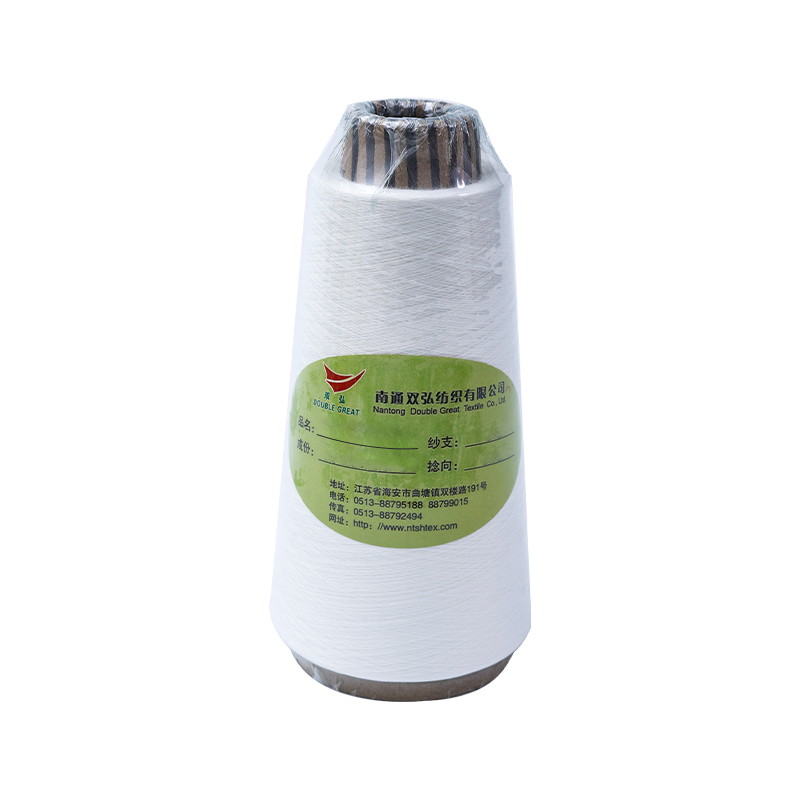 Cotton Core Spun Yarn for Apparel and Home TextilesCotton-wrapped synthetic core yarn in JC100% 21S-60S, offering even dyeing and shape retention for apparel and home textile fabrics.View Product →
A practical rule from the spinning floor: specify the sheath first, then size the core to the fabric's recovery target. Buyers who pick a core denier first and fit the sheath afterwards usually end up re-sampling two or three times, because the sheath controls dye shade, surface and shrinkage far more than the core does.
What Core Spun Yarn Delivers on the Loom and in the Wash
The value of core spun yarn is not that it is stronger than a filament yarn, because it is not. The value is that it combines filament-level performance with a staple surface, and that combination survives knitting, weaving, dyeing and repeated domestic washing without the two components separating.
- Strength at low weight. A fine filament core carries load that would otherwise need a much heavier all-staple yarn, so fabric weight drops while tensile performance holds.
- Elastic recovery. Spandex-cored yarns return to shape after stretching, which reduces bagging at elbows, knees and seat seams in stretch garments.
- Low hairiness at the surface. The sheath is bound tightly by twist, so protruding fibres and the pilling they cause are reduced compared with loosely twisted single yarns.
- Dimensional stability. Polyester-cored sewing thread and industrial yarns resist stretching under tension, which keeps seams flat and webbing dimensions consistent.
- Comfort with a natural face. The wearer touches cotton, modal or wool rather than bare filament, so the fabric does not feel slick or synthetic against skin.
- Process reliability. Lower elongation variation and fewer thin places mean fewer stoppages on high-speed knitting machines and fewer rejects in the cutting room.
Relative performance indicators (illustrative, normalised to the best performer in each group)
Illustrative comparison only. Actual tenacity and recovery depend on count, twist, core percentage and the test method used, so always verify against your own specification sheet.
Where Core Spun Yarn Fails: Limits Worth Budgeting For
Every specification is a trade-off, and core spun yarn has well-documented weak points. Knowing them up front is cheaper than discovering them after bulk delivery.
- Core protrusion and hard points. If the sheath coverage breaks at any point along the yarn, the filament appears at the surface. On a knitting machine this shows as a hard end that breaks needles; in finished cloth it shows as a shiny spot that takes dye differently.
- Core slippage at the yarn ends. Poor binding allows the filament to retract inside the sheath during cutting. The result is a limp seam end or a puckered stitch line, and it is most visible in fine-gauge knits.
- Shade variation between components. Spandex and cotton do not accept the same dyes. If the sheath is thin, the core shade reads through and the fabric looks patchy under daylight.
- Heat sensitivity. Spandex softens and loses recovery when exposed to excessive heat. Finishing ranges that are fine for cotton can permanently damage a spandex-cored fabric.
- Recycling complexity. A sheath mechanically bonded to a filament core is harder to separate than a single-fibre yarn, which matters for mills tracking recycled content claims.
- Needle heating in sewing. Dense core spun thread generates friction heat at high sewing speeds; the correct needle and stitch density avoid melted spots around the seam.
Temperature control is the single most common cause of lost elasticity in bulk production. When a finishing line is shared with all-cotton orders, confirm the actual fabric surface temperature rather than the set point on the controller, because radiant heat from a stenter can push the yarn well above the reading on the panel.
Fabric Uses: Where Core Spun Yarn Earns Its Place
The applications below account for most commercial volume, and each one leans on a different part of the structure.
Stretch Denim
Spandex core with a combed cotton sheath, spun in the 10s to 20s range. Recovery is the priority, because the garment must return to shape after a full day of wear.
Single Jersey and Rib Knitwear
Fine spandex cores with cotton or modal sheaths. Low hairiness keeps the knitting needles clean and the fabric surface smooth for printing.
Industrial Sewing Thread
Polyester filament core with a cotton or polyester sheath. The core keeps seam strength predictable while the sheath resists needle friction.
Webbing and Safety Straps
High-tenacity polyester or nylon cores bound with a coarse sheath. Dimensional stability under load matters more than softness here.
Medical Elastic Bandage
Covered constructions with controlled, repeatable extension so the bandage holds compression without pinching or slipping.
Compression Sportswear
Dual-core yarns combine stretch, recovery and a cool-touch synthetic sheath for garments worn through repeated wash cycles.
Shirting and Light Woven
Very fine cores add a small amount of comfort stretch to poplin and twill without changing the visual character of the cloth.
Protective Workwear
Functional sheaths such as flame-retardant or antibacterial fibres over a stable core keep protective properties in the wear layer.
 Combed Cotton and Lyocell Core Spun YarnBlends combed cotton with Lyocell over a core in several counts, combining softness, moisture regulation and strength for high-end shirts, skirts and home textiles.View Product →
Beyond these categories, core spun yarn appears in upholstery welt cord, bag strap webbing, shoe upper knits and narrow elastic tape. In each case the same question decides the specification: does the end product fail because it stretches too much, or because it does not come back?
Core Spun vs Covered vs Ply-Twisted Elastic Yarn
Buyers frequently use these three terms interchangeably, and the difference matters when a specification is being written.
| Property | Core spun yarn | Covered yarn | Ply-twisted elastic yarn |
|---|---|---|---|
| Structure | Filament core inside a drafted staple sheath, locked by twist | Filament core spirally wrapped by one or two cover yarns | Elastic filament twisted together with staple or filament yarns |
| Surface hand | Textile, natural, staple-forward | Can feel corded or firm depending on wrap density | Depends entirely on the outer component |
| Elongation | Moderate to high, set by twist and core ratio | High and very consistent | Moderate, with more growth under load |
| Production speed | High on ring frames | Low per spindle | Medium, adds a twisting step |
| Typical use | Denim, jersey, sewing thread, shirting | Bandage, tape, cord, narrow fabric | Light knits, decorative effects, low-stretch fabrics |
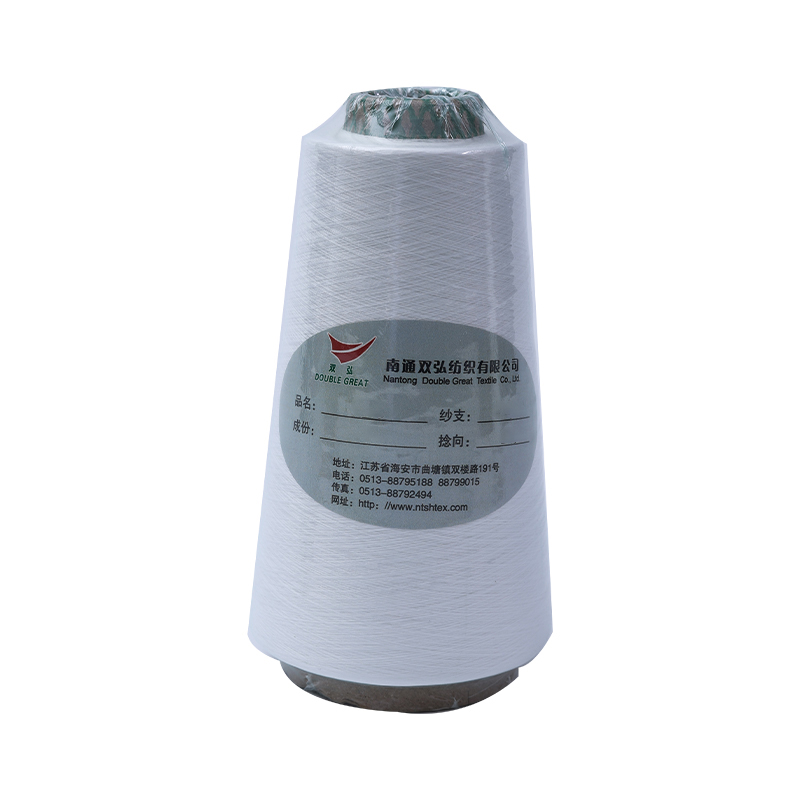 Polyester Viscose Spandex Core Spun YarnT70/R30 16S-60S yarn with polyester core, viscose cover and spandex stretch, suited to knitwear, jeans, sportswear and swimwear.View Product →
Buying Core Spun Yarn: What to Specify and What to Test
A useful purchase specification covers five things: sheath fibre and count, core filament type and denier, core percentage by weight, twist direction and level, and the elongation target at a stated load. Anything left vague becomes a sampling round.
- Tenacity and elongation at break. Test both, not just tenacity. A yarn that meets strength targets but misses elongation will break on the knitting machine rather than in the finished garment.
- Evenness and imperfection count. Thick places and thin places predict how the yarn will behave in high-speed processing more reliably than a single strength figure.
- Core slip resistance. Pull test at the yarn end after a defined conditioning period; the filament should not retract visibly inside the sheath.
- Shrinkage after boil-off. Core yarns can shrink differently in length and width, which affects final fabric yield and pattern sizing.
- Shade consistency across lots. For thin sheaths, dye both components and check under daylight and under store lighting before approving bulk.
- Hard point count. Inspect cones on a clearing winder; a rising count of protruding core points is the earliest warning of a spinning problem.
Where the mill operates an accredited in-house laboratory, ask for the test data on the actual lot rather than a generic certificate. Instrumented evenness testing, classimat clearing data and conditioned strength results give a buyer far more confidence than a specification sheet alone. Nantong Double Great Textile runs a CNAS-accredited central laboratory and USTER-based testing across its spinning lines, which is the kind of evidence worth requesting when a new supplier is being qualified — see the company profile for the testing and certification background.
Dyeing, Finishing and Care: How Core Spun Yarn Behaves Downstream
Core spun fabric rarely fails in the spinning mill. It fails in the dyehouse or in the consumer's washing machine, and both failures follow predictable patterns.
- Relaxation before dyeing. Stretch fabric should be relaxed so residual core tension releases before shade matching, otherwise the fabric changes dimensions after the shade is approved.
- Temperature ceilings. Keep spandex-cored fabric within a controlled temperature window and avoid prolonged dwell at the upper limit. Recovery loss is cumulative and cannot be reversed.
- Bleach chemistry. Chlorine-based systems attack elastane. Where a whiter base is required, choose an oxygen-based route and verify recovery after processing.
- Heat setting. A short, controlled setting step stabilises fabric width and improves dimensional stability; over-setting embrittles the core and reduces stretch life.
- Compacting and calendering. Mechanical finishing affects stretch perception. Calender pressure applied to a stretch fabric can flatten the surface and reduce the visible texture that the sheath was chosen for.
- Consumer care. Lower wash temperatures, no tumble drying at high heat, and no chlorine bleach preserve both elasticity and shade in garments made from core spun yarn.
FAQ: Core Spun Yarn Questions Buyers Ask Most
Is core spun yarn the same as covered yarn?
No. In core spun yarn the sheath fibres are drafted and twisted around the core during spinning, so the result behaves like a staple yarn. In covered yarn a finished cover yarn is wound spirally around the core on a separate machine, producing a corded, denser structure. Core spun dominates apparel; covering dominates narrow fabric and medical products.
Can core spun yarn be 100% cotton?
The sheath can be 100% cotton, and often is. The core cannot, because a core must be a continuous filament by definition. A yarn described as cotton core spun therefore means a cotton sheath over a filament core, not a fully cotton composition.
Does a higher core percentage always mean better quality?
No. A higher core ratio raises strength and lowers cost, but it stiffens the hand, reduces dye uptake and can make the fabric feel synthetic. The right ratio is the one that meets the recovery target while keeping the required surface character.
Why do hard points appear in some deliveries?
Hard points come from incomplete sheath coverage, which usually traces back to core tension variation, worn front-roller cots, or a sheath count that is too coarse to wrap tightly at the chosen twist. Inspect cones on a clearing winder and compare the count against the previous approved lot before accepting the delivery.
How should core spun yarn be stored?
Keep cones in a dry, shaded area away from heat sources and direct sunlight. Spandex-cored yarns should not sit in a hot warehouse for months, because prolonged heat exposure reduces recovery even before the yarn reaches the knitting machine.
Which counts are practical for apparel?
Stretch jersey typically runs in the medium-to-fine count range, stretch denim in the coarser range, and shirting in finer counts with a very fine core. Rather than fixing a universal number, specify the count together with the core denier and the fabric weight target, since all three interact.
Can functional properties be built into the sheath?
Yes. Flame-retardant polyester, antibacterial viscose or modal, far-infrared and recycled polyester sheaths are all commercially available over a standard core. The functional fibre sits where it matters — at the wear surface — while the core supplies the mechanical performance.
What is the fastest way to qualify a new core spun yarn?
Request a sample cone lot with full test data, knit or weave a small panel, then run a wash-and-recovery cycle before approving. Ten kilograms of trial yarn and two weeks of testing will surface almost every issue that would otherwise appear in bulk. For specifications matched to a specific end use, the technical team can review the target fabric and propose core, sheath and twist together.