 English
 русский
 Español
From Fiber to Finished Skein: How Cotton Yarn Is Manufactured in a Modern Spinning Facility
Every cotton yarn skein begins its journey long before it reaches a crochet hook or knitting needle. Behind every cone, hank, or skein of cotton yarn lies a sequence of mechanical and chemical processes that determine its strength, evenness, softness, and consistency. Understanding how cotton yarn is produced gives buyers a clearer picture of why certain yarns perform better in specific applications, and why parameters such as twist level, ply count, and fiber grade matter so much when selecting material for a project.
Raw Material Selection and Fiber Grading
The quality of any cotton yarn starts with the raw cotton fiber itself. Fiber grading is based on staple length, micronaire value, fiber strength, color grade, and trash content. Longer staple fibers produce smoother, stronger yarns with fewer protruding fiber ends, while shorter staple fibers tend to generate more surface fuzz and lower tensile strength. Micronaire value, which measures fiber fineness and maturity, directly affects dye uptake and the final hand feel of the yarn. Cotton with a micronaire value in the optimal mid-range produces yarn with balanced softness and structural integrity, whereas fiber that is too coarse or too fine can create processing difficulties during spinning.
Fiber batches are tested before entering production to confirm they meet internal specification thresholds. This pre-production testing reduces variability between lots and helps maintain consistent yarn characteristics across large production runs, which is particularly important for projects requiring multiple skeins from the same dye lot.
The Spinning Process: Carding, Combing, and Drawing
Raw cotton fiber cannot be spun directly into yarn. It must first pass through several preparatory stages that align fibers, remove impurities, and build a continuous, uniform strand called a sliver.
Ginning
Raw cotton is separated from seeds and coarse trash, producing baled lint cotton ready for spinning preparation.
Carding
Fibers are disentangled, aligned, and formed into a loose rope-like strand known as a card sliver, removing short fibers and remaining impurities.
Combing
An additional step used for finer yarns, combing removes short fibers and neps, resulting in a smoother, stronger, and more lustrous strand often labeled as combed cotton yarn.
Drawing and Roving
Multiple slivers are blended and drafted to even out thickness variations, then lightly twisted into roving in preparation for final spinning.
The difference between combed and carded cotton yarn is one of the most common technical questions among buyers. Combed cotton yarn undergoes an extra mechanical process that removes shorter fibers before spinning, resulting in a smoother surface, higher strength, and reduced pilling tendency. Carded cotton yarn skips this step, which lowers production cost but leaves more short fibers within the strand, producing a slightly fuzzier texture. Neither version is inherently better; the correct choice depends on whether the end application prioritizes a crisp stitch definition or a softer, more textured surface.
Twisting and Winding Standards
Once spun, single-ply cotton yarn strands are twisted together to form plied yarn, most commonly in two-ply, three-ply, or four-ply configurations. Twist direction is described as S-twist or Z-twist, and twist level is measured in turns per inch (TPI). Higher twist levels increase strength and reduce pilling but can make the yarn feel firmer and less pliable, while lower twist levels produce a softer handle at some cost to durability. Winding equipment then transfers finished yarn onto cones, hanks, or skeins depending on the intended packaging format, with tension controls calibrated to prevent stretching or uneven wind density.
Understanding Cotton Yarn Count Systems: Ne, Nm, Tex, and Denier
Cotton yarn thickness is expressed through several different numbering systems depending on regional convention and end-use industry. Confusion often arises when specification sheets reference different systems for the same physical yarn, so understanding how these systems relate to one another is essential for accurate sourcing and project planning.
| System | Definition | Higher Number Means | Common Region |
| Ne (English Cotton Count) | Number of 840-yard hanks per pound | Finer yarn | United States, United Kingdom |
| Nm (Metric Count) | Number of 1000-meter lengths per kilogram | Finer yarn | Europe |
| Tex | Grams per 1000 meters of yarn | Thicker yarn | International standard system |
| Denier | Grams per 9000 meters of yarn | Thicker yarn | Filament and synthetic yarn industries |
Note that Ne and Nm are inverse systems relative to Tex and denier: a higher Ne or Nm number describes a finer yarn, while a higher Tex or denier number describes a thicker yarn. When specification sheets list a plied count such as Ne 32/2, this indicates two strands of 32s cotton yarn twisted together, producing a finished yarn roughly half the fineness of a single 32s strand.
Yarn Weight Categories and Recommended Hook Sizes
Beyond the technical count system, cotton yarn is also grouped into standardized weight categories that guide tool selection and gauge expectations. The following breakdown reflects how cotton yarn performs across each weight class based on typical spinning specifications used in production.
Lace Weight
Hook range 1.5mm–2.25mm. Used for fine doilies, edgings, and delicate openwork pieces where drape and detail matter more than bulk.
Fingering Weight
Hook range 2.25mm–3.5mm. Suited to lightweight garments, socks, and fine amigurumi where stitch definition needs to stay sharp.
Sport Weight
Hook range 3.5mm–4.5mm. A balanced middle-ground count, frequently chosen for baby garments and lightweight home textiles.
DK Weight
Hook range 4.5mm–5.5mm. One of the most versatile counts, commonly used across garments, bags, and decorative items.
Worsted Weight
Hook range 5.5mm–6.5mm. A widely produced count offering fast stitch coverage while retaining reasonable stitch clarity.
Bulky Weight
Hook range 6.5mm and above. Produces thick, structured fabric quickly, often selected for baskets, rugs, and heavy-duty items.
Quality Control Metrics in Cotton Yarn Production
Consistent yarn quality depends on continuous testing throughout the production line rather than a single inspection at the end. Three metrics are monitored most closely: evenness (expressed as coefficient of variation, or CV%), tensile strength, and twist per inch. Evenness testing identifies thick and thin spots along the yarn length that can create visible irregularities in finished fabric. Tensile strength testing measures the breaking force required to snap the strand, which correlates directly with how well the yarn withstands tension during crochet or knitting work. Twist testing confirms the yarn holds the specified TPI, since insufficient twist leads to strand separation while excessive twist causes kinking and snarling.
| Test Metric | What It Measures | Typical Acceptable Range |
| Evenness (CV%) | Consistency of yarn diameter along its length | Lower CV% indicates higher uniformity |
| Tensile Strength | Force required to break the yarn strand | Varies by count; higher counts require proportionally adjusted thresholds |
| Twist Per Inch (TPI) | Number of twists along one inch of yarn | Set according to yarn weight specification, typically checked against target tolerance |
| Moisture Regain | Percentage of moisture the fiber absorbs under standard atmospheric conditions | Cotton fiber generally regains moisture in the upper single digits under standard testing conditions |
Strength generally scales with yarn thickness, since a thicker strand contains more fiber mass per unit length. The chart below illustrates the general relationship between yarn count and relative breaking strength observed during standard testing across common count ranges.
Relative Breaking Strength by Yarn Count (Illustrative)
Moisture Regain Across Fiber Variants
Moisture regain describes how much water a fiber absorbs from surrounding air under standard testing conditions, and it has a direct influence on comfort, breathability, and dye performance. Pure cotton fiber has one of the higher natural moisture regain values among common yarn materials, which explains its widespread use in warm-weather garments and absorbent household textiles. Blended and processed variants shift this value depending on their composition and finishing treatment.
Relative Moisture Regain Comparison (Illustrative)
Mercerized cotton yarn typically shows a slightly altered regain profile compared to untreated cotton because the alkali treatment changes the fiber's internal structure and crystallinity. Milk cotton yarn, blending cotton with protein-based fiber, tends to sit close to standard cotton in absorbency due to the hygroscopic nature of protein fiber. Acrylic yarn, being fully synthetic, absorbs significantly less moisture, which is precisely why it behaves differently in humid conditions and dries faster after washing.
Dyeing Methods and Color Fastness Grading
Color application on cotton yarn depends heavily on the dyeing method selected during production. Different dye classes bond with cotton fiber in different ways, affecting how well the color withstands washing, light exposure, and rubbing over time.
Reactive Dyeing
Forms a covalent bond with cellulose fiber molecules, producing strong wash fastness and a broad, vivid color range widely used for cotton yarn production.
Vat Dyeing
Known for excellent light and wash fastness, vat dyeing is often selected for cotton yarn intended for items with heavy repeated use.
Direct Dyeing
A simpler and more economical process, though generally offering lower wash fastness compared to reactive or vat methods.
| Fastness Grade | Performance Description |
| Grade 4–5 | Excellent resistance to fading from washing, light, and rubbing |
| Grade 3–4 | Good resistance suitable for regular use items |
| Grade 2–3 | Moderate resistance, may show gradual fading over repeated washing |
| Grade 1–2 | Lower resistance, more susceptible to noticeable color change |
Dye lot variation is a separate consideration from fastness grading. Even with identical dye formulas, slight differences in water composition, temperature, or fiber batch can cause subtle color shifts between production runs. This is why cotton yarn intended for a single large project should ideally be sourced from the same dye lot number whenever possible, since even minor variation becomes visible across a large finished surface area.
Fiber Sourcing and Certification Standards
Organic Cotton Certification
Confirms cotton fiber is grown without synthetic pesticides or fertilizers, with certification tracking maintained through each stage of processing.
Oeko-Tex Standard Testing
Screens finished yarn for harmful substances, confirming the material meets defined limits for skin-contact safety, relevant for garments and children's items.
Better Cotton Sourcing
Refers to cotton grown under improved agricultural practices that reduce water usage and promote responsible farming methods.
Packaging Formats and Storage Conditions
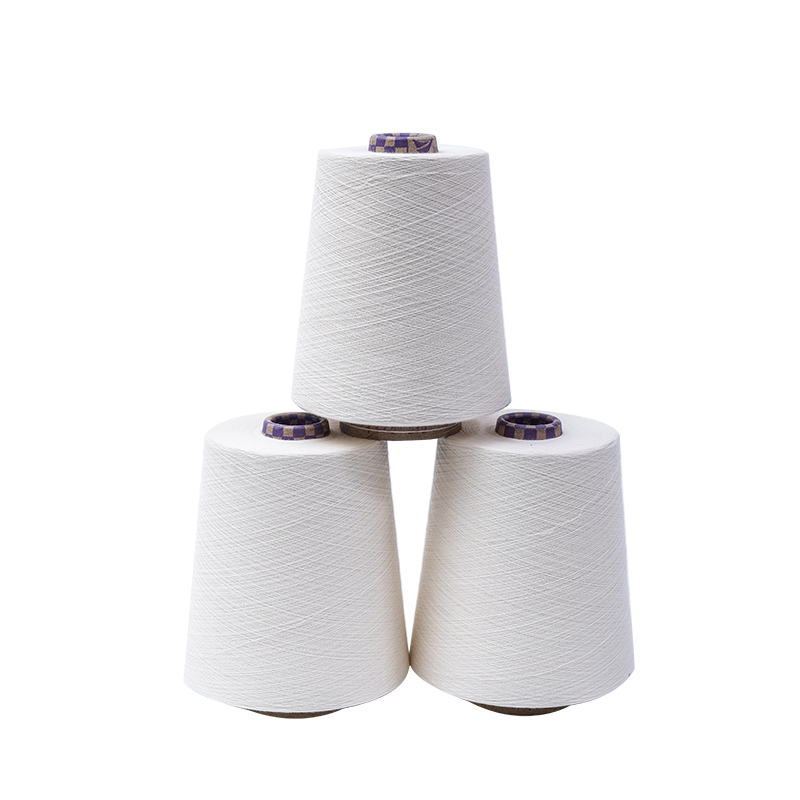
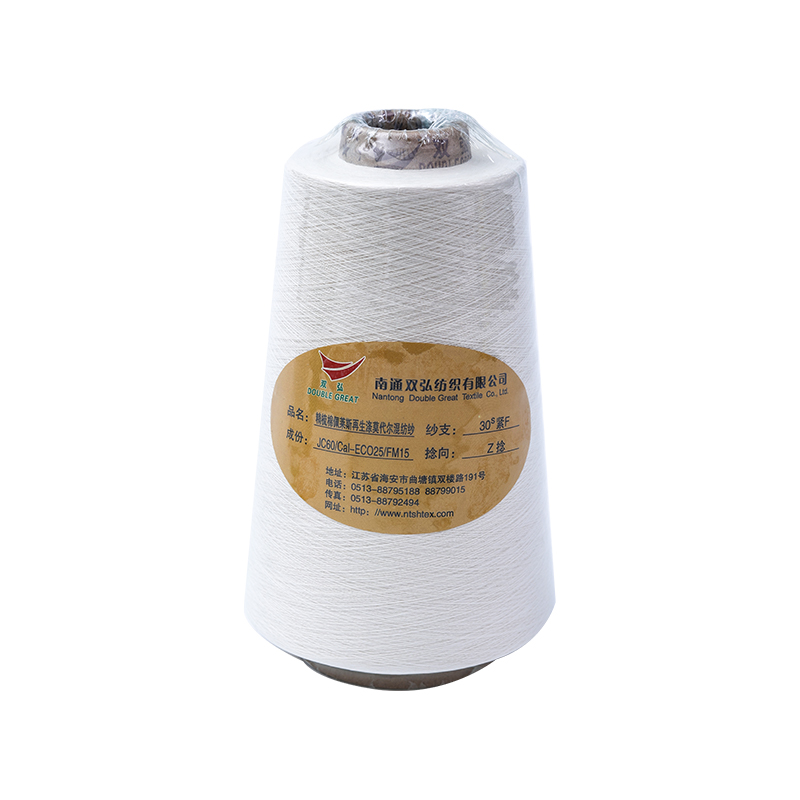
Cotton yarn is packaged in several standard formats, each suited to different handling and usage patterns. Skeins are center-pull wound and convenient for direct use without pre-winding. Hanks are wound in a loose loop and typically require winding into a ball before use to prevent tangling. Cones are wound on a tapered core and used where continuous, tension-controlled unwinding matters most, such as in machine knitting or large-scale production runs.
| Storage Factor | Recommended Condition | Reason |
| Humidity | Moderate, stable humidity range | Prevents fiber swelling or brittleness from extreme moisture fluctuation |
| Light Exposure | Away from direct sunlight | Reduces gradual color fading over long-term storage |
| Temperature | Cool, stable room temperature | Minimizes fiber degradation and prevents mildew formation |
| Packaging Wrap | Breathable, sealed packaging | Protects against dust and pest contamination while allowing airflow |
Washing and Care Temperature Guide
Different cotton-based yarn variants respond differently to heat and washing agitation, largely due to fiber composition and processing history. The table below outlines general care parameters based on fiber type.
| Yarn Type | Recommended Wash Temperature | Iron Temperature | Drying Method |
| Standard Cotton Yarn | Warm water | Medium-high, safe for direct contact | Flat dry to preserve shape |
| Mercerized Cotton Yarn | Warm water | Medium-high, retains luster well under heat | Flat dry away from direct sunlight |
| Milk Cotton Yarn | Cool to lukewarm water | Low to medium, avoid prolonged direct heat | Flat dry, reshape while damp |
Frequently Asked Technical Questions About Cotton Yarn Production
How many plies does cotton yarn typically have?
Ply count varies by intended use, with single-ply, two-ply, three-ply, and four-ply constructions all common. Higher ply counts generally increase strength and roundness of the strand, while single-ply yarn offers a flatter, more matte surface texture.
What causes pilling in cotton yarn?
Pilling occurs when short fibers on the yarn surface loosen through friction and tangle into small balls. Combed cotton yarn, which has fewer short fibers, generally pills less than carded cotton yarn under identical usage conditions.
Can cotton yarn be over-twisted?
Yes. Excessive twist causes the strand to kink, snarl, and lose its intended hand feel. Twist level is carefully controlled during spinning to match the target application, since both under-twisting and over-twisting create handling problems during crochet or knitting work.
What is the difference between combed and carded cotton yarn in practice?
Combed cotton yarn produces a smoother surface, higher strength, and cleaner stitch definition, making it preferable for detailed work. Carded cotton yarn has a slightly textured surface and softer initial hand feel, often selected for projects where a more rustic finish is desired.
How is yarn count verified during quality inspection?
A measured length of yarn is weighed under controlled conditions, and the resulting figure is compared against the target count specification. Deviation beyond the accepted tolerance range triggers further inspection of the spinning parameters.
What causes color variation between dye lots?
Even with an identical dye formula, differences in water mineral content, dyeing temperature, fiber batch absorbency, and processing time can cause slight shade variation. Matching dye lot numbers across an entire project reduces the risk of visible inconsistency.