 English
 русский
 Español
The Short Answer: Yes, 100% Cotton Yarn Is Biodegradable
Yes, 100% cotton yarn is biodegradable. Cotton is a natural cellulose fiber, which makes its molecular structure a food source for microorganisms in soil, water, and compost. Those organisms produce enzymes that break cotton's long polymer chains into water, carbon dioxide, and biomass. The evidence is well established. A 2010 study from Cornell University found that cotton fabric buried in industrial compost lost 77% of its weight within 90 days, while polyester tested under the same conditions showed essentially no degradation. How the yarn is constructed—twist level, combing, and finishing—changes how quickly microbes can reach the fiber surface, but it does not change the final outcome. Cotton degrades because it is cellulose. Polyester, nylon, and acrylic do not degrade in any meaningful timeframe because they are petroleum-based polymers.
What "Biodegradable" Actually Means for Textiles
"Biodegradable" and "compostable" are related terms, but the difference shapes both product claims and purchasing decisions. Under the U.S. Federal Trade Commission's Green Guides, a compostable claim must specify whether the product is suitable for home or industrial composting, must degrade completely within a timeframe similar to comparable compostable materials, and must leave no toxic residue. This is a demanding standard. A cotton yarn cannot be called compostable in an absolute sense; it can only be called compostable under specific conditions. A skein labeled "compostable" without saying where and how fast is, at best, incomplete. In an active compost pile with adequate warmth and moisture, cotton yarn breaks down in months. In a dry landfill with limited microbial activity, the same yarn can persist for years. The fiber chemistry is constant; the environment decides the rate. For any buyer, the relevant question is not simply whether a yarn is biodegradable, but under what conditions and in what timeframe it will break down.
How Cotton Yarn Degrades: The Science of Fiber Breakdown
Cellulose is a chain of glucose units linked by β-1,4 glycosidic bonds, and cotton fiber is roughly 90% cellulose. When cotton yarn enters a compost environment, bacteria and fungi secrete cellulase enzymes that hydrolyze those bonds. The freed glucose becomes microbial food, and the fiber is progressively converted into carbon dioxide, water, and microbial biomass. This mechanism explains why cotton's degradation is fundamentally different from the slow fragmentation of plastics: synthetic polymers have molecular backbones that enzymes cannot readily cleave.
The physical form of the yarn affects the speed of degradation, not its endpoint. A combed, tightly twisted yarn has a dense, smooth surface with fewer loose fiber ends, which reduces the area available for microbial colonization. A carded or loosely twisted yarn will be consumed faster. Mercerization, which treats cotton with caustic soda and increases fiber crystallinity, can slow moisture uptake, but mercerized cotton still degrades completely over a longer period. A 2023 Cornell University composting trial on denim shows the pattern in practice: the cotton portion began degrading within the first month, and after five months only the synthetic components remained. From a manufacturer's perspective, process choices such as combing and twist directly influence both yarn quality and end-of-life behavior, which is why product specifications, not fiber names alone, should guide a sustainability assessment.
Home Composting vs. Industrial Composting
For hand-knitters, crocheters, and small-batch producers, the practical question is whether leftover cotton yarn will break down in a backyard compost bin. It will, but the timeline depends heavily on that bin's conditions.
| Condition | Home Composting | Industrial Composting |
|---|---|---|
| Temperature range | 20–30°C | 55–60°C |
| Microbial activity | Variable and slower | Accelerated and controlled |
| Typical time to full breakdown | 6–12 months | 3–6 months |
| Best suited for | Small yarn scraps | Commercial textile volumes |
For home composters, cutting scraps into small pieces and mixing them into an active pile improves results; expect progressive breakdown over six to twelve months. For textile buyers, the implication is more serious. If a brand labels a product compostable, it must state the composting setting and the expected timeframe. Industrial composting at 55–60°C can process cotton textiles completely in three to six months, but that infrastructure is not available everywhere. A claim that omits these details is not defensible under the FTC Green Guides.
Cotton Yarn vs. Synthetic and Blended Yarns: The Biodegradability Comparison
Synthetic fibers are petroleum-based polymers. Polyester is polyethylene terephthalate, nylon is a polyamide, and acrylic is polyacrylonitrile. These structures are engineered to resist water, chemicals, and microbial attack, so the fibers persist in the environment for decades and shed microplastic fragments during washing and wear. Cotton sits at the opposite end: the short fibers that shed from cotton garments are natural cellulose, and microorganisms consume them in soil and water instead of allowing them to accumulate as microplastics.
| Fiber | Type | Biodegradable in compost? | Typical behavior |
|---|---|---|---|
| Cotton | Natural cellulose | Yes | Degrades in months under active composting |
| Modal, viscose, lyocell | Regenerated cellulose | Yes | Cellulose-based chemistry; degrades like cotton |
| Polyester | Synthetic polymer | No | Persists for decades; sheds microplastics |
| Nylon | Synthetic polymer | No | Resists microbial attack |
| Acrylic | Synthetic polymer | No | Persists in the environment |
Blended yarns complicate the end-of-life picture. In a typical polyester-cotton blend, such as T/C 65/35, the cotton fraction can degrade in compost while the polyester fraction remains behind, sometimes as visible fibers and sometimes as microplastic particles. The higher the synthetic content, the less meaningful a biodegradability claim becomes. Blends exist for practical reasons: polyester adds strength, wrinkle resistance, dimensional stability, and cost efficiency, which explains why polyester blends remain popular for durability. At the same time, the industry is developing alternatives that do not depend on persistent synthetics; biodegradable fiber innovations in textile production point toward regenerated cellulose and bio-derived polymers that can close the loop more cleanly. For applications that genuinely require blend performance, polyester-combed cotton blended yarns deliver controlled quality and consistent processing, but procurement teams should plan for the synthetic fraction at end of life.
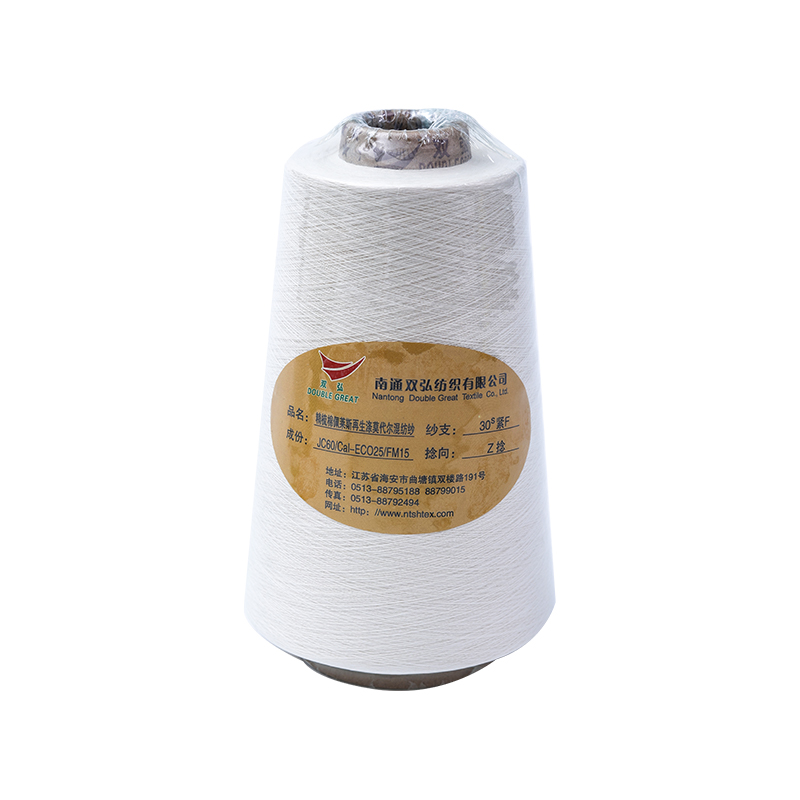
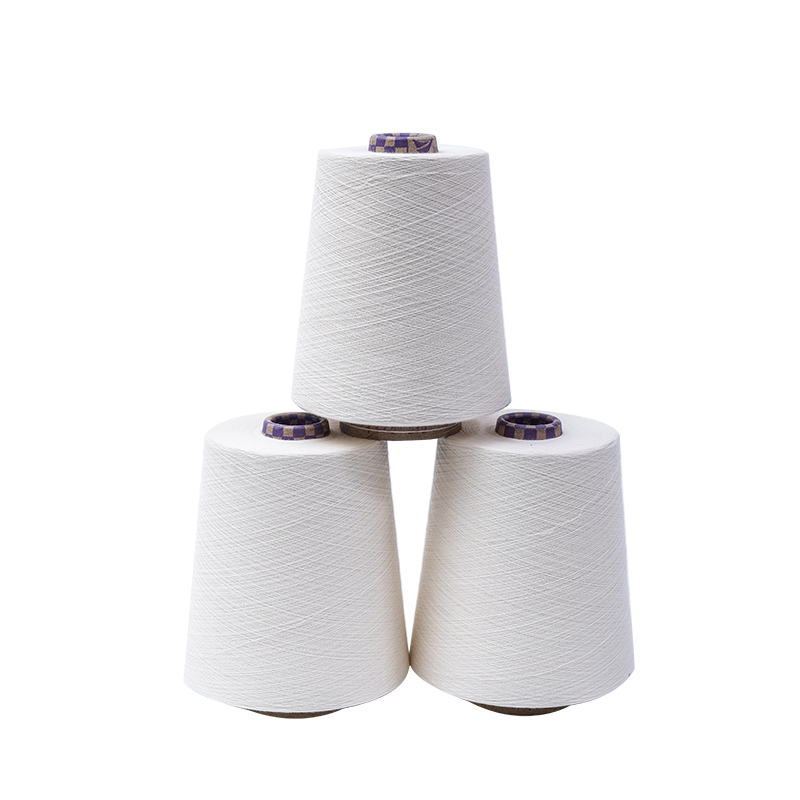 Polyester/Combed Cotton Blended Yarn Factory, ManufacturersNantong Double Great Textile is china polyester cotton blended yarn factory and combed cotton blended yarn manufacturers, we provides who...View Product →
Beyond Biodegradability: What Else Matters for Sustainable Yarn Choice
Biodegradability answers one question—what happens at end of life—but it is not a complete sustainability certificate. A lifecycle view includes water use, agrochemicals, energy, processing chemistry, transport, and the durability of the finished garment. Conventional cotton is a legitimate concern on the farming side: it is water-intensive and relies heavily on pesticides. A cotton yarn that degrades beautifully in compost may still carry a growing-stage footprint that is heavier than some alternatives. Durability matters too: a cotton sweater worn for five years spreads its footprint across many seasons, while a fast-fashion synthetic top discarded after a few wears leaves persistent waste behind. Honest sourcing decisions weigh these trade-offs instead of treating biodegradability as the only criterion.
The natural-fiber family is broader than cotton alone. Regenerated cellulose fibers such as modal, viscose, and lyocell share the cellulose chemistry that makes cotton degradable, and they offer different hand-feel, drape, and dyeing behavior. For brands that want a premium softness without introducing a persistent synthetic component, combed cotton modal yarn options combine two cellulose-based fibers in a blend that remains compatible with composting at the end of its useful life. The wider market is moving in the same direction; sustainable high-end yarn options beyond cotton show how premium positioning and environmental performance are increasingly being designed into the same products.
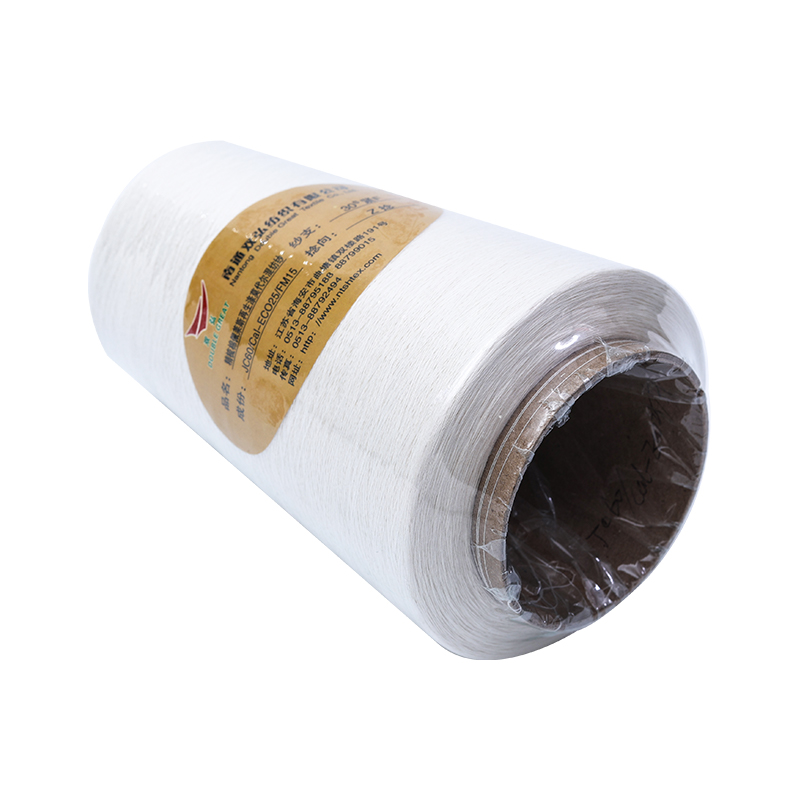 Combed Cotton/Modal Blended Yarn Factory, ManufacturersNantong Double Great Textile Co.,Ltd. is China wholesale Soft Sensation Yarn Series factory and Soft Sensation Yarn Series manufacturers,...View Product →
How to Verify a Supplier's Environmental Claims
Any supplier can claim environmental virtue; few can prove it. Procurement teams should ask for evidence in a form that can be audited. Three layers of documentation are worth requesting in every sourcing conversation:
- Third-party certification. GOTS verifies organic fiber content, OEKO-TEX confirms the absence of harmful substances, and GRS validates recycled content.
- Laboratory and quality-system evidence. Recognized testing accreditations, such as a CNAS-accredited lab, and quality certifications such as USTERIZED give weight to the specifications on a datasheet.
- Transparency. A supplier that shares fiber composition, test reports, and processing details gives buyers the material needed to form their own judgment.
Vague statements and green adjectives are not evidence. A practical example helps set the bar. Our facility is listed among Jiangsu Province's green factories, our laboratory holds CNAS accreditation, and we maintain USTERIZED quality certification. No single designation proves that one specific yarn biodegrades, but these markers show that environmental and quality claims have been checked by third parties rather than self-declared. That is the standard to apply across the supply chain; our green factory commitment is public, verifiable, and open to inspection.
Conclusion: Cotton Yarn's Place in a Circular Textile Economy
100% cotton yarn is biodegradable, and that is a genuine advantage in a circular textile economy. Under the right conditions—compost moisture, temperature, and microbial activity—cotton returns to natural cycles instead of accumulating as microplastics. As end-of-life behavior becomes a design requirement rather than a marketing differentiator, fibers that can re-enter biological cycles will gain further ground. But biodegradable does not mean zero impact. Cotton's water and pesticide footprint, the energy used in spinning and finishing, and the behavior of any synthetic blend component all belong in the final assessment. The responsible approach is to match the fiber to the application: pure cotton or cellulose-based blends when end-of-life performance matters, with any synthetic fraction minimized or recycled.
Regenerated cellulose fibers extend the logic beyond cotton itself. Eco-friendly viscose yarn alternatives offer a cellulose-based option that shares cotton's degradability while addressing concerns about process chemistry and forestry. When you evaluate a supplier, ask for test reports, certifications, and process details. A claim that survives that scrutiny is the only one worth building a product around.
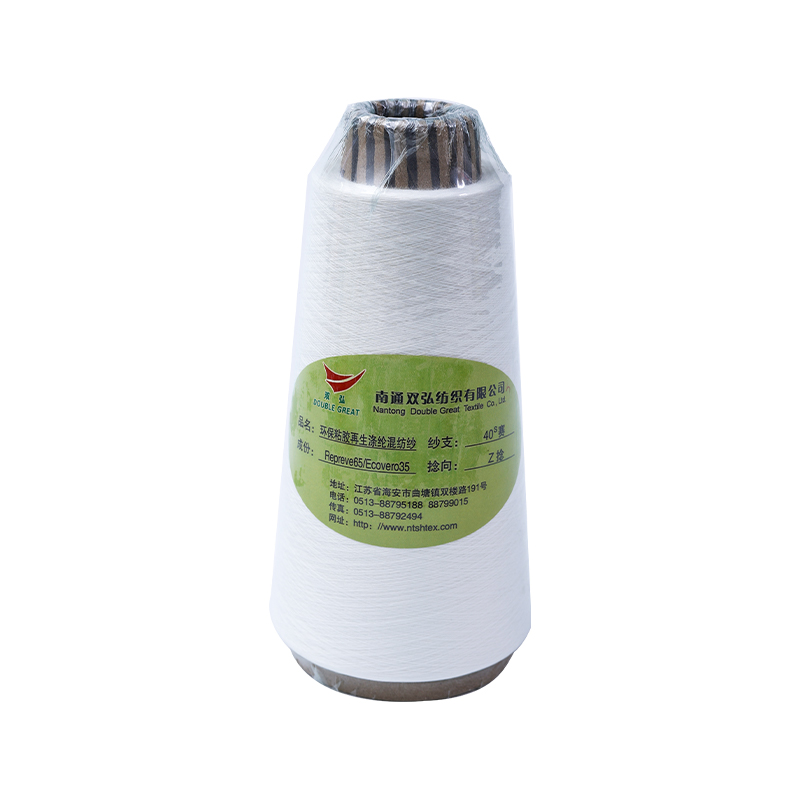 Wholesale Eco-Friendly Viscose Blended Yarn-Tex Factory, Manufacturers - NantongNantong Double Great Textile Co.,Ltd. is China wholesale Soft Sensation Yarn Series factory and Soft Sensation Yarn Series manufacturers,View Product →