 English
 русский
 Español
What Is Bioplastic Yarn and Why Does It Matter?
You can make a workable strand of bioplastic yarn on a classroom table with four ingredients: sodium alginate, glycerine, water, and calcium chloride. The principle, ionic gelation, is the same one used in industrial wet spinning. The strand will be soft, elastic, and water-sensitive, fine for a prototype, wrong for a T-shirt. Keep that gap in mind before you mix.
Bioplastic yarn is spun from natural polymers rather than petroleum-based resins. Unlike polyester or nylon, it is designed to break down under microbial or composting conditions. That promise attracts educators, material designers, and textile innovators seeking alternatives to fossil-fuel fibers amid growing concern over microplastics and textile waste.
So why make it yourself? Because hands-on experience answers questions that reading cannot: Why does the polymer solution need to rest overnight? Why does a calcium bath turn liquid into gel? Why is uniformity so hard to achieve by hand? A professional spinning mill asks the same questions every day.
The Core Materials: What You Need and Why
Every alginate-based bioplastic yarn recipe uses four components:
- Sodium alginate, the film-forming polymer. Extracted from brown seaweed, it dissolves in water into a thick, viscous dope.
- Glycerine, the plasticizer that keeps the dried yarn flexible instead of brittle.
- Water, the solvent that thins the polymer to an extrudable consistency.
- Calcium chloride, the crosslinker. When alginate meets calcium ions, the polymer chains form a gel network, transforming a liquid stream into a solid filament.
Calcium ions bind to the guluronic acid units of the alginate molecule to form a stable gel. Longer residence in the bath means more complete crosslinking, the same ionic gelation used in food science and alginate wound dressings.
Ratios matter. A common desktop recipe uses roughly 1:2:25 alginate to glycerine to water by volume. More glycerine softens the yarn but slows setting. More alginate thickens the dope and complicates extrusion. Too little water creates lumps that block the nozzle.
Optional additives extend the possibilities: natural dyes color the filament, mica powder adds opacity, chitosan improves wet strength. Thermochromic, phosphorescent, and conductive additives appear frequently in design experiments.
Food-grade sodium alginate and calcium chloride are available from restaurant-supply and cosmetic-ingredient retailers. For reproducible experiments, choose a supplier that states the alginate viscosity grade; purity affects spinning stability.
Choosing Your Polymer: Beyond Alginate
Sodium alginate is the easiest entry point, but not the only spinnable biopolymer. The right choice depends on your equipment, target properties, and whether industrial scale matters.
| Polymer | Spinning route | Handling | Strength | Water resistance | Industrial status |
|---|---|---|---|---|---|
| Sodium alginate | Wet spinning into calcium chloride bath | Easy at bench scale | Medium | Poor, re-wets and softens | Niche and educational |
| Gelatin | Warm extrusion, set by cooling | Needs heating; food-grade quality | Low to medium | Poor, hydrophilic | Limited |
| Starch | Extrusion with high plasticizer content | Brittle without plasticizer | Low to medium | Poor | Only in blends |
| Chitosan | Wet spinning into alkaline bath | Complex preparation | Medium | Better than alginate | Research stage |
| PLA | Melt spinning | Industrial standard | High | Good | Commercial scale |
For a maker at a desk, alginate wins because it gels at room temperature with no specialized equipment. Gelatin and starch are cheaper but brittle or awkward to process. Chitosan offers antibacterial properties but needs acid dissolution and an alkaline coagulation bath.
For industry, the picture reverses. Alginate is expensive, batch-sensitive, and slow to spin. PLA, by contrast, is melt-spun on conventional fiber lines at commercial scale. The lesson in polymer selection: what works on a bench is not necessarily what works in a mill.
Step-by-Step: How to Make Bioplastic Yarn at the Bench
This is the standard alginate wet-spinning recipe used in university textile programs and material design studios. Quantities are for tabletop scale; expect a few dozen meters at most.
- Gather the tools. You need a stick blender, a 60 mL syringe or squeeze bottle, a spray bottle, a glass jar, a drying rack, and a mixing container.
- Mix the alginate solution. Add a little sunflower or olive oil to the blender jar, then alginate, glycerine, and water in roughly a 1:2:25 ratio by volume. Blend into a smooth paste, add the remaining water, and blend until homogeneous. Oil aids dispersion and reduces drying shrinkage.
- Let the bubbles escape. Rest the mixture for at least one hour, ideally overnight. Trapped air creates weak spots in the extruded yarn; this is the most skipped step and the most common cause of broken strands.
- Prepare the crosslinking bath. Dissolve calcium chloride in water at about 10% by weight, for instance 30 g in 300 g of water, in a jar deep enough for the full yarn length.
- Extrude into the bath. Fill the syringe, hold the nozzle just below the surface, and push the plunger slowly and steadily. The stream gels instantly; move the syringe side to side so the yarn lands in loose loops, not tangles.
- Cure and spray. For the first 24 hours, mist the yarn every few hours with fresh calcium chloride solution and reposition the loops so they do not fuse. Skipping this creates a flat, bonded ribbon.
- Dry completely. Hang the cured yarn on a rack for five to seven days. Useful strength develops only after full drying; a damp core collapses under tension.
- Test the result. Tie a knot and pull; the strand should hold without snapping at the knot. If it snaps, extend the curing time and re-dry.
This is a bench technique. It demonstrates the wet-spinning principle, but shares almost nothing with an industrial line in control, speed, or uniformity.
How Strong Is Bioplastic Yarn? Performance Realities
The performance ceiling is low. The dried strand stretches like thick nylon cord, feels stiffer than rubber, and has modest tensile strength. It will not pass through a sewing machine needle, and heavy load snaps it.
Water is the critical weakness. The polymer network relies on ionic crosslinks, not covalent bonds, so the yarn softens when wet and can gradually re-dissolve. It is not washable in any conventional sense. Acceptable for a one-off design piece, unacceptable for apparel.
Hand knitting and crochet work well at coarse gauges because surface friction holds knots firmly. Fine-gauge work is difficult: diameter control is inconsistent and the fabric lacks commercial evenness.
Keep the yarn dry and sealed for storage. In humid conditions it degrades, which is exactly what biodegradable means; small samples break down within months.
From a textile quality perspective, three metrics separate this yarn from a production product: coefficient of variation in linear density, breaking strength, and elongation at break. A hand-extruded strand can vary by tens of percent along its length; a commercial yarn is tested continuously to keep CV within tight tolerances. That infrastructure is exactly what a bench lacks.
From Bench to Mill: The Gap Between DIY and Industrial Bioplastic Yarn
The wet-spinning principle behind the syringe method is the same one used in industrial fiber plants: polymer solution pumped through a spinneret into a coagulation bath, where it solidifies into continuous filaments. Every operational detail, however, is different.
| Control dimension | Bench setup | Industrial line |
|---|---|---|
| Spinneret | Single hand-held syringe | Multi-hole spinneret with precision-machined orifices |
| Coagulation bath | Static calcium chloride at room temperature | Temperature- and concentration-controlled bath with circulation |
| Tension and draw | Manual and highly variable | Controlled draw ratio between motorized godets |
| Quality monitoring | None | Continuous measurement of linear density, strength, and defects |
That contrast explains why pure alginate yarn remains niche. The material is expensive, batch consistency is hard to guarantee, and throughput is slow compared with melt-spun polymers. Alginate filaments today serve medical textiles and specialty applications, not high-volume apparel.
Commercial bio-based and recycled yarns follow a more mature route. PLA is melt-spun on polyester-style equipment; recycled polyester converts post-consumer plastic waste into fiber; eco-friendly viscose comes from responsibly sourced wood pulp. For a closer look at commercially available bio-based options, explore our bioregeneration yarn series.
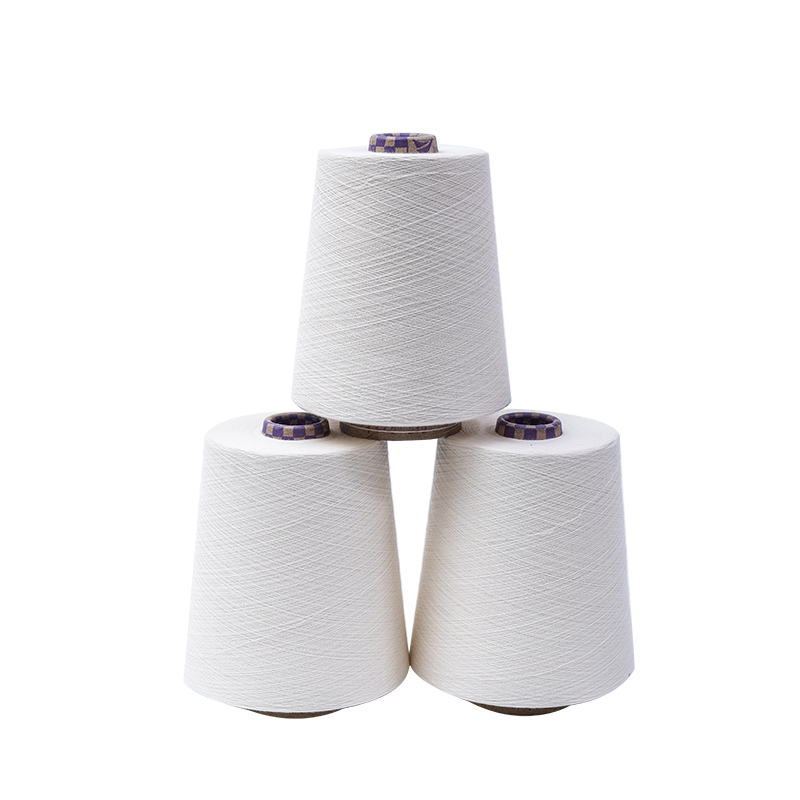
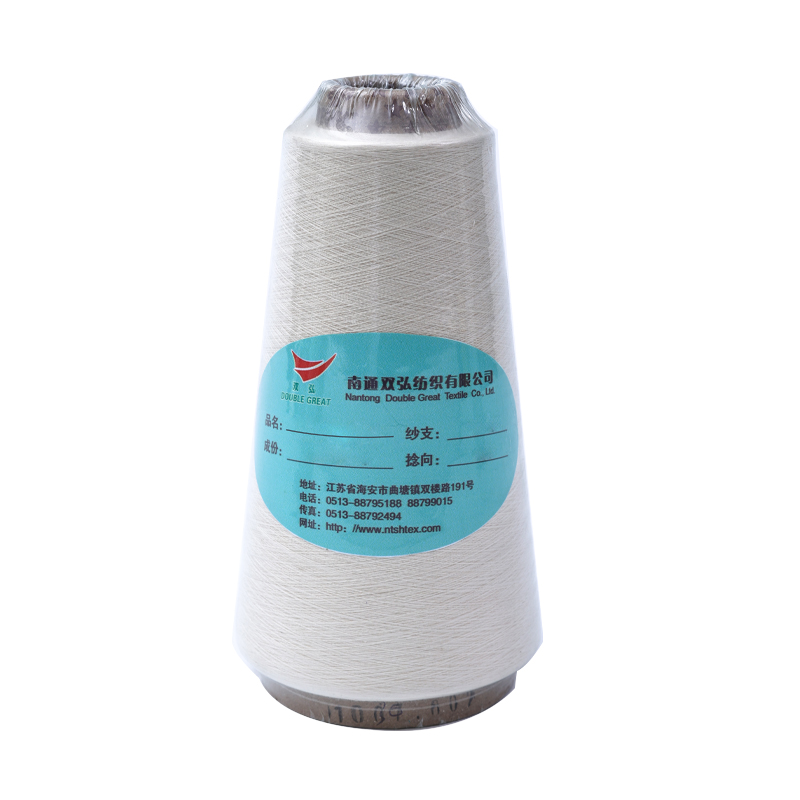
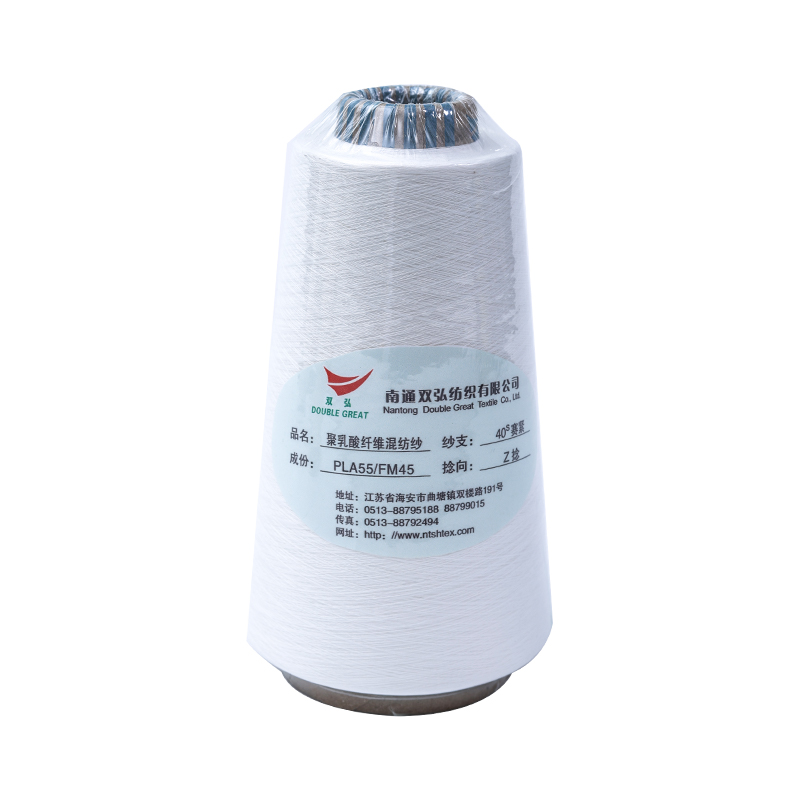 Custom Cotton Bioregeneration Yarn Series Manufacturers, SuppliersNantong Double Great Textile Co.,Ltd. is China Bioregeneration Yarn Series manufacturers and Bioregeneration Yarn Series suppliers, we cu...View Product →
Industrial yarn production also depends on rigorous quality control, from raw material inspection to bobbin-by-bobbin testing. That cannot be approximated on a bench. We describe the process on our testing and quality assurance capabilities.
Choosing the Right Sustainable Yarn for Production
If you are planning a sustainable product line, shift from a DIY mindset to a procurement mindset. Homemade bioplastic yarn is an excellent learning tool; it is not a supply chain.
Your practical options as a brand or mill include several proven materials:
- Recycled polyester, the most mature sustainable synthetic, made from post-consumer bottles.
- Eco-friendly viscose, a man-made cellulosic fiber from sustainably managed wood.
- Lyocell, a closed-loop cellulosic fiber with proven environmental performance.
- Bioregeneration blends, combining bio-based and recycled content for premium apparel.
For a proven, scalable alternative to homemade filaments, many brands choose recycled polyester blend yarn, which delivers durability with a reduced environmental footprint. When the goal is a natural hand feel, eco-friendly viscose yarn offers renewability and excellent dyeability.
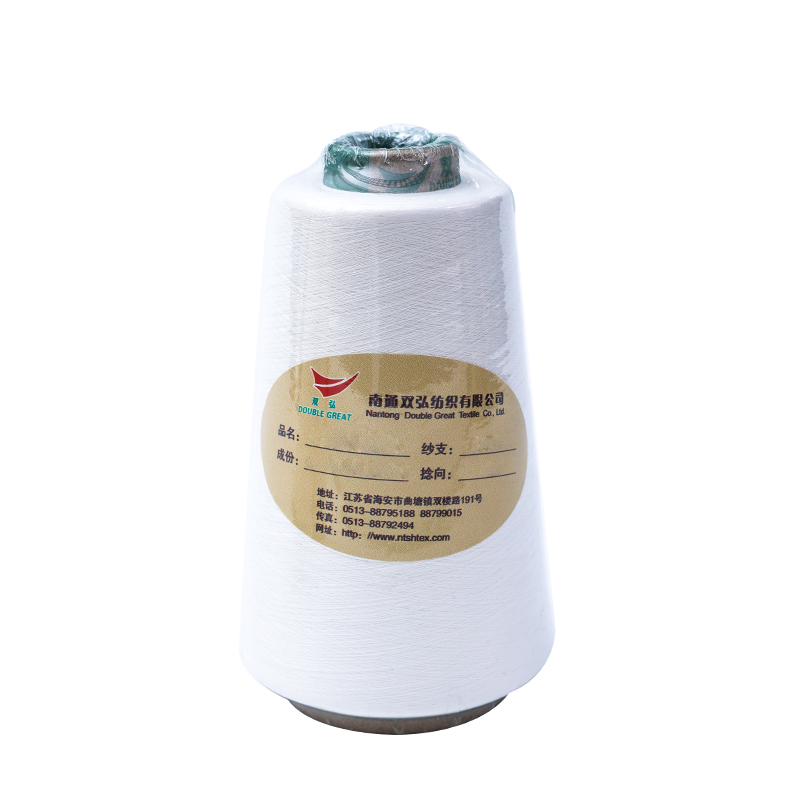
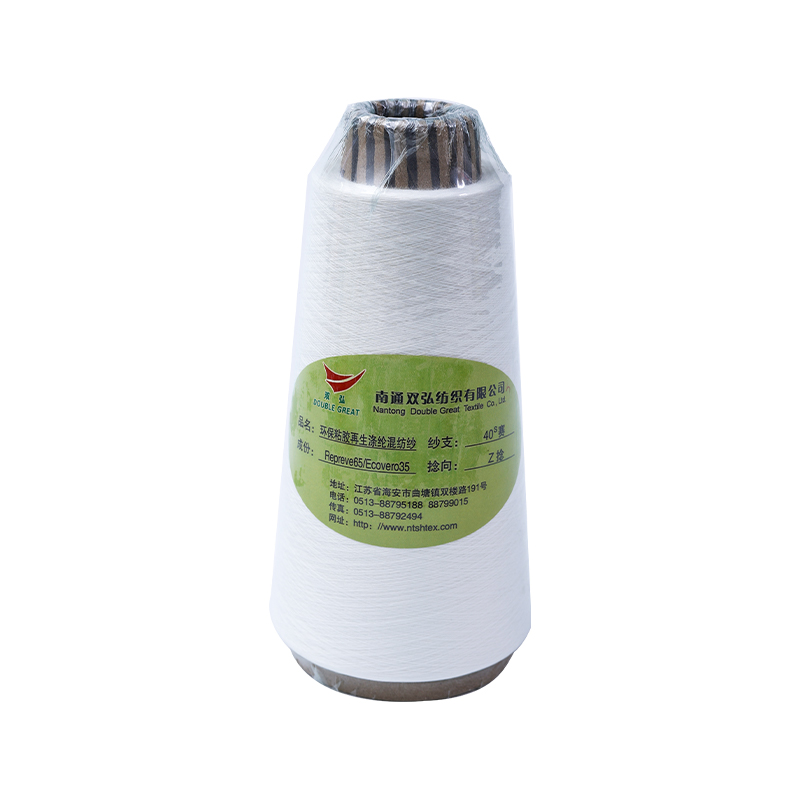 Wholesale Eco-Friendly Viscose Blended Yarn-Tex Factory, Manufacturers - NantongNantong Double Great Textile Co.,Ltd. is China wholesale Soft Sensation Yarn Series factory and Soft Sensation Yarn Series manufacturers,View Product →
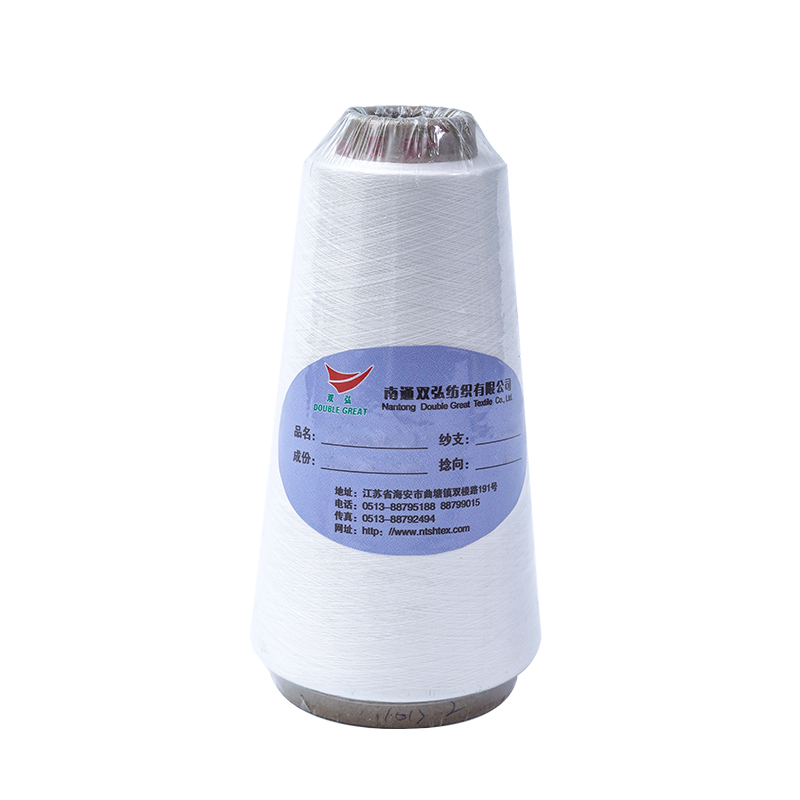
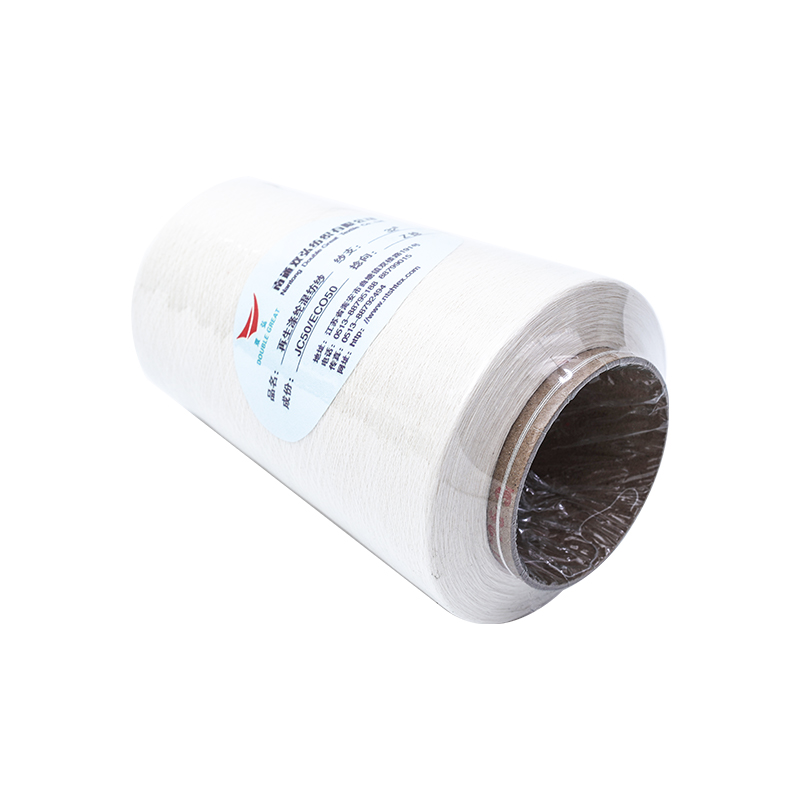 Recycled Polyester Blended Yarn Factory, ManufacturersNantong Double Great Textile is china recycled polyester blended yarn factory and recycled polyester yarn manufacturers, we provides whol...View Product →
Material choice must match the application: recycled polyester for sportswear, eco-viscose for dresses and linings, bioregeneration blends in between. Supplier selection matters equally, look for certified laboratories and a consistent production record.
Final Thoughts: DIY for Learning, Industrial for Scaling
Making bioplastic yarn by hand is one of the most direct ways to understand fiber formation. It teaches the role of solution viscosity, the function of a crosslinking bath, and the meaning of uniformity.
Students, educators, and material designers exploring bio-based textiles will benefit from a weekend with a syringe and a jar of calcium chloride.
If your goal is a commercial product, the path runs through an experienced yarn manufacturer. The difference between a dried alginate strand and a production-grade yarn is not effort; it is industrial infrastructure. To see how this translates into production-ready yarns, read about how our bioregeneration yarn series supports greener textile production.