 English
 русский
 Español

Freezing Yarn: The Useful Answer and the Limits
Putting yarn in the freezer is a targeted pest-control measure, not a cleaning, softening, or finishing process. It is worth doing when you suspect clothes moths, carpet beetles, or their eggs in wool, silk, cashmere, alpaca, or a natural-fiber blend. It is not worth doing for 100% polyester, nylon, or acrylic yarn that has no organic food source, and it is risky for damp yarn, paper cones, or anything sealed in a way that traps condensation.
The useful part is cold. A domestic freezer held at -18°C (0°F) or colder can kill some larvae and eggs if the material stays cold long enough and the cold reaches the center of the package. The limits are equally important: household freezers cycle through defrost periods, a tightly packed package insulates itself, and insect species differ in cold tolerance. A 15-minute chill does not sterilize yarn, does not kill every life stage, and does not remove dust, oils, or mold.
Use the freezer when
You have dry wool, silk, cashmere, or a natural blend that may have been exposed to moths or beetles. The yarn is clean, fully dry, sealed in airtight bags, and can stay at -18°C or colder for at least 72 hours.
Skip the freezer when
The yarn is 100% synthetic, damp, moldy, dirty, or still sealed in paper or cardboard that can absorb moisture. Cold will not clean it, and moisture is the bigger risk to strength, color, and package integrity.
Never freeze when
The package contains wet yarn, water-based labels, leather trims, elastic that cannot tolerate condensation, or visible mold. A kitchen freezer is not a sterilizer and should not be treated as one.
For a mill, the question is not “can we freeze a cone?” but “what pest-control system protects the batch without adding moisture or handling damage?” For a knitter, the question is narrower: “is this natural-fiber yarn dry, sealed, and cold enough for long enough?” Both questions lead to the same principle: cold treatment only works when the material is dry and the process is controlled.
- Cold slows or kills some insects; it does not remove their bodies, frass, or the stains they leave behind.
- Freezing does not replace washing, dust removal, or storage in a clean, dry place.
- Condensation after freezing is often more damaging than the cold itself.
- Natural-fiber blends need attention even when the synthetic percentage is high.
What Cold Actually Does to Wool, Silk, Cotton, and Blends
Water is the main variable in any freezer decision. Dry fibers contain bound moisture and some free moisture, but not enough liquid water to form large ice crystals inside the fiber structure. Damp fibers are different. When water freezes inside a yarn package, it expands, can distort the package, and can create tiny ice lenses between fibers. On thawing, that water becomes mobile again, and if the package is opened too early, condensation forms on cool surfaces.
Protein fibers such as wool, silk, cashmere, alpaca, and mohair are the classic targets for clothes moths and carpet beetles. Cellulosic fibers such as cotton, viscose, modal, and lyocell are less likely to be eaten by clothes moths, but they are more sensitive to damp storage and mold. Synthetic fibers such as polyester, nylon, and acrylic have very low moisture regain and little food value for textile pests, so freezing them usually adds risk without solving a real problem.
| Fiber or blend | Main storage risk | Effect of controlled freezing | Practical guidance |
|---|---|---|---|
| Wool, cashmere, alpaca | Moths, carpet beetles, and larvae feeding on protein fibers | Can kill some larvae and eggs if dry and held cold long enough | Dry, seal, freeze at -18°C or colder for 72 hours, thaw sealed |
| Silk and silk blends | Protein fiber damage, color sensitivity, moisture marks | Useful for pest control when dry; cold alone does not clean stains | Test colorfastness, avoid wet freezing, use a clean inner bag |
| Cotton | Mold, damp storage, dust, package staining | Little pest-control benefit; moisture risk is higher than insect risk | Keep dry and ventilated; do not freeze damp cotton |
| Viscose, modal, lyocell | High moisture regain, condensation, package deformation | Cold can stress damp packages; dry cold is mostly inert | Control humidity; avoid freezer unless pest exposure is confirmed |
| Polyester, nylon, acrylic | Dust, oils, storage dirt, package compression | No meaningful pest-control benefit | Skip the freezer; focus on clean, dry, sealed storage |
| Wool blends | Pest risk follows the natural-fiber content | Can help if the blend is dry and the cold penetrates the package | Treat according to the wool or silk percentage, not the synthetic percentage |
| Core yarns | Sheath fiber risk, core elastic fatigue, package condensation | Depends on the sheath; cold may not harm a dry package but can trap moisture | Confirm construction and moisture content with the supplier |
| Functional and antibacterial yarns | Finish performance, moisture, contamination | Freezing is not a substitute for the designed functional finish | Ask for care guidance; do not assume cold boosts the finish |
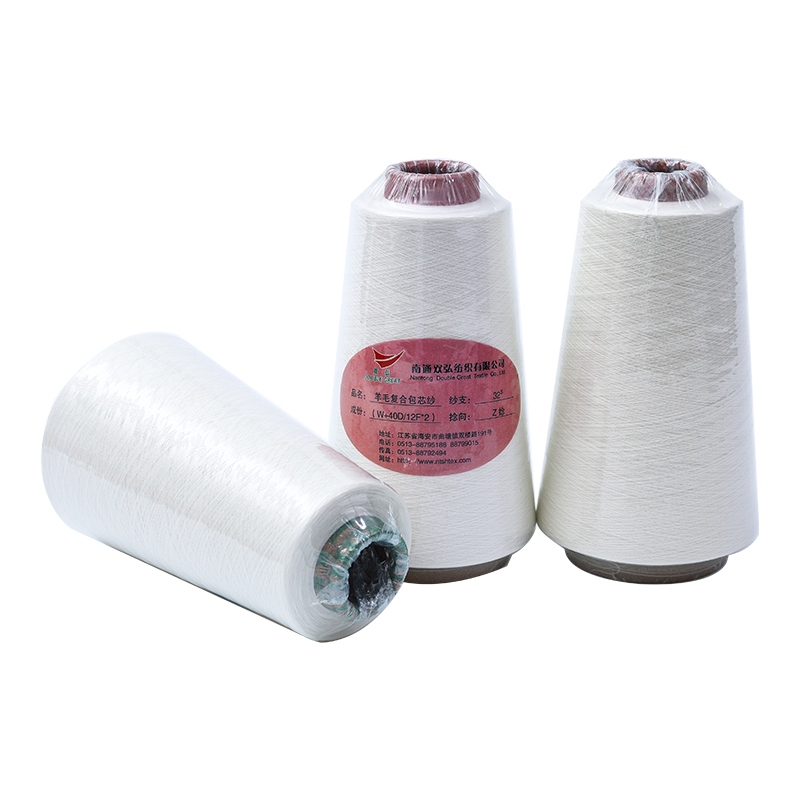 Wool Core Spun Yarn for Elastic KnitwearFor wool-rich projects needing elasticity, this core-spun yarn combines soft wool with elastic fibers for warmth, comfort, and shape recovery.View Product →
Wool is the fiber most people associate with freezer advice, and for good reason. Wool has a complex surface structure and can hold a significant amount of moisture without feeling wet. That same property makes dry storage essential. If a wool package is sealed while still warm or damp, moisture can migrate to the coolest part of the bag and create a damp patch. The freezer may kill larvae, but the storage method can still ruin the yarn.
Silk behaves differently. It is strong, smooth, and sensitive to prolonged dampness and some cleaning agents. A silk blend may contain wool, viscose, or polyester, so the pest risk and moisture risk may come from different components. A 70% polyester / 30% silk blend still contains a protein fiber that can be attacked. The synthetic majority does not make the silk invisible to insects.
Cotton and regenerated cellulosic fibers are usually not the first choice for a freezer treatment. Their main enemy is moisture, not moth larvae. A damp cotton package placed in a freezer can become a condensation problem when it returns to room temperature. If the goal is to protect cotton from storage damage, the better investment is humidity control, clean shelving, and sealed packaging.
A Home Freezer Protocol That Does Not Damage the Yarn
The protocol matters more than the folklore. A common mistake is to put yarn in a freezer bag, remove it after a short time, and open the bag while the yarn is still cold. That is a recipe for condensation. Another mistake is to freeze damp yarn because it “will dry in the cold.” It will not dry in a sealed freezer bag; it will simply hold moisture in a colder place.
- Confirm the yarn is clean and fully dry. If it smells damp, feels cool and clammy, or has visible mold, do not freeze it. Treat the mold or discard the affected package first.
- Inspect the yarn for live insects, larvae, casings, or frass. Remove loose debris with a vacuum or a clean brush outside the storage area.
- Place the yarn in a clean, airtight bag. Use a second bag for extra protection. Remove as much air as practical without compressing the yarn package.
- Set the freezer to -18°C (0°F) or colder. Use a thermometer if the freezer has no display. Avoid the door shelf, where temperature fluctuates most.
- Keep the package in the freezer for at least 72 hours. For dense packages, large cones, or known active infestation, extend the time and consider a repeat cycle after thawing.
- Thaw the package sealed at room temperature for at least 24 hours. Do not open the bag until the package has reached room temperature.
- Inspect again after thawing. If live larvae or fresh damage appear, repeat the freeze cycle or use a professional pest-control method.
- Label the package with the treatment date and the next inspection date. Clean the freezer shelf after handling suspect material.
| Parameter | Target | Why it matters |
|---|---|---|
| Temperature | -18°C (0°F) or colder | Warmer domestic freezers may slow insects without killing all life stages |
| Hold time | At least 72 hours | Cold must penetrate the package; dense yarn insulates itself |
| Packaging | Double airtight bag, air removed | Limits moisture exchange and prevents contamination |
| Thaw | Sealed, 24 hours at room temperature | Prevents condensation on cold yarn surfaces |
| Repeat | After 2 to 3 weeks if infestation is active | Eggs that survive may hatch later; a second cycle catches the next stage |
| Inspection | Before and after treatment | Confirms whether the problem is pest damage, mold, or mechanical wear |
Do not use an oven, microwave, or direct sunlight to speed up thawing. Those methods create uneven heat, and uneven heat is another moisture problem. Do not freeze yarn in paper bands, cardboard cores, or unsealed cotton bags unless you accept the risk of moisture absorption and label damage. If the yarn is valuable, test a small sample first and keep a written record of the treatment.
The 15-minute freezer tip that circulates online is not a reliable pest-control protocol. A short chill may make insects sluggish, but it does not guarantee mortality across species and life stages. It also does nothing for bacteria or mold. If the concern is hygiene, clean and dry the yarn properly. If the concern is insects, use a longer, sealed, controlled cold treatment or a professional method.
Where the Freezer Habit Comes From—and Where It Fails
The freezer habit comes from textile conservation, woolen storage, and home pest control. Museums and heritage collections have long used cold treatment as one tool in integrated pest management because it avoids wet cleaning and chemical residues. Home textile owners borrowed the idea and simplified it into “put wool in the freezer.” The simplified version works only when the material is dry, the package is sealed, the temperature is low enough, and the hold time is long enough.
The failures are predictable. A package goes into the freezer with residual moisture. It comes out and is opened immediately. Warm room air meets cold yarn, and condensation forms inside the bag. The yarn surface feels damp. If the package is then stored in a closed bin, mold can develop. The user blames the freezer, but the real cause is the thawing method and the moisture content before freezing.
Paper cones, cardboard cores, and water-based labels are another failure point. Paper absorbs moisture and can deform or transfer ink. A cardboard core that becomes damp may leave a stain on the inner layers of yarn. Adhesive labels may lift or wrinkle. If the package must be frozen, use a clean inner liner and keep the original paper components outside the freezer bag when possible.
Elastic and core yarns deserve special attention. A covered elastic core may tolerate dry cold, but repeated condensation can affect the finish, the wrapper, or the hand feel. The same is true for yarns with water-sensitive finishes. Freezing is not automatically compatible with every yarn construction. Ask the supplier for storage guidance, especially when the yarn contains elastane, functional coatings, or delicate natural fibers.
Visible mold is a stop sign. Freezing does not remove mold spores or the enzymes that cause staining and fiber degradation. If mold is present, isolate the package, improve ventilation, and treat the affected material as a quality problem. Do not put a moldy package into a freezer that also holds clean yarn.
Fiber-by-Fiber Risk Map for Buyers and Makers
The risk is in the natural-fiber content, not only in the label. A blend with 10% wool can still be attacked by clothes moths. A yarn that feels smooth and synthetic may contain a silk or wool component that attracts pests. A package that has been in long storage may carry eggs that are not visible during a quick inspection. The table below maps the common risks and the realistic value of a freezer step.
| Fiber or blend | Main pest or storage risk | Freezer value | Buyer action |
|---|---|---|---|
| 100% wool | Clothes moths, carpet beetles, larvae | High when dry and properly sealed | Freeze suspect packages; store in sealed bins with monitoring |
| Cashmere, alpaca, mohair | Protein fiber pests; high value makes damage costly | High if the package is dry and the cold penetrates fully | Use a written protocol and keep treatment records |
| Silk | Protein fiber pests, water spots, color sensitivity | Moderate to high for pest control; no cleaning benefit | Test a sample, avoid damp freezing, thaw sealed |
| Wool blends | Risk follows the wool content | Moderate; depends on blend and package density | Inspect the blend ratio and ask for fiber origin |
| Cotton | Mold, damp staining, dust, storage insects | Low; moisture risk outweighs pest benefit | Control humidity and keep packages off the floor |
| Viscose, modal, lyocell | High moisture regain, condensation, package distortion | Low unless pest exposure is confirmed | Store dry; avoid freezing damp or warm packages |
| Polyester, nylon, acrylic | Dust, oils, compression, storage dirt | Very low; no meaningful pest-control benefit | Skip the freezer; use clean, dry, sealed storage |
| Core yarns | Sheath fiber risk, core performance, condensation | Variable; construction and moisture matter | Confirm storage guidance with the yarn supplier |
| Functional yarns | Finish performance, contamination, moisture | Not a substitute for the designed function | Follow the finish supplier’s care and storage instructions |
 Silk Blended Yarn for Soft Luxurious FabricsSilk blended yarn offers soft luster, breathability, and moisture absorption with improved durability, suited to high-end apparel, suit fabrics, and bedding.View Product →
Blends are where quick judgments fail. A wool-polyester blend may look and feel mostly synthetic, but the wool portion can still feed larvae. A silk-viscose blend may carry both protein-fiber pest risk and high moisture sensitivity. A cotton-modal blend may have little moth risk but a strong tendency to hold moisture in the package. The correct treatment depends on the component that creates the risk, not on the marketing name of the blend.
Core yarns add another layer. The sheath may be wool, silk, cotton, or a blend, while the core may be polyester, nylon, or elastane. The sheath determines the pest risk. The core determines how the yarn behaves under mechanical stress and moisture. A dry, sealed package is essential because the core and the sheath may respond differently to condensation. If the yarn is specified for a critical end use, ask for a storage recommendation rather than applying a home remedy.
Functional yarns require the same discipline. An antibacterial yarn is designed to manage odor or microbial growth in the finished article; it is not a pesticide for storage pests. Freezing an antibacterial yarn does not improve its function and may complicate the finish if moisture is present. The right question is whether the package is dry, clean, and protected from pests during storage.
Moisture Regain, Condensation, and the Hidden Cost of a Cold Shock
Moisture regain is the amount of water a dry fiber absorbs from the air at a given humidity. It explains why some yarns feel cool, why some packages gain weight in humid weather, and why a freezer can create problems that are not obvious at first. Wool can hold a large amount of moisture without feeling wet. Viscose and modal also absorb moisture readily. Polyester absorbs very little. When these fibers are packed together or stored in the same room, they respond differently to humidity changes.
The hidden cost of a cold shock is not usually a dramatic change in fiber chemistry. It is the water that moves during thawing. A sealed bag taken from a -18°C freezer to a 22°C room creates a temperature gradient. If the bag is opened before the yarn reaches room temperature, moist room air condenses on the cold yarn. The outer layers may feel damp while the inner package remains cold. If the package is then rewrapped or stored in a closed bin, that moisture has nowhere to go.
Paper and cardboard make the problem visible. A damp paper cone can lose stiffness, deform under winding tension, or transfer color to the yarn. A label can wrinkle or lift. A cardboard carton can soften and compress the package below it. These are handling costs, not fiber costs, but they affect yield and customer acceptance. For a mill, a rejected package is still a quality loss even if the fiber itself is unchanged.
Dry cold is much less eventful. If the yarn is below the critical moisture level, sealed against outside air, and thawed slowly, the main risk is handling damage rather than fiber damage. That is why the protocol should start with a moisture check, not with the freezer setting. A simple hand test is not enough for critical batches. Use a moisture meter, a conditioned laboratory test, or the supplier’s certificate when the end use demands it.
Mill-Grade Pest Control: What Replaces the Kitchen Freezer
A kitchen freezer is a spot treatment. A mill needs a system. Industrial pest control for yarn and fiber combines incoming inspection, clean storage, humidity control, package rotation, monitoring, and—when needed—a validated treatment method. The goal is not to freeze everything. The goal is to prevent pests from entering the storage area, detect them early, and treat only the material that needs it.
Integrated pest management starts with the building. Sealed windows, positive air pressure in clean storage areas, door sweeps, and separated receiving zones reduce the chance of insects entering. Monitoring traps and regular inspections show whether activity is rising. Stored fiber should be kept off the floor, away from walls, and in labeled lots with clear dates. First-in, first-out rotation prevents old packages from becoming a reservoir.
| Method | Best use | Strength | Limitation |
|---|---|---|---|
| Integrated pest management | All storage areas | Prevents problems before treatment is needed | Requires discipline, records, and trained staff |
| Heat treatment | Selected equipment, packaging, or empty storage areas | Can kill multiple life stages when temperature and time are validated | Not suitable for heat-sensitive fibers or finishes |
| Fumigation | Confirmed infestations in sealed enclosures | Penetrates difficult spaces when professionally applied | Regulated, hazardous, and not a routine production step |
| Controlled atmosphere | Sealed storage or treatment chambers | Can manage pests without wet chemistry | Needs gas control, sealing, and monitoring |
| Irradiation | Specific regulated applications | Effective when approved for the material and market | Regulatory acceptance and labeling vary by country |
| Cold storage | Selected natural-fiber lots | Useful when temperature, time, and moisture are controlled | Energy cost, condensation risk, and limited penetration in dense packages |
Regulations matter. A method that is accepted in one market may be restricted in another. Fumigation and irradiation are not decisions for a production line to make informally. They require qualified providers, documentation, and customer approval. For most yarn manufacturers, the first line of defense is clean, dry, rotating stock with clear traceability. Treatment is the exception, not the routine.
Our own yarn manufacturing background reflects that systems approach: controlled sourcing, laboratory testing, and quality management rather than ad hoc fixes. A freezer can help a small batch at home, but it cannot replace the combination of incoming inspection, moisture control, and disciplined warehouse practice.
How a Yarn Manufacturer Tests and Protects Sensitive Fibers
At a yarn manufacturer, quality control begins before the fiber reaches the spinning line. Incoming fiber is checked for grade, length, fineness, moisture, and contamination. Natural fibers may carry plant matter, dust, or variability that affects spinning. Blended fibers need consistent proportions so the finished yarn meets the specified strength, evenness, and hand feel. These checks are not pest-control steps by themselves, but they create the traceability needed when a problem appears.
Moisture is tested because it changes weight, strength, and processing behavior. A fiber that is too dry can generate static and break more often. A fiber that is too damp can card poorly, form laps, or encourage mold. The spinning environment is conditioned, and the yarn is monitored through processes such as carding, combing, drawing, roving, spinning, and winding. The goal is a stable package with predictable performance, not a package that has been exposed to unnecessary temperature swings.
Laboratory testing supports the storage decision. Evenness, neps, thick places, thin places, hairiness, tenacity, and elongation can reveal whether a fiber lot is behaving normally. For critical orders, the package and the fiber should be tested before and after any unusual storage treatment. That is why a manufacturer does not simply “put everything in the cold.” The treatment must be justified, documented, and checked against the customer’s specification.
Our central laboratory’s CNAS accreditation supports this testing discipline. The point is not to claim that cold storage is a routine production step. The point is to show that sensitive fibers are managed with measurements, records, and controlled conditions. When a customer asks whether a natural-fiber package is safe for long storage, the answer should come from evidence: fiber content, moisture, packaging, inspection, and a documented pest-control plan.
Packaging also matters. A clean poly bag protects against dust and insects, but it can trap moisture if the yarn is packed warm. A breathable outer bag may reduce condensation risk in some climates but offers less pest protection. The right combination depends on the fiber, the journey, and the storage time. For high-value natural fibers, a sealed inner bag plus a clean outer carton and a desiccant policy is often more useful than a freezer session.
Product Angles: Wool, Silk, Core Yarn, and Functional Blends
If cold-weather storage is part of your risk plan, the yarn specification should make the job easier. A clean, dry package with a known fiber content and a stable finish is less likely to create surprises. The product family matters because the same freezer advice does not fit every yarn. Wool and silk need pest awareness. Core yarns need construction awareness. Functional yarns need finish awareness.
Wool core yarn
Natural wool around a controlled core can deliver warmth, crimp, and structure in one package. The wool sheath means pest prevention still matters, so dry storage and sealed packaging are part of the quality story.
Silk blended yarn
Silk contributes smooth hand feel and a natural protein-fiber risk profile. A blend may reduce cost or improve performance, but it does not remove the need to protect the silk component from pests and moisture.
Antibacterial polyester-modal yarn
Functional protection is designed for the finished article, not for storage pests. Keep the package dry and clean, and do not treat an antibacterial finish as a substitute for pest control.
For buyers, the practical takeaway is to match the yarn to the storage plan. A wool-rich yarn for a premium sweater needs a clean, sealed package and a pest inspection before it goes into long storage. A silk blend for a smooth, light fabric needs the same natural-fiber attention plus moisture control. A functional polyester-modal blend may be less attractive to moths, but it still needs protection from dirt, damp, and handling damage.
 Flame-Retardant Polyester and Antibacterial Modal YarnThis blend pairs flame-retardant polyester with antibacterial modal, offering soft, breathable, skin-friendly comfort for textiles needing cleanliness and flame resistance.View Product →
Product selection is not a substitute for process control. A well-specified yarn can still be damaged by a damp warehouse, a dirty container, or a package that was sealed warm. The best combination is a yarn that meets the performance target and a storage plan that protects it from moisture, pests, and unnecessary temperature cycling. That is the difference between a short-term home fix and a repeatable quality system.
FAQ: Freezer Questions Buyers Ask Most
Why put yarn in the freezer at all?
The main reason is pest control. Cold treatment can kill some clothes moth larvae and eggs in natural-fiber yarn. It is not a cleaning method, a softness treatment, or a way to sterilize yarn. If there is no pest risk and the yarn is synthetic, the freezer usually adds risk without a benefit.
How long should yarn stay in the freezer?
A practical home protocol is at least 72 hours at -18°C (0°F) or colder, with the yarn dry and sealed. Dense packages need more time because the outer layers insulate the center. If an active infestation is present, repeat the cycle after thawing and inspection.
Does freezing kill all moths and eggs?
No. Cold tolerance varies by species and life stage. Freezing can reduce the population, but it is not a guaranteed single-step solution. A second cycle, careful inspection, and clean storage are important. For valuable or critical material, use a professional pest-control method.
Can I freeze polyester or acrylic yarn?
You can, but there is usually no reason to do so. Synthetic fibers have little food value for textile pests. The bigger risk is condensation if the package is cold and opened too early. Clean, dry, sealed storage is a better use of time.
Can I freeze damp yarn?
No. Damp yarn in a freezer can form ice crystals, distort the package, and create condensation during thawing. Dry the yarn completely first. If the yarn is wet from washing, follow the fiber’s care instructions and dry it fully before any cold treatment.
Does freezing kill mold or bacteria?
Freezing slows microbial growth but does not sterilize yarn. It does not remove mold spores, allergens, or the stains and enzymes produced by mold. A short freeze is not a hygiene treatment. If mold is visible, isolate the package and treat it as a quality problem.
Will freezing change yarn color?
Dry cold usually has little effect on color, but moisture can. Condensation can cause water marks, dye migration, or label transfer. Test a small sample first, especially for deep shades, hand-dyed yarn, or packages with water-sensitive labels.
Can I freeze yarn with paper labels or cardboard cores?
It is better to avoid paper and cardboard inside the freezer bag. Paper absorbs moisture and can deform or transfer ink. If the label must stay with the yarn, seal it in a separate plastic sleeve or record the information outside the bag.
Is 15 minutes in the freezer enough?
No, not for reliable pest control. A short chill may slow insects, but it does not guarantee that all larvae and eggs are killed. It also does not sanitize the yarn. Use a longer, sealed, temperature-controlled protocol if pest control is the goal.
Can I freeze finished garments?
Sometimes, but the same rules apply: dry, sealed, cold enough, long enough, and thawed slowly. Check trims, elastic, leather, and water-sensitive finishes first. A freezer is not a substitute for cleaning, and it can trap odors if the garment is stored in a sealed bag while damp.
Does freezing replace washing or cleaning?
No. Freezing does not remove dirt, oils, sweat, or dust. Clean yarn and clean storage are the foundation. If the yarn smells, feels sticky, or has visible soil, clean it according to the fiber’s care instructions before considering any cold treatment.
What about wool blends with a small natural-fiber percentage?
Treat the blend according to its natural-fiber content. A small wool or silk percentage can still attract pests. The synthetic portion may dilute the risk, but it does not eliminate it. Inspect the blend ratio and store it with the same care as a natural-fiber yarn.
A Pre-Chill Checklist for Yarn Teams
Before any package goes into cold storage, confirm the basics. The checklist is deliberately short because a long procedure that nobody follows is worse than a simple one that is recorded. Use it as a release gate for home storage, sample room storage, or a small production batch.
- Confirm the fiber content and identify whether wool, silk, cashmere, or another natural protein fiber is present.
- Check the yarn is clean, dry, and free of visible mold, damp patches, and unexplained stains.
- Inspect for live insects, larvae, casings, and frass. Photograph anything unusual for traceability.
- Remove paper bands, cardboard cores, and water-sensitive labels from the freezer bag where practical.
- Seal the yarn in a clean, airtight bag and remove excess air without compressing the package.
- Verify the freezer temperature with a thermometer and place the package away from the door.
- Hold at -18°C (0°F) or colder for at least 72 hours; extend the time for dense or large packages.
- Thaw sealed for at least 24 hours before opening; inspect again after the package reaches room temperature.
- Record the treatment date, temperature, hold time, operator, and inspection result.
- Return the yarn to a clean, dry, pest-monitored storage area and keep it sealed until use.
If any answer is uncertain, do not freeze the package. Isolate it, identify the risk, and ask for technical guidance. A controlled storage system protects the yarn better than a last-minute cold treatment, and it gives the next person in the chain a clear record of what happened.