 English
 русский
 Español
Polyester yarn gets described in two extreme ways: as a low-cost substitute or as a high-performance industrial fiber. Both descriptions are incomplete. A properly spun 100% polyester yarn can make a motocross jersey, a heavyweight workwear shell, a baby blanket, or a filter cloth for a cement plant. The difference lies in fiber grade, yarn count, twist, blend ratio, and spinning quality. As a yarn manufacturer, we have seen the same nominal Ne 30/1 polyester yarn produce completely different fabrics depending on those variables. So instead of saying “polyester is only for budget products,” it makes more sense to start with the end product and work backward to the yarn specification.
What makes polyester yarn different from other fibers?
Polyester yarn is not one single material. It can be made from polyethylene terephthalate chips, from recycled bottle flakes, or from pre-consumer textile waste. It can be spun as a continuous filament or cut into short fibers and spun like cotton. It can be round, trilobal, hollow, cationic dyeable, moisture wicking, flame retardant, or high tenacity. The easiest way to understand it is to separate “filament” from “spun.”
Filament polyester yarn is smooth, slippery, and very uniform. It is often used for sportswear, linings, ropes, webbings, and fabric constructions that need high strength with low fuzz. Spun polyester yarn behaves more like cotton: it has a softer hand, more cover, and a matte surface. Spun yarn is what most people think of when they buy knitting yarn or traditional woven fabric.
Both formats remain stable when washed, resist stretching under load, and hold color well. The main limitation of polyester is less about breathability and more about how the yarn has been engineered. A good polyester yarn can be made with moisture-wicking channels, antimicrobial additives, or a low-pill finish. The spinning process changes how those fibers align, how much twist they receive, and how the yarn behaves in a specific fabric.
Polyester yarn types and where they perform best
| Yarn type | Key characteristics | Best suited for |
|---|---|---|
| 100% polyester spun yarn | Even, strong, colorfast, low absorbency | Knitwear, woven apparel, bags, home textiles |
| Polyester-cotton blend | Breathable, softer, less pilling | T-shirts, shirts, uniforms, denim, bedding |
| Polyester-viscose blend | Drape, luster, softer hand | Dresses, linings, fashion tops, blouses |
| High-tenacity polyester | Strong, low stretch, resistant to abrasion | Safety belts, webbing, tarpaulins, industrial fabric |
| Cationic polyester | Dyes at lower temperatures, cross-dye effects | Patterned sportswear, dual-tone knits, fashion fabrics |
| Recycled polyester | Lower carbon footprint, slightly varied shade | Outerwear, bags, activewear, sustainable collections |
Apparel: from activewear to everyday uniforms
Polyester yarn is one of the most reliable raw materials in garment making because it does not shrink like untreated cotton, does not stretch out of shape, and dries quickly. It is also cheap to dye in bright, saturated colors. That combination is rare in natural fibers.
For t-shirts and polos, a 65/35 polyester-cotton blend gives a stable fabric that resists wrinkles and survives industrial laundering. For sports jerseys, 100% polyester spun yarn with a moisture management finish keeps the player drier than cotton. For workwear, a high-twist polyester-cotton yarn makes a denser, harder-wearing fabric that still looks clean after repeated washing.
- Athletic tops: quick-drying polyester or polyester-viscose blends offer a soft hand and good moisture transport.
- Uniforms: T/C blends reduce ironing and color fading.
- Denim: a small polyester content increases tensile strength and reduces shrinkage.
- Fleece: brushed polyester yarn gives insulation without the weight of wool.
If you want a fabric that feels closer to cotton but keeps the performance of polyester, a polyester-combed cotton blend is often the best compromise. The combed cotton removes short fibers and makes the surface smoother, while the polyester core provides structural strength and easy care.
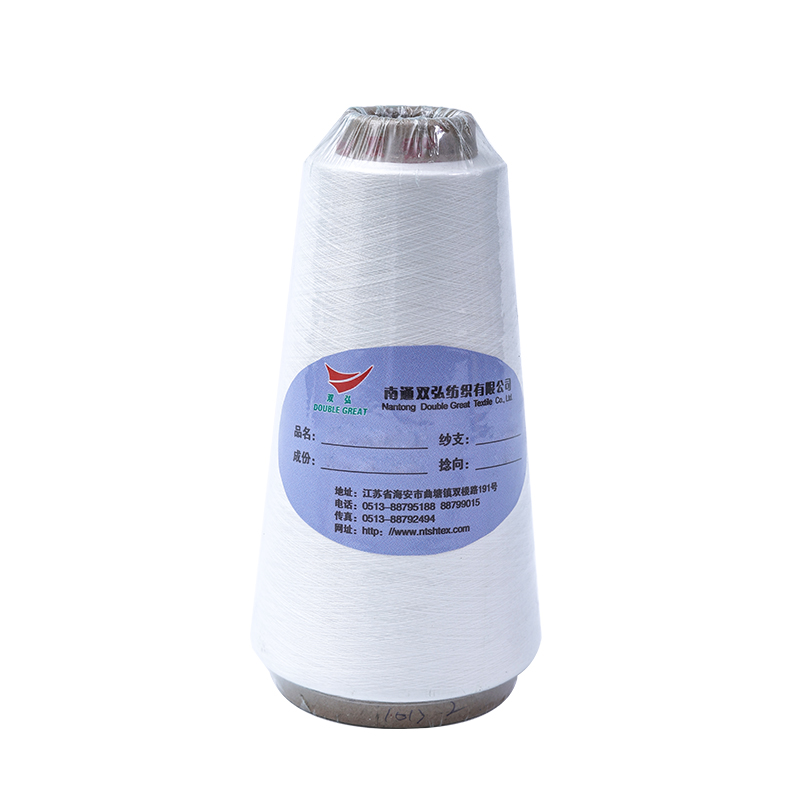 Polyester Blended Yarn for Durable Home TextilesThis versatile yarn offers easy care, wrinkle resistance, and quick drying, making it ideal for curtains, bedding, and upholstery that withstand daily use.View Product →
Home textiles: curtains, bedding, and upholstery
Polyester yarn appears all over the home, often in places where people do not notice it. Curtains made with polyester hold their folds, resist UV damage for longer than natural fibers, and do not mildew in humid rooms. Bedding made from polyester-cotton blends costs less than pure cotton while still feeling smooth, and it dries faster when washed.
Upholstery demands high abrasion resistance and dimensional stability. A polyester-viscose blend is a common choice for sofa fabrics because the viscose adds a soft, expensive touch while the polyester keeps the weave tight and prevents bagging. Table linens, placemats, and decorative cushions also benefit from polyester yarn because colors stay bright through repeated washing.
For hotels, medical facilities, and rental properties, polyester-rich fabrics are practical because they resist shrinking, hold color well, and require less ironing. This is not a compromise on looks; it is a decision about maintenance cost. When you compare fabric performance over two years, polyester-rich home textiles often outperform many natural-fiber options in durability and appearance retention.
Bags, accessories, and structured goods
Tote bags, backpacks, luggage shells, webbing straps, and woven labels all rely on polyester yarn because it behaves predictably under weight. A cotton strap might soften after washing; a cheap polypropylene strap might creep; a good polyester strap keeps its length and thickness.
For woven bags, the yarn should have high tenacity and controlled elongation. If the elongation is too high, the bag will deform when loaded. If the twist is too low, the yarn will split during weaving. If the fiber is coarse and uneven, the surface will look rough and dye poorly. These are not cosmetic issues; they affect whether a strap can hold a 20 kg load without snapping.
Market shoppers, cosmetic bags, pet carriers, and even laminated tarpaulins are common finished goods made from polyester yarn. The same base yarn can be adapted with different twist multipliers and finishes: a water-repellent finish for outdoor bags, an antifungal finish for bathroom storage, or a softener finish for a laptop sleeve.
Industrial and functional textiles
At the industrial end of the scale, polyester yarn is valued for repeatable strength and resistance to chemicals, UV, and abrasion. Firefighter inner liners, high-visibility vests, automotive seat covers, conveyor belts, filter media, and safety nets all use polyester yarn in different forms.
One important product is flame-retardant polyester yarn. Standard polyester melts at around 250 °C, but flame-retardant variants are modified with additives that suppress combustion and reduce dripping. This makes them suitable for protective clothing, curtains in public buildings, aircraft textiles, and upholstery with higher safety standards. The recycled version of this yarn adds an environmental angle without losing the protective function.
Industrial buyers should request test certificates for each yarn lot, including breaking strength, elongation, shrinkage, and flame-retardant performance. The yarn count and twist should also be matched to the final fabric construction. A filter fabric, for example, needs a dense, uniform structure to trap fine particles. The same yarn used for a safety net would need higher tenacity and better UV stability.
 Flame Retardant Recycled Polyester Yarn with CertificationsInherently flame-retardant and GRS-certified, this recycled yarn meets safety standards for contract textiles and protective wear, ensuring long-term reliability.View Product →
Crochet, knitting, and handcraft projects
Polyester yarn has a strong presence in the craft market because it is affordable, bright, and easy to maintain. It is commonly used for amigurumi, blankets, hats, scarves, market bags, pillow covers, coasters, and soft toys.
The hand of the yarn matters more in these projects than in industrial weaving. A single-plied polyester can feel rough; a well-twisted multi-ply yarn feels firmer, resists splitting, and produces neater stitches. If you are crocheting a bag, you want a tighter twist to hold the shape. If you are making a baby blanket, you want a soft, lower-twist yarn that drapes and does not scratch the skin.
Polyester blends are also common in craft yarn. A cotton-polyester blend gives the crispness of cotton with less shrinking and faster drying. A polyester-viscose blend gives a soft sheen that flatters scarves and shawls. When choosing a handcraft yarn, think about the project structure: structured items need harder yarn, while draped items need softer yarn.
Blend ratios and what they change
Many products are not made from 100% polyester yarn. Blending changes the hand, strength, moisture behavior, dyeing result, and cost. The most common blend ratios are well established, but their behavior varies depending on fiber quality and spinning settings.
| Blend ratio | Main benefit | Typical fabric use |
|---|---|---|
| 65% polyester / 35% cotton | Good balance of strength, easy care, dyeability | Shirts, uniforms, bed linen, workwear |
| 50% polyester / 50% cotton | Balanced comfort and durability | T-shirts, sweatshirts, towels |
| CVC 60% cotton / 40% polyester | Cotton-rich feel with better shape retention | Polo shirts, knit tops, casual wear |
| 65% polyester / 35% viscose | Soft drape and subtle luster | Dresses, linings, fashion blouses |
| Polyester-wool | Warmth, resilience, lower cost than pure wool | Jackets, suiting, knitwear |
| 100% polyester | Dimensional stability, moisture resistance | Sportswear, bags, industrial textiles |
The same blend ratio can feel different from one supplier to another. For example, a 65/35 T/C yarn made from fully combed cotton will feel smoother than one made from carded cotton. A yarn with higher twist will be firmer; a lower twist will be loftier. Always request a reference sample and compare it with the actual production lot.
What to specify before ordering polyester yarn
If you are sourcing yarn for a new product, the yarn count is only the beginning. To avoid failures later, ask for a full specification sheet that covers the following points.
- Yarn count or linear density: Ne 20/1, Ne 30/1, Ne 40/1, or the equivalent metric number in tex/denier.
- Tenacity: measured in cN/dtex or g/den. High-tenacity grades usually range from 5.5 to 7.0 cN/dtex for 100% polyester spun yarn.
- Elongation at break: should match the intended weaving or knitting machine tension.
- Twist per inch or twist multiplier: determines hardness, pilling resistance, and fabric hand.
- Evenness (CV%): a high CV% creates thick and thin places, barre, and uneven dyeing.
- Pilling rating: look for pilling performance above 3-4 on the ICI scale for normal garments.
- Shrinkage: boiled-water shrinkage should be low enough for the end use.
- Color fastness: check light, rubbing, laundering, and perspiration fastness before production.
- Fiber content and origin: especially important for recycled polyester claims.
- Lot-to-lot consistency: same specification across batches is essential for repeat orders.
These values are not just laboratory numbers. A 10% difference in elongation can decide whether a fabric survives needle punching or tears during framing. A poorly controlled twist can cause spirality in knitted fabric. A high CV% can cause horizontal stripe patterns in dyed garments. The most expensive mistake is discovering these problems after pieces have been cut and sewn.
Quality risks that show up only later
Polyester yarn can look acceptable on a cone but create problems in fabric form. Understanding these risks helps buyers ask the right questions before placing a larger order.
Barre and horizontal streaks
Uneven yarn tension or poor lot blending causes visible stripes in dyed fabric. The solution is a consistent CV% and even package winding.
Pilling
Low-twist, short-fiber, or low-tenacity polyester pills on the garment surface. A high-twist or low-pill polyester grade reduces this risk.
Color inconsistency
Recycled polyester can absorb dye slightly differently depending on the source material. A single source and strict lot control help maintain shade.
Shrinkage after washing
Unrelaxed polyester yarn can shrink 5% or more after first wash. Heat setting and relaxed winding are necessary to stabilize the yarn.
A transparent textile factory will test every yarn lot and keep batch records. It will also tell you where the yarn may fail so that you can adjust your fabric construction before mass production.
Sustainable products made from recycled polyester yarn
Recycled polyester yarn has moved from a niche option to a standard choice for brands that want to reduce carbon footprint. It is made by melting plastic waste, re-polymerizing it, and extruding new fibers. The best recycled yarns are produced under controlled conditions so that the filament strength and dye uniformity are close to virgin polyester.
Recycled polyester is used in jackets, bags, upholstery, and even denim. It performs like regular polyester in most applications, with one caveat: color consistency can be more difficult from batch to batch because the source flakes vary. Buyers should ask for a larger reference sample and reserve a shade range before committing to a large cutting order.
Recycled polyester also supports circularity when combined with other sustainable fibers. For example, a recycled polyester-viscose blend can offer softness and a lower environmental impact than virgin synthetic fiber alone. If your project requires recycled content, check that the yarn supplier can provide the relevant recycling certificate and traceability documents.
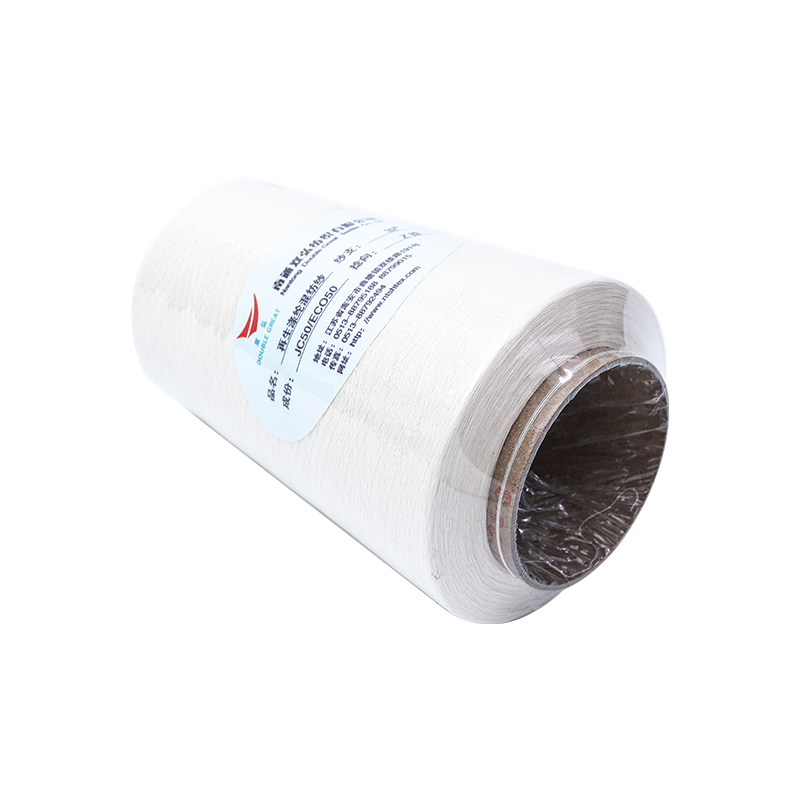 Recycled Polyester Blended Yarn for Sustainable ComfortBlending recycled polyester with cotton or viscose, this yarn enhances breathability and softness while reducing waste, suitable for apparel and bedding.View Product →
Why manufacturer experience changes yarn performance
Yarn is a semi-finished product. Two yarns with the same nominal count can behave completely differently because of spinning equipment, fiber preparation, humidity control, and quality testing. That is why the experience of the spinning mill matters as much as the raw material price.
A serious polyester yarn manufacturer controls the environment in the spinning workshop, especially temperature and humidity, because static electricity affects fiber alignment and yarn hairiness. It also uses testing instruments to monitor every stage: carding, drawing, roving, spinning, and winding. Regular testing of strength, evenness, twist, and foreign fibers prevents problems from reaching the customer.
One independent indicator of this capability is USTER certification. Another is a CNAS-accredited laboratory, which means the mill can issue test reports with internationally recognized accuracy. We have both in our own factory, and we use them to check every lot before shipment. When a customer tells us what they are making, we can adjust the yarn specification to fit the machine and end use rather than sending a generic product.
Frequently asked questions
What are some things I can make with polyester yarn?
Polyester yarn can be used for apparel, home textiles, bags, accessories, industrial textiles, toys, and craft projects. Common finished products include t-shirts, sportswear, uniforms, curtains, upholstery fabric, backpacks, tote bags, workwear, filter fabrics, and amigurumi.
Is 100% polyester yarn good for clothing?
Yes, when the yarn is engineered for the garment. 100% polyester yarn offers good strength, quick drying, low shrinkage, and colorfastness. It is especially suitable for sportswear, rainwear, and garments that need to hold their shape after washing.
Why does polyester yarn pill?
Pilling happens when short or loose fibers are rubbed into small balls on the fabric surface. It is not unique to polyester. Low-twist yarn, poor fiber quality, or harsh fabric finishing can increase pilling. Choosing a high-twist, long-fiber, or low-pill polyester yarn reduces the problem significantly.
Can polyester yarn be used for baby blankets?
Yes. Many baby blankets are made from polyester or polyester blends because they are easy to wash, dry quickly, and do not trigger wool allergies. Use a soft, machine-washable yarn with a smooth surface and avoid rough textures that could irritate sensitive skin.
What is the difference between 65/35 polyester-cotton and 50/50 polyester-cotton?
A 65/35 blend has more polyester, giving it stronger wrinkle resistance, durability, and shape retention. A 50/50 blend feels more cotton-like and breathable. The right choice depends on whether the priority is cotton comfort or easy care and performance.
Is recycled polyester yarn as strong as virgin polyester yarn?
In most cases, a well-made recycled polyester yarn has strength close to virgin polyester, especially when it is produced from consistent, high-quality waste streams. The main difference is usually batch-to-batch color consistency, not physical strength.
What should I look for in polyester yarn for crochet?
Choose a yarn with balanced twist and a smooth surface so the stitches stay defined and the yarn does not split. For bags and baskets, select a firmer, high-twist yarn. For blankets and scarves, choose a softer ply with good drape.
When you know what you want to make, the next step is to compare yarn suppliers on measurable details: raw material, count, twist, strength, evenness, pilling performance, and lot control. Polyester yarn is a dependable material, but only when the person producing it understands how it will be used. If you are planning a new product or need help translating a finished item into a yarn specification, contact our technical sales team and we will help you match the yarn to the real production conditions.