 English
 русский
 Español
Understanding the Versatility of Cotton Blend Yarn
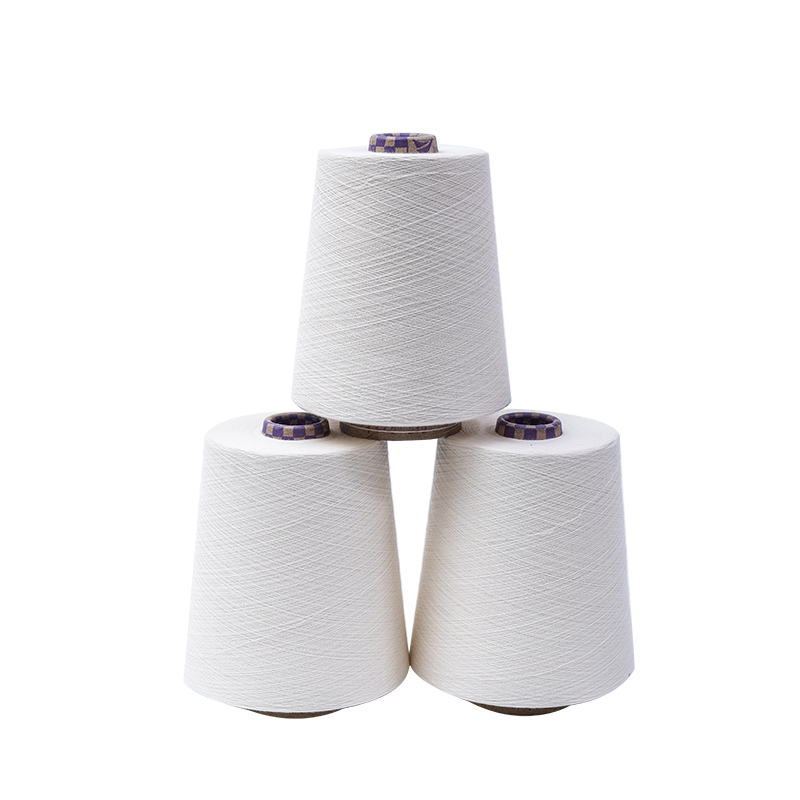
In the modern textile industry, cotton blend yarn has become a cornerstone material for balancing comfort with high-level performance. As a textile material created by blending natural cotton fibers with other fibers—such as polyester, spandex, acrylic, or viscose—in specific ratios, it retains the skin-friendly and breathable attributes of cotton while overcoming inherent weaknesses like wrinkling, shrinkage, and poor abrasion resistance.
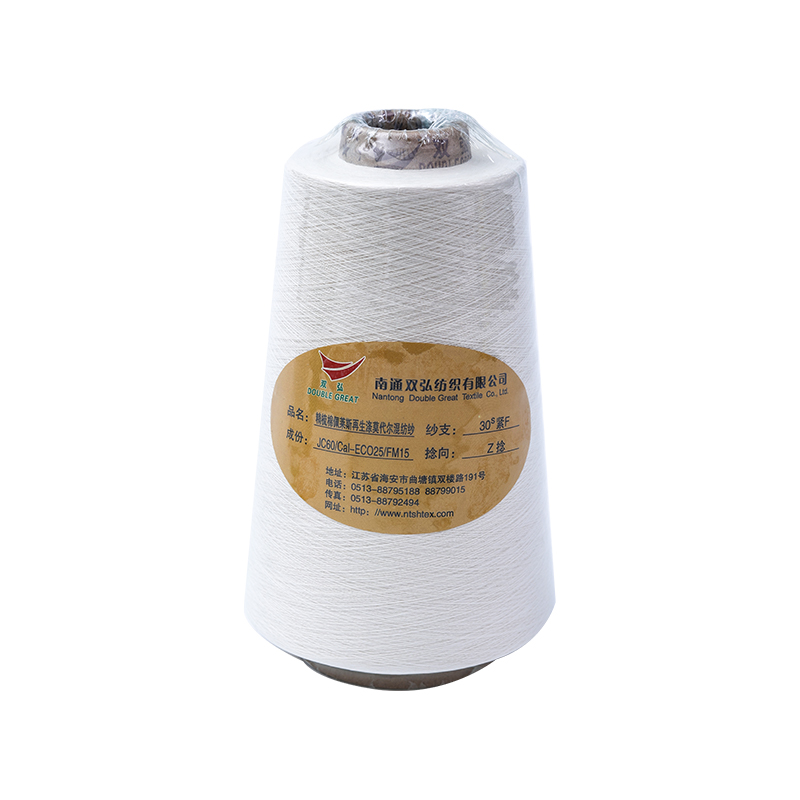
This evolution has given rise to the professional concept of Cotton Functionality Guard Yarn. This is not merely a stack of different fibers; rather, it is a specialized yarn where a "functional shield" is integrated into the yarn during the spinning process through physical or chemical modification. The core value of this yarn lies in its ability to significantly enhance fabric strength, dimensional stability, and protective attributes while maintaining the natural touch of cotton fibers.
For global manufacturers, choosing cotton blend yarns, particularly those utilizing Cotton Functionality Guard Yarn technology, means the ability to produce high-end products that adapt to complex environments while maintaining a cost advantage.
Physical Characteristics and Material Composition
The physical properties of cotton blend yarn depend on the composition ratio and the processing technology used. By introducing different companion fibers, the performance of the yarn changes significantly.
Comparison of Common Ratios and Parameters
| Yarn Type | Typical Blend Ratio | Tensile Strength | Moisture Wicking | Wrinkle Resistance | Typical Applications |
| CVC (Chief Value Cotton) | 60% Cotton / 40% Poly | High | Medium | Excellent | Brand T-shirts, Uniforms |
| TC (Tetoron Cotton) | 35% Cotton / 65% Poly | Very High | Low | Superior | Industrial Workwear, Sheets |
| Cotton Spandex | 95% Cotton / 5% Spandex | Medium | Low | Average | Underwear, Activewear |
| Cotton Functionality Guard Yarn | Enhanced Functional Blend | Exceptional | Dynamic Balance | Permanent Memory | High-performance Gear |
The Science of the "Guard" Factor
The superiority of Cotton Functionality Guard Yarn over conventional blends lies in its protective structure. During the fiber aggregation stage, this yarn uses core-reinforcement technology where synthetic fibers tightly wrap or support the cotton fibers.
Anti-Pilling Property: While regular blends tend to fuzz after friction, Cotton Functionality Guard Yarn increases fiber cohesion, significantly improving the anti-pilling grade.
Moisture Management: The yarn utilizes capillary action to quickly conduct moisture from the skin to the fabric surface, while the cotton core maintains the necessary micro-environment humidity for the skin.
What is Cotton Blend Yarn Good For? (Key Applications)
Due to its excellent physical performance, the applications for cotton blend yarn are extremely diverse.
Performance Apparel
Sports and outdoor clothing require materials that are breathable like cotton but quick-drying like synthetics. Athletic shirts made with Cotton Functionality Guard Yarn do not become heavy or cling to the skin after heavy sweating; the internal functional fibers maintain the garment's structure.
Home Textiles & Decor
In curtains, sofa covers, and high-frequency bedding, durability is the primary consideration. Cotton blend yarns resist fiber degradation caused by UV rays. Home textile products processed with Cotton Functionality Guard Yarn technology maintain color saturation and surface flatness even after dozens of industrial washes.
Industrial & Safety Gear
This is the core domain where Cotton Functionality Guard Yarn showcases its strength. Industrial workwear must handle mechanical wear, high temperatures, and chemical splashes. The abrasion resistance parameters of this functional yarn are typically several times higher than regular cotton, while still providing essential wearer comfort.
Seasonal Fashion
Summer: Lightweight cotton-viscose blends use the thermal conductivity of Cotton Functionality Guard Yarn to provide a cool touch.
Winter: Blends of cotton with acrylic or wool utilize the loftiness of functional yarn to trap air, achieving lightweight warmth.
The Comparative Advantage: Cotton Blend vs. Pure Cotton
To clearly demonstrate the benefits of Cotton Functionality Guard Yarn, we examine deep comparisons across several dimensions.
Parameter Comparison: Pure Cotton vs. Enhanced Cotton Blend
| Performance Metric | 100% Pure Cotton Yarn | Cotton Functionality Guard Yarn |
| Shrinkage Rate | 5% - 8% (High) | Less than 2% (Stable) |
| Wrinkle Recovery | 60 - 80 degrees (Easy to wrinkle) | 120 - 150 degrees (Non-iron) |
| Abrasion Resistance | 10,000 - 15,000 rubs | More than 40,000 rubs |
| Drying Speed | Slow (Prone to mildew) | Fast (Anti-bacterial) |
Shape Retention: Pure cotton garments easily deform at the elbows and knees. Cotton Functionality Guard Yarn has an excellent elastic recovery rate, ensuring the garment keeps its shape over time.
Color Fastness: While pure cotton fades after multiple washes, the functional fibers in the blend lock dye molecules more securely.
Manufacturing Excellence: The Role of Cotton Functionality Guard Yarn
From a manufacturing perspective, Cotton Functionality Guard Yarn represents a precision production standard.
Spinning Techniques: Utilizing Siro-spinning or Compact Siro-spinning technology, the protective fibers are twisted with combed cotton. This structure results in minimal hairiness and an extremely smooth hand-feel.
Tensile Strength: On high-speed industrial knitting machines, yarn breakage directly impacts efficiency. Because of the functional reinforcement components, the breaking work of this yarn is significantly increased, supporting more complex fabric designs.
Quality Consistency: Every batch of Cotton Functionality Guard Yarn undergoes strict physical parameter testing to ensure no color deviation or strength fluctuations occur during large-scale production.
User Experience: Breathability Meets Durability
Users of products containing Cotton Functionality Guard Yarn can perceive the benefits of technical innovation in daily life.
Thermal Regulation: This yarn senses environmental temperature changes. In hot conditions, it accelerates evaporation to remove heat; in cold conditions, its dense fiber structure effectively blocks cold air penetration.
Long-term Protection: Many consumers complain about clothes being "ruined after a few washes." The mission of Cotton Functionality Guard Yarn is to extend the product lifecycle by locking fibers at the microscopic level to prevent loss due to mechanical washing.
Maintenance and Care Instructions
While cotton blend yarn is extremely durable, proper care ensures that the features of Cotton Functionality Guard Yarn perform at their peak.
Temperature Control: Washing in warm water (not exceeding 40 degrees Celsius) is recommended. Excessive heat may damage the functional fibers within the blend.
Avoid Strong Spin-Drying: Rely on the quick-drying nature of the yarn; light spin-drying is sufficient.
Separate Colors: Despite high color fastness, it is still advisable to avoid washing with dark, rough fabrics to protect the natural brightness of the cotton fibers.
FAQ:
Q1: Is Cotton Functionality Guard Yarn a chemical treatment or a physical blend?
A: It is usually a combination of both. Physically, it uses composite spinning technology, while the fiber surface may undergo functional coating or molecular chain modification to achieve the "Guard" effect.
Q2: Why is blend yarn sometimes more expensive than pure cotton?
A: High-quality blends like Cotton Functionality Guard Yarn involve expensive synthetic fibers and complex spinning equipment. The durability and multi-functionality (such as flame retardancy, anti-bacterial properties, and extreme wear resistance) far exceed what pure cotton can provide.
Q3: Is this yarn friendly to those with sensitive skin?
A: Yes. The core design of Cotton Functionality Guard Yarn ensures that natural cotton touches the skin. The functional components are either encased in the core or distributed evenly, which actually improves comfort by reducing skin irritation caused by trapped sweat.
Q4: How can I identify high-quality cotton blend clothing?
A: Observe the fabric's recovery. Squeeze the fabric tightly and release; if the wrinkles disappear quickly and the hand-feel remains warm like cotton, it likely utilizes a premium blend yarn with protective functions.
Knowledge Hub: What is "Yarn Count"?
Yarn count is a measure of the thickness of the yarn. The higher the count (e.g., 60s, 80s), the finer the yarn and the lighter and more delicate the fabric. Cotton Functionality Guard Yarn in high counts can achieve the thinness of silk while maintaining the strength of industrial workwear, making it a favorite in the high-end garment market.