 English
 русский
 Español
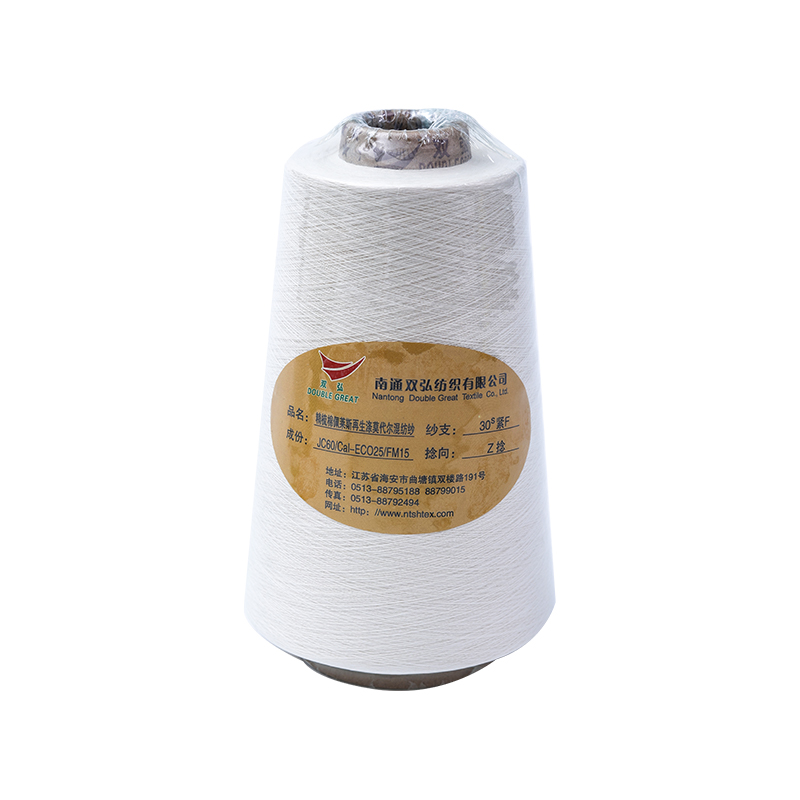
Cotton Bioregeneration: From Regenerative Agriculture to High-Performance Yarn
In the modern textile industry, Cotton Bioregeneration Yarn is more than just an eco-friendly slogan; it represents a deep integration of fiber physical performance and ecological restoration technology. To understand why this yarn is highly regarded in the high-end market, one must first deconstruct its core source: raw cotton produced under Regenerative Agriculture.
Core Definition and Ecological Logic
Regenerative cotton is not simply "recycled cotton." It originates from a farming model centered on restoring soil health, increasing biodiversity, and capturing atmospheric carbon emissions. Cotton grown under this model experiences a different developmental environment compared to conventional field cotton. By reducing tillage, using cover crops, and managing natural fertility, cotton plants develop deeper, more robust root systems, which directly affects the nutrient supply to the fibers.
Quality Advantages of Bioregeneration Yarn
Is the quality of regenerative cotton truly superior? The answer is yes, and it outperforms conventional cotton across multiple physical dimensions.
Fiber Length (Staple Length): Because the growth period experiences less water and pest stress, regenerative cotton tends to produce a higher proportion of long-staple fibers. This means that during the spinning process, the cohesion between fibers is stronger.
Breaking Strength: Research indicates that cotton fibers grown in healthy soil have more uniform cellulose deposition, making Cotton Bioregeneration Yarn less likely to break under high-intensity tension.
Natural Oil Content: Regenerative cotton retains a moderate amount of natural cotton wax, giving the yarn a naturally "moist" feel rather than the dry, brittle touch of conventional industrial cotton.
Key Parameter Comparison: Regenerative vs. Conventional vs. Recycled
To visually demonstrate the performance level of Cotton Bioregeneration Yarn, the following is an experimental parameter comparison based on standard 32s single yarn:
| Physical Performance Index | Regenerative Cotton Yarn | Conventional Cotton Yarn | Physically Recycled Cotton Yarn |
| Average Fiber Length (mm) | 29.5 - 31.0 | 27.0 - 28.5 | 22.0 - 25.0 |
| Breaking Strength (cN/tex) | 24.5 - 26.0 | 22.0 - 23.5 | 18.0 - 20.5 |
| Evenness (CV%) | Low (Smoother) | Medium | High (Prone to slubs) |
| Carbon Footprint (kg CO2e/kg) | Negative or near zero | 2.5 - 4.0 | 0.5 - 1.2 |
| Moisture Regain (%) | 8.5% | 8.0% | 7.5% |
Why is "Bioregeneration" Synonymous with High Performance?
The production of bioregeneration yarn emphasizes closed-loop processing. During the transformation of raw cotton into yarn, bio-enzyme technology (Bio-treatment) is used to replace harsh chemical desizing and bleaching. This process maximizes the protection of the fiber's cuticle, ensuring that the resulting Cotton Bioregeneration Yarn possesses excellent skin-friendliness and long-lasting durability.
Scientific Principles and Physical Transformation of Mercerization
After understanding the high-quality raw material base of Cotton Bioregeneration Yarn, it is essential to discuss a key technology in cotton yarn processing: Mercerization. This is a process that fundamentally changes the microscopic structure of cotton fibers through synergistic chemical and physical actions.
The Essence of Mercerization: Fiber Swelling under Strong Alkali
Mercerization typically involves immersing cotton yarn or fabric under tension in a high-concentration sodium hydroxide (NaOH) solution. At the molecular level, the cellulose undergoes intense physicochemical reactions:
Morphological Change: Cotton fibers are naturally flat and ribbon-like. Under the action of the alkali, the fibers swell violently, and the cross-section changes from flat to circular.
Crystal Type Transformation: The arrangement of cellulose molecules changes. The hydrogen bonds between molecules are rearranged, making the structure more compact and orderly.
Surface Smoothness: The natural spiral twist of the fiber is flattened under tension, making the surface as smooth as a mirror.
The Leap in Performance: Why Perform Mercerization?
Cotton Bioregeneration Yarn or ordinary cotton yarn treated with mercerization gains physical characteristics incomparable to traditional cotton:
Silk-like Luster: Due to the cylindrical shape and surface smoothness, light reflection creates a sophisticated, soft luster similar to silk.
Strength Enhancement: Although the alkali treatment seems harsh, the orientation of the fiber molecules increases, usually improving single yarn strength by 15% - 25%.
Significantly Higher Dye Yield: Due to the change in crystal structure, dye molecules enter the fiber more easily. At the same dye concentration, mercerized cotton appears deeper and more saturated.
Technical Index Comparison: Mercerized vs. Ordinary Cotton Yarn
| Performance Index | Ordinary Cotton Yarn | Mercerized Cotton Yarn | Performance Change |
| Luster Index | Low, matte appearance | High, silk-like texture | Increased 70% - 100% |
| Breaking Strength (cN) | Baseline (e.g., 22.0) | 26.5 - 28.0 | Over 20% increase |
| Hygroscopicity | 1.0 (Baseline) | 1.25 - 1.35 | Improved absorption |
| Dimensional Stability | High (approx. 5%-8%) | Very low (usually < 3%) | Significantly improved |
| Fiber Diameter (um) | 18 - 22 | 22 - 26 | Fibers become thicker |
Process Branches: Mercerization vs. Liquid Ammonia
Modern Cotton Bioregeneration Yarn increasingly utilizes Liquid Ammonia Mercerization technologies. Traditional mercerization focuses on luster and strength but can sometimes result in a stiff hand-feel. Liquid ammonia treatment achieves the mercerized effect while providing the yarn with excellent wrinkle resistance and extremely soft resilience.
Limitations of Mercerized Cotton: Performance Trade-offs
Despite the superior luster and color performance mercerization brings to Cotton Bioregeneration Yarn, it also introduces several limitations.
Main Disadvantages of Mercerized Cotton
Decreased Water Absorption Rate: While it absorbs dye better, the capillary effect changes after fiber swelling. Compared to natural cotton, mercerized cotton has a slower instantaneous absorption speed for moisture like sweat.
Increased Rigidity: The process makes fibers rounder and more tightly packed, sacrificing the original fluffiness and elasticity of cotton. Finished products often feel stiffer than ordinary cotton.
Environmental Burden: Mercerization consumes large amounts of NaOH and rinsing water. Even with modern recovery systems, the carbon footprint is significantly higher than untreated bioregeneration yarn.
Sensitivity to Washing Temperature: Mercerized cotton can lose its luster or develop uneven spots if washed at high temperatures.
Yarn Comparison: Ordinary Cotton vs. Mercerized Cotton
When choosing Cotton Bioregeneration Yarn, whether to undergo mercerization is the key factor in determining the final garment style.
Core Difference Parameter Table
| Dimension | Standard Regenerative Yarn | Mercerized Regenerative Yarn |
| Visual Texture | Matte, natural, slight fuzz | High luster, silk-like |
| Dye Depth | Baseline 100% | 125% - 130% |
| Tactile Feel | Warm, fluffy, soft | Cool, smooth, crisp |
| Pilling Resistance | Medium | High |
| Post-wash Stability | Risk of shrinkage | Excellent stability |
| Application Fields | T-shirts, baby products | Business polos, knit skirts |
Anti-Pilling Yarn: Marketing Gimmick or Real Value?
Pilling is the most frustrating issue for cotton users. For Cotton Bioregeneration Yarn pursuing long-term value, anti-pilling performance is a core measure of durability.
Why Choose Anti-Pilling Yarn?
Pilling occurs when short fibers escape the yarn due to friction and tangle into small balls. Anti-pilling yarns solve this through physical singeing (burning off surface fuzz), compact spinning (using airflow to tuck fiber ends tightly), and bio-polishing (using enzymes to remove microscopic fuzz).
Value Assessment: Is It Worth It?
For high-friction areas like underarms and cuffs, anti-pilling yarn significantly extends the visual life of a garment by 2-3 times. In Martindale Pilling Tests, ordinary cotton yarn usually reaches grade 2-3 after 2000 rubs, while treated bioregeneration yarn can reach Grade 4 or higher. If the product positioning is Slow Fashion, anti-pilling treatment is a worthy premium investment.
Technical Science & User FAQ
Q1: Are Regenerative Cotton and Recycled Cotton the same thing?
No. Recycled cotton is made by shredding old clothes; the fiber length is severely damaged. Cotton Bioregeneration Yarn comes from farming models that restore the ecosystem; it consists of intact, high-quality virgin fibers that often outperform ordinary raw cotton.
Q2: Will the luster of mercerized cotton disappear after several washes?
If the process is up to standard and cold water washing is followed, the luster is permanent because it results from a physical change in the fiber molecular structure. However, high-temperature drying can damage the light-reflecting surface.
Q3: Does anti-pilling treatment affect breathability?
Essentially, no. Physical singeing or bio-polishing only removes redundant surface fibers and does not affect the microporous structure inside the fibers, maintaining cotton excellent breathability.
Q4: Why is Bioregeneration Yarn usually more expensive?
It includes the ecological costs of soil restoration, stricter non-chemical pest management, and the use of high-end spinning processes like compact spinning. It is an investment in future environmental health and long-term quality.