 English
 русский
 Español

Antibacterial, Cooling and UV-Protective Yarns: Match the Function to the Failure Mode
The fastest way to choose a functional yarn is to name the failure mode first. Antibacterial yarns address odor, bacterial growth and hygiene claims. Cooling yarns address heat buildup and the first-minute contact feel against skin. UV-protective yarns address transmission of UVA and UVB radiation through fabric. These are three different performance targets, and they are verified with three different test methods. A yarn that performs well in one category will not automatically perform in another, even when all three are sold under the same “functional yarn” label.
For a mill or brand team, the practical decision is not “which function is best.” It is “which function is claimed, how will it be tested, and what happens after five or ten wash cycles.” A 99% antibacterial result on a new swatch has limited value if the finish washes out before the garment reaches the consumer. A cool-to-touch Qmax value has limited value if the fabric is heavy, tight and poorly ventilated. A UPF 50+ label has limited value if the fabric loses protection when stretched or wet. The table below gives a working comparison before the deeper sections.
| Function | What it solves | Common validation | Main sourcing risk |
|---|---|---|---|
| Antibacterial | Odor, bacterial growth, hygiene-sensitive applications | AATCC 100, ISO 20743, JIS L 1902, with wash cycles | Surface finish washes off; broad claims exceed test data |
| Cooling | Contact heat, stuffy feel, warm-climate comfort | Qmax contact coolness, air permeability, moisture management | Cooling effect is confused with light weight or slick hand |
| UV-protective | UVA and UVB transmission through fabric | AS/NZS 4399, AATCC 183, GB/T 18830, UPF and UVA transmittance | UPF drops after stretching, wetting or washing |
The comparison also shows why a single “functional” label is too broad for product development. Antibacterial performance is usually a biological test. Cooling performance is a physical test of heat transfer and air movement. UV protection is an optical test of radiation transmission. When a specification sheet mixes these into one claim, ask for the original test report, the fabric state tested, and the wash treatment applied before testing.
Antibacterial Yarns: Durable Fiber Function Beats a Temporary Surface Finish
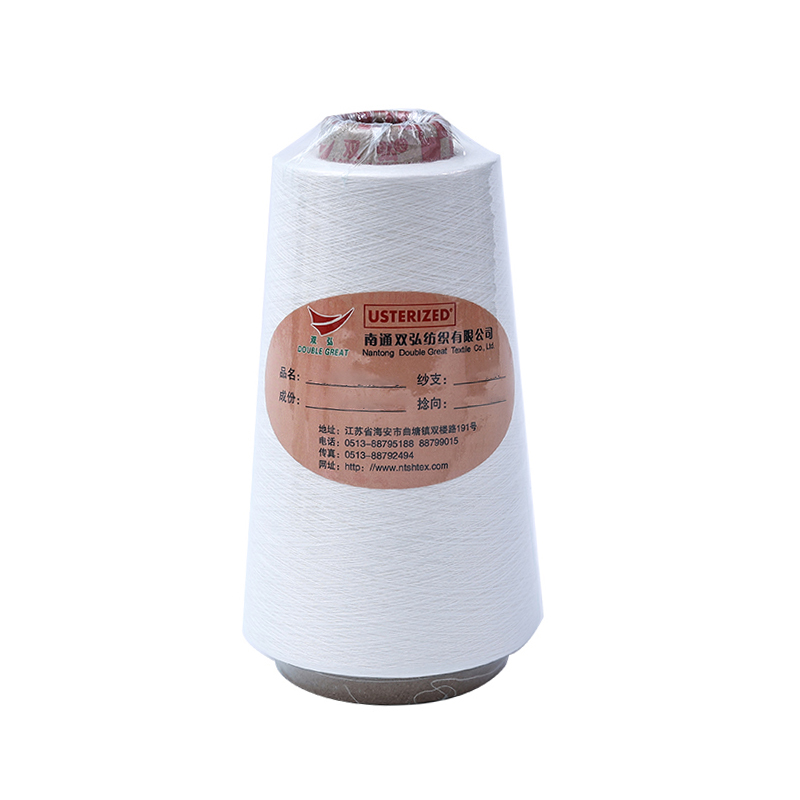 Antibacterial Polyester-Modal Blended Yarn for Functional TextilesBlended yarn combines flame-retardant polyester with antibacterial modal for soft, moisture-absorbent fabrics suited to applications requiring flame retardancy, comfort, durability and hygienic performance.View Product →
Antibacterial yarns are often described as if the function were a single additive. In practice, there are two commercial routes. One route applies an antimicrobial finish to the yarn or fabric surface. The other incorporates the active function into the fiber during polymer or fiber production. Both can produce a valid test result, but they behave differently after washing, abrasion and dyeing. A surface finish may give a strong initial result and then decline quickly. A fiber-based function usually has a slower and more stable release profile, but it can still be affected by dyeing temperature, pH and finishing chemicals.
For textile programs, the useful question is whether the antibacterial function is intended for odor control, hygiene-sensitive textiles or a regulated medical application. Odor control in sportswear and underwear is a different claim from antibacterial protection in a hospital textile. The test method should match the claim. AATCC 100 is a quantitative suspension test often used for antibacterial finishes. ISO 20743 covers antibacterial activity on textile products and includes different absorption methods. JIS L 1902 is widely used in Asian supply chains. None of these tests replaces a wash durability protocol. Ask for results after 5, 10 or 20 home launderings, depending on the end use.
Check the active route
Ask whether the function is in the fiber, added at spinning, or applied at finishing. Each route has a different wash profile and a different risk of shade or hand change.
Test the fabric, not only the yarn
Dyeing, heat setting and softeners can change antibacterial activity. The final fabric state is the only state that supports a garment claim.
Separate odor from hygiene
Odor control can be supported by antibacterial testing, but hygiene claims need a tighter specification and a clear end-use justification.
Our functional guard range includes antibacterial polyester-modal and antibacterial viscose options. The polyester-modal route is often selected where a dry hand, dimensional stability and a soft touch are needed. The viscose route is selected where moisture absorption and a cooler, more breathable hand are priorities. Neither route should be specified by name alone. The blend ratio, yarn count, twist and finishing route determine whether the antibacterial claim survives the garment process.
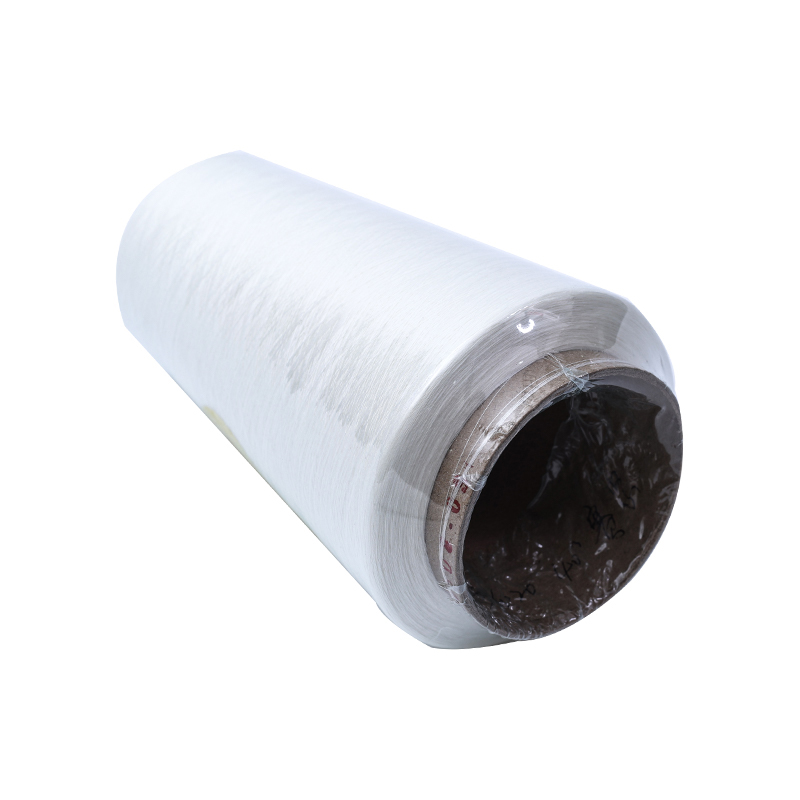 Antibacterial Viscose Yarn for Hygienic Breathable TextilesFiber-embedded antimicrobial viscose retains breathability, moisture wicking and softness for medical, activewear, intimate apparel and home furnishing programs needing durable hygienic performance.View Product →
Three purchasing risks deserve attention. First, a supplier may present an antibacterial test on loose fiber rather than on dyed fabric. Second, the test may report a high reduction rate without stating the contact time, inoculum or washing condition. Third, the antibacterial agent may affect color fastness, yellowing or skin comfort. A practical release specification should include the test method, the fabric state, the wash cycles and the acceptance threshold. For many apparel programs, a reduction rate of at least 90% after the agreed wash cycles is a starting point, but the exact threshold must follow the brand’s claim and the destination market.
What to put in an antibacterial yarn specification
- Fiber composition and blend ratio, with tolerances for the functional component.
- Yarn count, twist direction, twist multiplier and minimum breaking strength.
- Antibacterial test method, test organism, contact time and wash cycles before testing.
- Acceptance threshold for bacterial reduction, stated as a percentage and tied to the claim.
- Color fastness, pH, formaldehyde and skin-contact safety requirements for the target market.
- Hand feel, whiteness or shade tolerance after dyeing, because some antibacterial routes shift tone.
Antibacterial yarns are most convincing when the function is treated as a quality attribute with a test trail, not as a marketing word. A supplier that can show the fiber route, the dyeing tolerance and the wash-durability data is easier to audit than one that only provides a single certificate.
Cooling Yarns: Qmax, Airflow and Moisture Movement Work Together
Cooling yarns are frequently judged by a single number: Qmax. That number describes the maximum heat flux when skin contacts the fabric, so it is useful for the first-touch cool feeling. It does not describe long-term comfort. A fabric can feel cool for two seconds and then become clammy if moisture cannot move away. For a reliable cooling claim, evaluate three things together: contact coolness, air permeability and moisture management. The yarn structure affects all three through fiber cross-section, crimp, twist and fabric cover factor.
The chart is illustrative, not a specification. Actual Qmax depends on fabric weight, thickness, surface structure and test conditions. In many contact-coolness standards, a Qmax value around 0.15 J/(cm²·s) or higher is used as a practical threshold for a cool-to-touch claim. That threshold is only meaningful when the test method, fabric state and conditioning are stated. A value measured on a loose knitted swatch cannot be compared directly with a value measured on a tightly woven finished fabric.
Cooling yarn selection usually comes down to four commercial options. Modified polyester with an engineered cross-section can improve capillary action and give a dry, cool hand. Viscose or modal blends can improve moisture absorption but may reduce quick-dry performance. Nylon can add strength and a smooth touch, but it can also increase heat retention if the fabric structure is too dense. Cotton can be comfortable but generally has lower Qmax than engineered polyester. The right choice depends on whether the garment is for a hot indoor environment, outdoor sport, sleepwear or a uniform that must be worn for a full shift.
Sport and activewear
Prioritize moisture spreading, quick dry and a stable Qmax after washing. Avoid heavy plaited structures that trap air near the skin.
Warm-climate uniforms
Balance cooling feel with opacity and durability. A very open structure cools well but may fail tear strength or UV requirements.
Sleepwear and underwear
Use cooling as a supporting attribute. Softness, skin neutrality and wash stability usually matter more than a high single-point Qmax.
Cooling claims also carry a common confusion risk: the consumer expects the garment to lower body temperature. Contact coolness is a sensory effect, not air conditioning. The specification should use precise language, such as “cool-to-touch” or “ moisture-wicking with cool contact,” and support it with the relevant test. If the product also makes a UV claim, check the fabric cover factor because a more open cooling structure can reduce UV protection. This interaction is one reason functional yarn programs should be evaluated at fabric level rather than yarn level alone.
For development work, start with a small matrix: one base yarn, two cooling variants and one control. Knit or weave the same structure, dye to the same shade, and test Qmax, air permeability, moisture management and dimensional stability after washing. That matrix will show whether the cooling effect comes from the yarn or from the fabric structure. It will also reveal whether the cooling variant changes hand, pilling or strength. More detail on the functional yarn range is available on the functional guard yarn series page.
UV-Protective Yarns: UPF Is a Fabric Property, Not a Yarn Badge
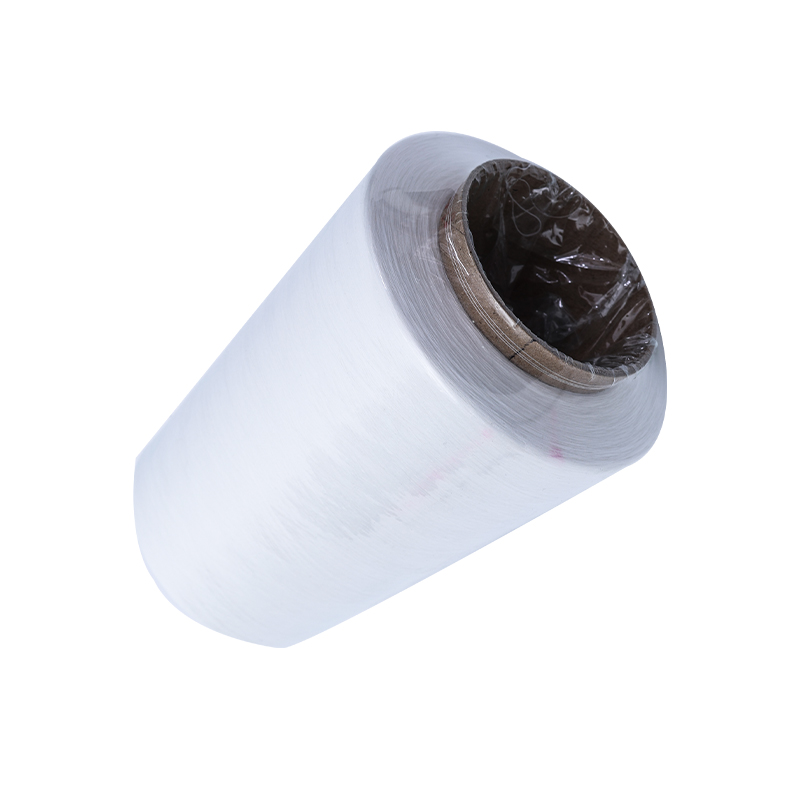 Reclaimed UV-Resistant Cationic Cotton Blend YarnRecycled polyester and combed cotton blend with fiber-built UV blocking and cationic dyeing for sustainable sun-protective activewear, childrenswear and resort apparel.View Product →
UV-protective yarns are often specified with a UPF target, but UPF is measured on fabric. The yarn contributes through fiber type, delustering, color, blend ratio and the ability to form a dense, uniform cover. The fabric contributes through thickness, porosity, cover factor, stretch and moisture content. A UPF 50+ result on a greige laboratory sample does not guarantee UPF 50+ on a finished, washed, stretched garment. The test standard matters as well. AS/NZS 4399, AATCC 183 and GB/T 18830 use related but not identical procedures. For a global program, state the standard, the fabric state and the acceptance criteria in the specification.
Three practical points are often missed. First, UV protection usually increases with fabric cover factor and thickness, but both can conflict with cooling. Second, dark shades generally absorb more UV radiation than pale shades, but color alone is not a reliable design tool. Third, stretching and wetting can open the structure and reduce UPF. For swimwear, summer knits and lightweight outdoor fabrics, test the stretched and wet state if the end use requires it. For workwear and childrenswear, test after the agreed wash cycles and check UVA transmittance as well as UPF.
The curve above is illustrative and is not a product specification. It shows why a single initial UPF value is not enough. A fabric can start with a high UPF and lose protection as the structure relaxes, the surface fuzzes or a finishing effect washes away. The opposite can also happen: some fabrics tighten after washing and show higher UPF. The only safe approach is to test the finished fabric in the state that the consumer will use.
UV-protective yarn options often use cationic cotton blends, modified polyester, or fiber blends that help form a stable, dense fabric with acceptable hand. Cationic cotton can improve dye uptake and color depth, which supports UV absorption, but it also changes dyeing behavior and shade reproducibility. A supplier should be able to explain the dyeing route and the shade tolerance, not just the UPF target.
UV specification checklist
- State the test standard and the fabric state: dry, wet, stretched, after 5 or 10 washes.
- Require both UPF and UVA transmittance, because a high UPF can still allow too much UVA.
- Set a minimum cover factor or air permeability range to prevent an overly open structure.
- Check shade reproducibility and color fastness, especially for cationic cotton blends.
- Confirm that the UV claim remains valid after the garment’s actual finishing and laundering route.
For programs that combine UV protection with cooling, expect a trade-off. A dense fabric protects better but may ventilate less. A very open fabric feels cooler but may need a higher cover factor or a UV-absorbing fiber to reach the target. Resolve this conflict at the fabric development stage, not after the bulk order is placed.
Combining Antibacterial, Cooling and UV Functions Without Creating a New Problem
Combination fabrics are possible, but they need a priority order. If the primary claim is UV protection, the fabric structure must be dense enough to meet UPF, and the cooling effect may have to come from fiber cross-section and moisture management rather than from openness. If the primary claim is cooling, the fabric may need a more open structure, which can reduce UV protection. If the primary claim is antibacterial, the finishing route must be compatible with the cooling finish and the UV absorber. Some softeners and wetting agents can block antibacterial activity or reduce UV performance. Some cationic dyes and finishes can shift the hand and the shade.
| Combination | Likely benefit | First interaction to verify | Useful end use |
|---|---|---|---|
| Antibacterial plus cooling | Odor control with a cool contact feel | Whether the antibacterial finish changes moisture spreading or hand | Sportswear, underwear, summer knits |
| Cooling plus UV protection | Comfort in sun-exposed outdoor use | Cover factor versus air permeability and UPF after stretching | Outdoor shirts, hats, lightweight uniforms |
| Antibacterial plus UV protection | Hygiene and sun protection in one fabric | Finish compatibility and wash durability of both functions | Workwear, childrenswear, travel textiles |
| All three functions | Multi-claim performance | Test sequence and whether one finish blocks another | Premium outdoor, uniform and travel programs |
A practical development sequence is to build the fabric structure first, then the color, then the functional finishes. Test the base fabric for strength, pilling, shrinkage and hand. Add the cooling route and retest. Add the antibacterial route and retest. Add the UV requirement and retest in the finished state. This sequence costs more in the sample stage, but it prevents a common failure mode in which each function passes individually and the combination fails after finishing.
Define the primary claim
One claim should lead the product story. Secondary claims should support it without forcing the fabric structure in opposite directions.
Fix the test sequence
Test the finished fabric after the real wash and drying route. A function that only survives the lab is not a commercial function.
Protect the hand
Functional finishes can make a fabric stiff, slick or harsh. Hand feel is a specification item, not an afterthought.
From Spinning to Bulk: Where Functional Yarn Quality Is Won or Lost
Functional yarn performance is often discussed at the chemical level, but many failures begin in spinning. Blend ratio variation changes the functional component percentage. Uneven twist changes cover factor and air permeability. High hairiness changes surface friction and can hold finishes unevenly. Weak places increase breaks in knitting or weaving and create shade bands after dyeing. For a functional program, the spinning specification should include the same quality parameters as a conventional yarn, plus the functional component tolerance.
Useful mill-side controls include incoming fiber verification, blend ratio monitoring, count and twist checks, tensile strength, evenness, hairiness and foreign fiber inspection. For antibacterial and UV programs, retain a sample from each lot and test the finished fabric at a defined frequency. If the functional component is a small percentage of the blend, a small weighing error can become a large performance variation. The tolerance should be tight enough to protect the claim but realistic enough for production. A common approach is to set the functional component tolerance by weight and verify it through laboratory extraction or a validated supplier method.
Our mill works with USTER laboratory equipment and a CNAS-accredited central laboratory, and the quality system is built around fiber-to-yarn traceability. That matters for functional yarns because a test report is only useful when it can be linked to a specific lot, blend and process route. More background on the company and its quality infrastructure is available on the about page.
| Control point | What to record | Why it matters |
|---|---|---|
| Fiber lot | Supplier, lot number, functional fiber declaration | Links performance to raw material traceability |
| Blend ratio | Weighed percentage, tolerance, verification method | Small deviations can change the claim |
| Yarn evenness | Count CV, thick and thin places, hairiness | Affects cover, hand and finish uniformity |
| Twist | Twist per meter, direction, tolerance | Changes air permeability and contact feel |
| Strength | Breaking strength and elongation | Reduces breaks and shade bands in downstream processing |
| Finished fabric test | Method, wash cycles, test state, result | Supports the final consumer claim |
Bulk production also exposes the difference between a laboratory sample and a commercial lot. Dyeing machines, water quality, drying tension and finishing temperature can all shift functional performance. For that reason, the approved bulk standard should include a retained fabric swatch, the test report and a clear reorder specification. When a repeat order is placed, the mill should be able to reproduce the same functional route without renegotiating the test method.
Purchasing Specification: What to Ask Before a Sample Is Made
A functional yarn inquiry becomes much easier to quote when the specification separates aesthetic requirements from performance requirements. A supplier needs to know the end use, the fabric structure, the target function, the test standard and the acceptable cost position. A request that only says “antibacterial cooling UV yarn” leaves too many variables open. The supplier may choose a route that meets one claim and compromises another. The list below is a practical brief for the first sample.
- End use: sportswear, underwear, workwear, outdoor, home textile or another application.
- Fabric structure: single jersey, rib, interlock, woven, nonwoven or laminated.
- Function priority: antibacterial, cooling, UV protection, or a defined combination.
- Test standard and target: for example, AATCC 100 after 10 washes, Qmax at a stated fabric weight, or UPF 50+ after 5 washes.
- Fiber composition and blend ratio, including the functional component tolerance.
- Yarn count, twist, strength and hairiness requirements.
- Color fastness, pH, formaldehyde and restricted substance requirements for the destination market.
- Hand feel, whiteness, shade tolerance and shrinkage after washing.
- Sample quantity, lead time and the test report package required for approval.
Two commercial risks are worth naming. The first is a claim that is broader than the test. “Antibacterial” can mean many things, and “UV-protective” can be stated without a UPF value. The second is a specification that ignores the fabric state. A test on greige fabric, a test on a loose swatch and a test on a finished garment are not interchangeable. A clear purchasing brief protects both sides from a late-stage dispute.
Ask for the test state
Dry, wet, stretched or washed changes the result. The test report should say which state was tested and how many cycles were applied.
Ask for the failure data
A supplier that can explain where a functional yarn loses performance is usually more reliable than one that only shares the best result.
Ask for the reorder route
The functional component, blend ratio and finishing route should be documented so a repeat lot can be matched without guesswork.
FAQ: Functional Yarn Selection and Verification
Is antibacterial yarn the same as odor-resistant yarn?
Not exactly. Odor resistance is a consumer benefit, while antibacterial performance is a test result against specified organisms. An antibacterial yarn can support an odor-control claim, but the claim should be worded carefully and backed by a test that reflects the fabric’s real wash history. If the product is intended for hygiene-sensitive use, the specification should be tighter than for general apparel.
Can a cooling yarn make fabric feel cold in winter?
A cool-to-touch effect is most noticeable in warm conditions or during activity. In cold conditions, the same fabric may feel neutral or even cool at first contact. The Qmax value describes heat transfer, not comfort in every climate. For year-round products, use cooling as a supporting attribute and balance it with insulation, thickness and moisture management.
Does a higher UPF always mean better UV protection?
UPF is one part of the picture. UVA transmittance also matters, especially for longer-wear outdoor products. A fabric with a high UPF but poor UVA blocking may not meet the intended protection target. Test both values and check the standard used. Also test the fabric after stretching or washing if those conditions apply to the end use.
Can antibacterial, cooling and UV functions be combined in one yarn?
They can be combined, but not by simply adding three labels. The functions interact through fabric structure, finish chemistry and dyeing. A dense UV-protective structure may reduce cooling airflow. A softener used for hand feel may reduce antibacterial activity. Build the fabric in stages and test the combination after the real finishing route.
What is a realistic wash-durability target?
The target depends on the product. For fashion apparel, 5 to 10 home launderings may be enough for a claim. For workwear, uniforms or childrenswear, 20 or more cycles may be more appropriate. The test report should state the wash method, temperature, detergent and drying condition. Without that detail, a wash-durability number is difficult to compare.
Why does the functional component percentage need a tolerance?
Functional performance is often sensitive to the percentage of the active fiber or additive. A small weighing error can change the test result, especially in a low-dose blend. Set a tolerance by weight and verify it with a validated method. The tolerance should be tight enough to protect the claim but practical for normal spinning and blending variation.
Should the test be done on yarn or fabric?
For most consumer claims, test the finished fabric. Yarn testing is useful for incoming control and process monitoring, but it does not capture the effects of knitting, weaving, dyeing, finishing and washing. The fabric state is the state that supports the final product claim.
What is the first sample to request?
Request a small matrix rather than a single swatch: one control yarn, one functional variant and one combination variant, all made into the same fabric structure. Test hand, strength, shrinkage and the intended function. That matrix will show whether the function is robust enough for the next stage and whether the cost position is realistic.