 English
 русский
 Español
When a garment factory procurement manager asks us whether a 65/35 T/C yarn can replace a 50/50 CVC yarn in a knitted polo shirt, the honest answer is: it depends. The two yarns look similar in a cone, but they behave differently in knitting, dyeing, finishing, and finally in the garment that reaches the consumer. This is why cotton and polyester blend yarn should never be treated as a single product. It is a family of yarns where the fiber ratio, spinning method, and process control determine strength, softness, shrinkage, pilling resistance, and dyeing performance.
As a manufacturer that has focused on high-quality yarn for more than 40 years, we have seen the same questions from fabric mills, brand owners, and traders. This guide covers the practical side of cotton-polyester blend yarn: what the blends mean, how they are spun, which quality parameters matter, and how to choose the right yarn for a specific use. If you are evaluating suppliers or planning a new fabric development, the details below can help you ask better questions and avoid costly mistakes.
What Is Cotton and Polyester Blend Yarn?
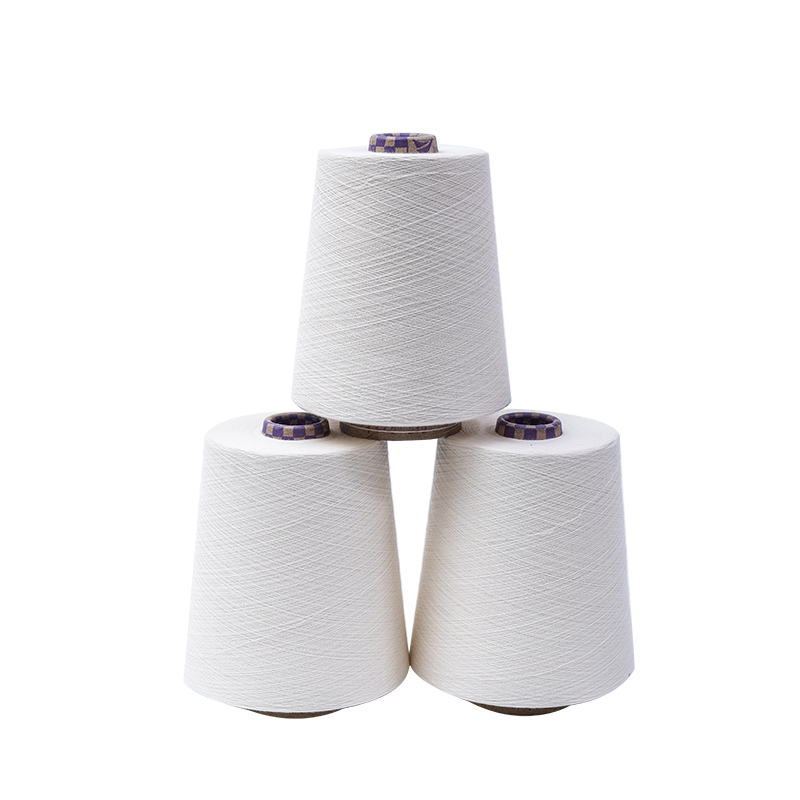
Cotton and polyester blend yarn is a spun yarn made by mixing cotton staple fibers and polyester staple fibers before the spinning process. The two fiber types are opened, cleaned, carded, drawn, and then spun into a single yarn. Because the mix is made at the fiber stage, every centimeter of the yarn contains both cotton and polyester in a homogeneous distribution.
The purpose of blending is to combine the positive attributes of each fiber. Cotton contributes natural softness, moisture absorption, breathability, and a comfortable hand feel. Polyester contributes tensile strength, dimensional stability, wrinkle resistance, abrasion resistance, and faster drying. A well-balanced cotton-polyester yarn can perform better than either 100% cotton or 100% polyester in many woven and knitted applications.
- Cotton side: softness, hygroscopicity, low static, comfortable against the skin.
- Polyester side: strength, resilience, wash-and-wear performance, resistance to stretching and shrinkage.
- Combined effect: a fabric that is easier to care for, more durable in use, and more economical than many single-fiber fabrics.
Why Cotton and Polyester Are Blended
The most common reason for blending cotton with polyester is to create a fabric that balances natural comfort with synthetic performance. But for a manufacturer, the decision is also about process stability and consistent end-use quality. There are four major reasons why acrylic, viscose, and other fibers are often combined with cotton, and the same logic applies to polyester.
- Strength and durability
Polyester fibers have higher breaking strength and elongation than cotton. When blended, the yarn becomes less likely to break during weaving or knitting, and the finished fabric can withstand repeated washing and abrasion. - Shape retention and easy care
Cotton tends to wrinkle and shrink, while polyester helps the fabric return to shape. Blended garments usually need less ironing and keep their dimensions better after washing. - Cost efficiency
Polyester staple fiber is generally less expensive than cotton, depending on the market. Replacing part of the cotton with polyester can reduce raw material cost while maintaining acceptable softness and breathability for many end uses. - Dyeing and finishing versatility
Cotton accepts reactive and direct dyes, while polyester is dyed with disperse dyes. Cotton-polyester blends can be cross-dyed to create heather or melange effects, and the finishing process can include anti-pilling or moisture management treatments.
Common Blend Ratios and What They Mean
In the textile industry, cotton-polyester blends are described by ratios such as “T/C 65/35” or “CVC 60/40.” T/C means the polyester content is higher, while CVC means the cotton content is higher. This is not just a naming convention; it directly affects how the yarn feels, dyes, and wears.
| Ratio | Common Name | Key Characteristics | Typical End Uses |
|---|---|---|---|
| 65/35 Polyester/Cotton | T/C 65/35 | High strength, low shrinkage, crisp hand, strong wrinkle resistance | Shirting, workwear, denim, canvas |
| 55/45 Polyester/Cotton | T/C 55/45 | Balanced comfort and durability, moderate pilling tendency | Outerwear, casual wear, uniforms |
| 50/50 Polyester/Cotton | T/C 50/50 | Equal blend; widely used for knitwear and easy-care fabrics | Polo shirts, t-shirts, home textiles |
| 60/40 Cotton/Polyester | CVC 60/40 | Cotton-dominant feel with improved dimensional stability | Knit sleepwear, ladies’ tops, underwear |
| 80/20 Cotton/Polyester | CVC 80/20 | Natural cotton hand, slight performance enhancement only | Premium knitwear, babywear, medical textiles |
How Cotton-Polyester Blend Yarn Is Spun
The spinning process determines many of the properties that buyers notice later. A high-quality cotton-polyester blend yarn is not simply a matter of mixing fibers together; each stage must be controlled to keep the blend uniform and the yarn even.
- Opening and cleaning: Cotton bales are opened and cleaned to remove trash and short fibers. Polyester staple is opened separately to reduce fiber entanglement.
- Carding: Cotton and polyester are carded on separate lines. Carding aligns the fibers and removes impurities and neps. Cotton often needs combing if a finer, smoother yarn is required.
- Drawing and blending: The carded slivers are drawn and blended on draw frames. The number of draw passages controls the uniformity of the mix and the parallelism of the fibers.
- Roving and spinning: The blended sliver is drafted to the required count and spun on a ring, compact, or rotor spinning frame. Compact spinning reduces hairiness and improves yarn strength.
- Winding: The spun yarn is wound onto cones, and electronic yarn clearers remove objectionable defects. This step also controls the knot density and winding speed.
Because cotton and polyester have different elongation and moisture behavior, the draw frame settings and machine speeds need careful adjustment. A manufacturer that can combine stable cotton quality with consistent polyester staple quality will produce a yarn with fewer thick and thin places, lower hairiness, and better dyeing uniformity. This is where a specialized mill with long experience in polyester blended yarn has a clear advantage.
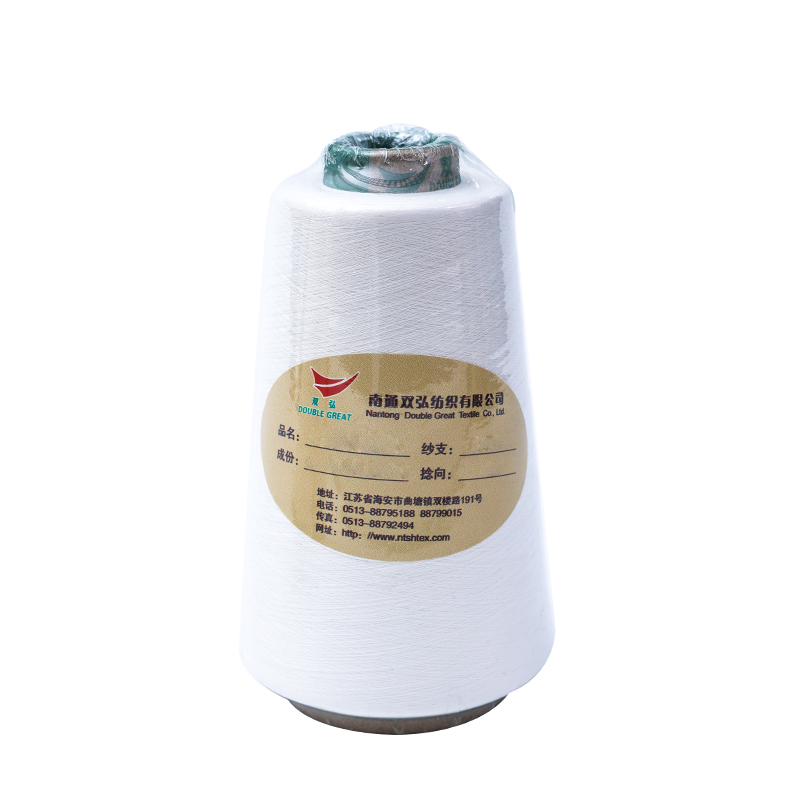
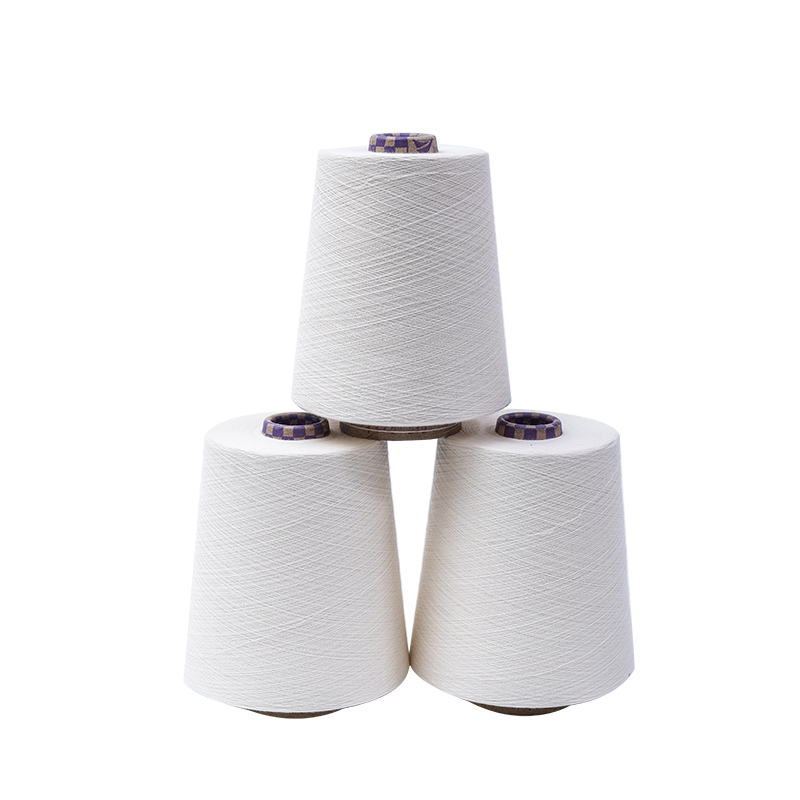 Polyester/Combed Cotton Blended Yarn for Smooth, Durable FabricsThis yarn combines polyester durability with combed cotton softness, offering reduced pilling and improved evenness. It suits fine knitwear, shirting, and high-end apparel where a smoother surface and consistent dyeing are desired.View Product →
For applications where a smoother, finer surface is important—such as fine knitwear or shirting—combed cotton is blended with polyester to reduce protruding fibers. The resulting yarn is more even, higher in strength, and less prone to pilling after repeated washing.
Quality Control: Key Parameters to Check
When buying cotton and polyester blend yarn, a fabric mill should not rely only on sample swatches. The yarn itself must be tested against agreed specifications. The following parameters are commonly used for ring-spun cotton-polyester yarns and typical values for a 32s combed T/C 65/35 yarn are shown for reference.
| Parameter | Unit | Typical Target | Why It Matters |
|---|---|---|---|
| Yarn count | Ne | 32/1 ± 1.5% | Determines fabric weight and cover factor |
| Evenness CV | % | ≤ 11.5 | Lower CV means fewer thick and thin places |
| Strength (single yarn) | cN/tex | ≥ 14 | Avoids breaks in weaving and knitting |
| Elongation | % | 10–13 | Relates to processing behavior and fabric stretch |
| Twist | TPI | 18–22 | Affects hand, strength, and pilling tendency |
| Hairiness H | UT | ≤ 6.0 | Reduces fuzz and improves dyeing appearance |
| Neps (+200%) | /1000m | ≤ 20 | Visible dark specks in dyed fabrics |
In our own laboratory, we use Uster evenness testers and strength testers to monitor every production lot. For a buyer, asking the supplier for a complete test certificate is good practice. The certificate should show count, CV, strength, elongation, twist, and a defect count. If the mill cannot provide these, the yarn may not be consistent enough for your quality standard.
Pilling resistance is another important concern for cotton-polyester blends. Because polyester is stronger than cotton, anchored polyester fibers can hold onto developing fuzz balls. The pilling tendency is affected by twist, hairiness, fiber length, and fabric finish. For a deeper explanation, you can read our technical article on how polyester blended yarns improve durability and comfort. These blended yarns enhance fabric durability in daily wear.
Choosing the Right Yarn for Your Fabric and End Use
There is no single “best” cotton-polyester blend yarn. The right choice depends on the target market, the production equipment, and the final garment price. Here are three common use cases to illustrate how the blend can be adjusted.
- Lightweight knitwear and t-shirts
A CVC 60/40 or 50/50 blend in 24s to 40s count offers a soft cotton touch with good shape recovery. If the brand wants a very smooth surface, combed cotton and compact spinning are preferred. - Workwear and uniforms
A T/C 65/35 blend in 20s to 30s count provides high durability and easy-care performance. Higher twist and a slightly heavier count reduce abrasion and maintain appearance after industrial washing. - Fashion and outerwear
A polyester-viscose-cotton tri-blend, or a 55/45 T/C with low twist, can create a fluid drape and a softer hand. For a more sustainable option, recycled polyester can replace virgin polyester in the same blend structure.
When you send us your specifications, we often recommend a yarn that balances three things: the fiber ratio, the yarn count, and the spinning system. For example, if you need a fabric with a softer drape than a classic cotton-polyester blend, a polyester and viscose blend yarn can be used as a side variation while still maintaining cotton-like comfort. This type of product works well for lined jackets, athletic tops, and knit skirts.
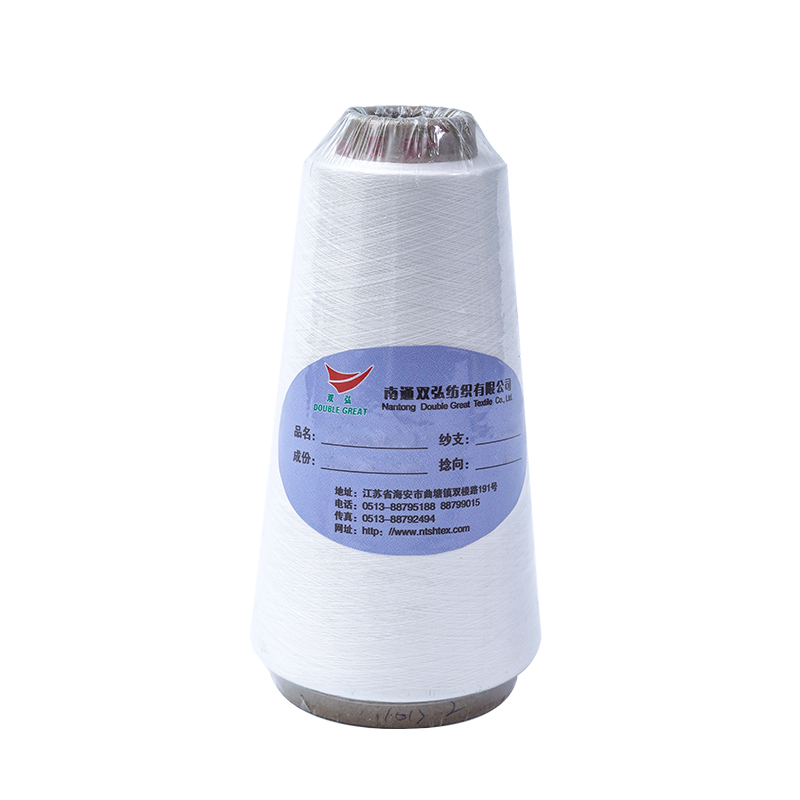
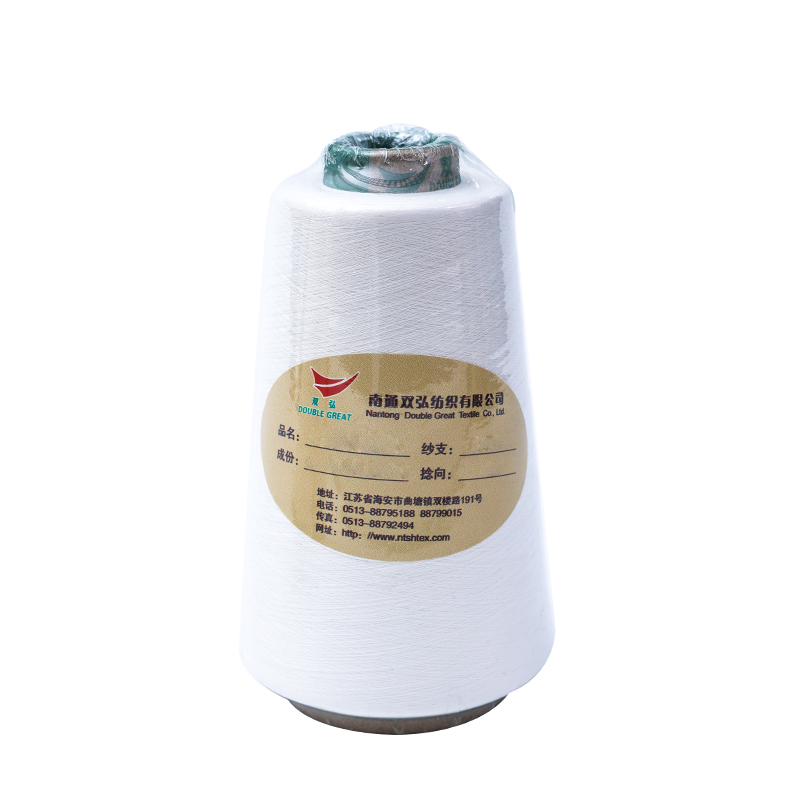 Polyester/Viscose Blended Yarn with Soft Drape and Vibrant ColorsBlending polyester strength with viscose softness and moisture absorption, this yarn provides a softer drape than classic cotton blends. Ideal for lined jackets, athletic tops, and knit skirts, it also supports brighter dyeing results.View Product →
Another common request we receive is for yarns with a brighter, more intense color after dyeing. In this case, the cotton component can be combed to remove short fibers, and the polyester component should be selected with a bright or semi-dull luster depending on the final aesthetic.
Sustainability in Cotton-Polyester Blends
Sustainability is no longer an afterthought for yarn buyers. Many global fashion brands now require recycled polyester in their supply chain, even for basic T/C fabrics. A cotton-polyester blend yarn can be made more environmentally responsible by replacing virgin polyester with post-consumer or post-industrial recycled staple fiber.
Recycled polyester fiber made from PET bottles or pre-consumer waste has a lower carbon footprint than virgin polyester. When blended with cotton, it behaves similarly to virgin polyester in the spinning process, though the raw material consistency must be checked carefully. A reliable supplier will control the intrinsic viscosity, fiber length, and white speck level of the recycled fiber to avoid quality surprises.
Nantong Double Great Textile is listed among the green factories in Jiangsu Province, and we produce recycled polyester blend yarns as part of our regular range. The yarn can be dyed with the same disperse dyes and processed with the same finishing routes as standard T/C yarn. From a performance perspective, recycled polyester blend yarn is becoming a practical choice for brands that want to reduce the environmental impact of their garments without sacrificing durability.
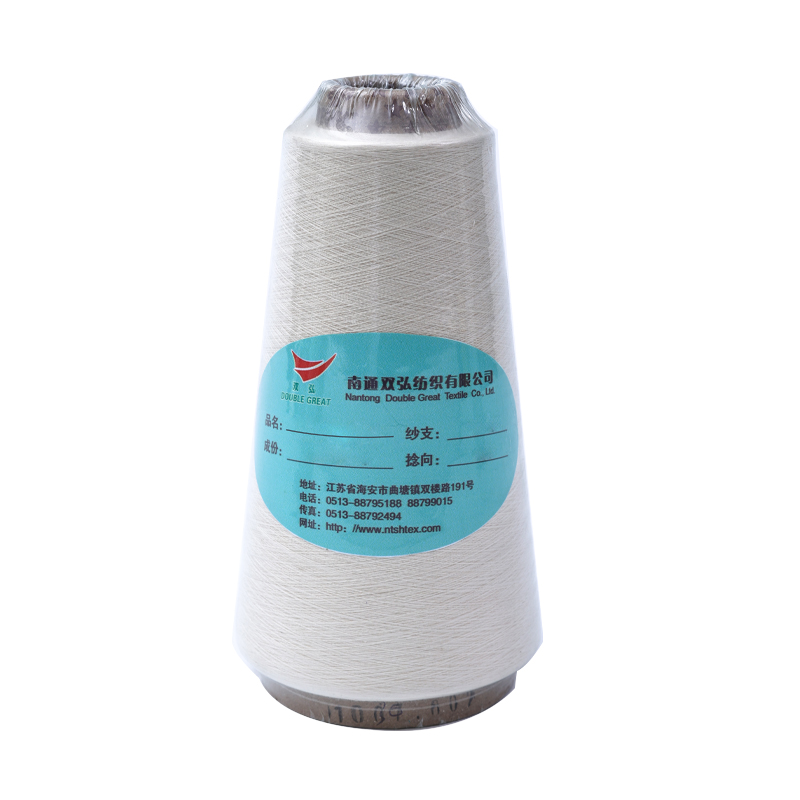
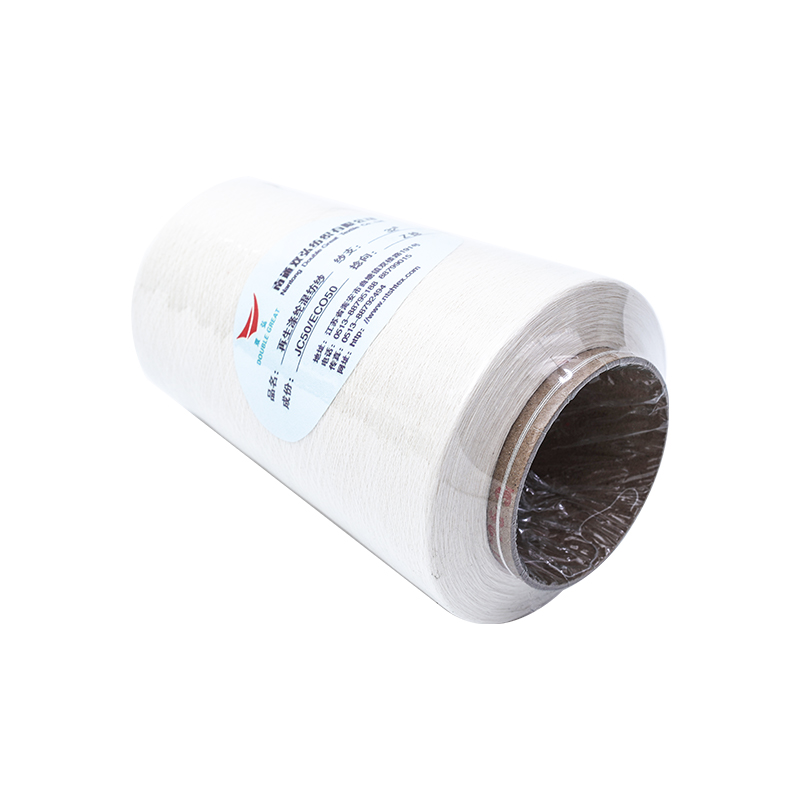 Recycled Polyester Blended Yarn for Sustainable TextilesThis eco-friendly yarn uses recycled polyester combined with cotton or viscose, reducing environmental impact while maintaining durability and color fastness. Suitable for sportswear, casual wear, and home textiles, it supports greener supply chains.View Product →
In addition to the fiber itself, spinning energy efficiency and waste control are part of sustainable manufacturing. Buying from a mill that manages its own spinning waste, cleans its dust emissions, and recycles packaging is an easy way to improve the sustainability profile of your supply chain.
Frequently Asked Questions
Is cotton-polyester blend yarn better than 100% cotton yarn?
It depends on the application. Cotton-polyester blend yarn is stronger, more dimensionally stable, and easier to care for than 100% cotton. However, 100% cotton has a softer, more absorbent feel and breathes more naturally. If the product is a premium baby garment, a high cotton content or 100% cotton may be preferable. If the product needs repeated washing and easy maintenance, a blend is usually the better choice.
What does “T/C 65/35” mean?
T/C refers to a polyester-cotton blend where polyester is the dominant fiber. In T/C 65/35, the yarn contains 65% polyester and 35% cotton. CVC applies when cotton content is higher than 50%, and the naming order is reversed, such as CVC 60/40. The ratio directly influences strength, absorbency, and dyed appearance.
Does cotton-polyester blend yarn shrink?
All yarns made with natural or regenerated fibers can shrink to some degree. Cotton-polyester blend yarn shrinks less than 100% cotton because polyester added to the structure helps the yarn recover its dimensions. The actual shrinkage depends on yarn twist, fabric structure, and finishing. Asking for a shrinkage test before bulk production is advisable.
Can cotton-polyester blend yarn be dyed with reactive dyes?
Cotton absorbs reactive dyes, but polyester requires disperse dyes under high temperature and pressure. A cotton-polyester blend is usually dyed with a one-bath or two-bath process using both reactive and disperse dyes. The dyeing result can vary with the blend ratio and the quality of the yarn surface. A higher cotton content generally produces a richer shade with reactive dyes.
How can I reduce pilling in cotton-polyester fabric?
Pilling in cotton-polyester blends is influenced by fiber length, twist, yarn hairiness, and fabric finishing. Choosing combed cotton and compact-spun yarn reduces surface hair. A slightly higher twist also improves pilling resistance. After weaving or knitting, singeing and bio-polishing can further reduce pilling on the fabric surface.
Cotton and polyester blend yarn remains one of the most practical raw materials in the textile industry. From classic T/C shirting to recycled-polyester knitwear, the key is to define your fabric requirements clearly and select a supplier who understands both fiber behavior and process control. The ratio is only the starting point; the real difference comes from how the yarn is spun, tested, and managed in production.
If you are developing a new fabric or evaluating yarn suppliers, send us your required count, blend ratio, and end-use performance needs. Our technical team can recommend a yarn that will perform well in your process and in your customers’ hands.
Please feel free to contact our team with your specifications for a detailed recommendation and sample testing.