Home / News & Media / Industry News / What Is Polyester Fiber Yarn and How Do You Choose the Right Type

News

What Is Polyester Fiber Yarn and How Do You Choose the Right Type

Polyester Yarn Technical Guide

How Is Polyester Fiber Yarn Selected for Different Textile Uses?

polyester fiber yarn is used in apparel, home textiles, sewing threads, decorative fabrics, industrial materials and blended yarn systems. Its actual performance depends on whether the yarn is made from continuous filaments, spun staple fibers, textured filaments or a polyester-acrylic blend.

Understanding yarn construction, strength, elongation, shrinkage, surface texture and dyeing behavior helps textile manufacturers select a specification that performs consistently during knitting, weaving, finishing and end-product use.

Key Selection Factors

Yarn Structure Staple spun, filament, textured or blended
Linear Density Count, denier or dtex matched to fabric weight
Mechanical Performance Strength, elongation, abrasion and dimensional stability
Processing Requirement Knitting, weaving, sewing, dyeing or heat setting
Direct answer

What is polyester yarn?

Polyester yarn is a textile yarn produced from polyester polymers, commonly polyethylene terephthalate. The polymer is melted, extruded through spinnerets and cooled into fibers. These fibers may remain continuous as filament yarn or be cut into shorter lengths before being spun into staple yarn.

The term does not describe one fixed product. It covers smooth filament yarn, low-elasticity textured yarn, high-tenacity yarn, spun polyester yarn and blended constructions developed for different fabric surfaces and mechanical requirements.

01

How Chemical Fiber Polyester Yarn Is Manufactured

Production control determines yarn consistency before weaving or knitting begins.

1

Polymer Preparation

Polyester raw material is dried to control moisture before melting. Excess moisture may reduce polymer stability and affect filament strength.

2

Melt Spinning

Molten polymer passes through spinneret holes to form individual filaments. Spinneret design influences filament diameter and cross-sectional shape.

3

Cooling and Drawing

Fresh filaments are cooled and stretched. Drawing aligns the molecular structure and improves strength, dimensional stability and elongation control.

4

Yarn Formation

Filaments can be wound directly, textured for bulk, twisted for stability or cut into staple fibers for spinning.

Why is it called chemical fiber polyester yarn?

The expression chemical fiber polyester yarn identifies polyester as a manufactured fiber rather than a naturally grown fiber. Its fiber dimensions, strength, luster, color and shrinkage can be engineered during production. This controllability makes chemical fiber polyester yarn suitable for repeatable textile processing and standardized product ranges.

02

Difference Between Polyester Staple Fiber Polyester Filament Yarn

Fiber length changes the appearance, hand feel and processing behavior of the yarn.

Comparison Point Polyester Staple Fiber Yarn Polyester Filament Yarn
Fiber form Made from short polyester fibers that are carded, drawn and spun Made from continuous polyester filaments
Surface appearance Softer visual effect with controlled hairiness Smooth, clean and generally more lustrous
Hand feel Can resemble cotton or wool depending on fiber fineness and spinning method Can feel silky, crisp or technical depending on filament size and texturing
Yarn uniformity Influenced by fiber length, carding and spinning consistency Usually provides high linear-density uniformity
Hairiness Normally higher because fiber ends appear on the yarn surface Normally lower because the filaments are continuous
Strength Suitable for general apparel and home-textile requirements Usually offers higher strength at a comparable yarn size
Pilling tendency Requires control through fiber selection, twist and finishing Less surface hairiness, although fine fabrics may be sensitive to snagging
Typical uses T-shirts, sweaters, bedding, workwear, sewing yarn and blended fabrics Sportswear, linings, curtains, narrow fabrics, bags and industrial textiles

Choose staple fiber yarn when

A Natural-Looking Surface Is Required

Polyester staple fiber yarn is suitable when the fabric needs a softer, less reflective appearance. It can be adjusted through fiber length, yarn count, twist and spinning technology to produce cotton-like or wool-like characteristics.

Choose filament yarn when

Uniformity and Strength Are Priorities

Polyester filament yarn is appropriate for smooth surfaces, higher tensile performance, reduced hairiness and stable high-speed processing. Textured filament variants can add bulk and elasticity without changing the continuous-filament structure.

03

Common Types of Polyester Fiber Yarn

Product names should be connected to measurable yarn properties.

01

Spun Polyester Yarn

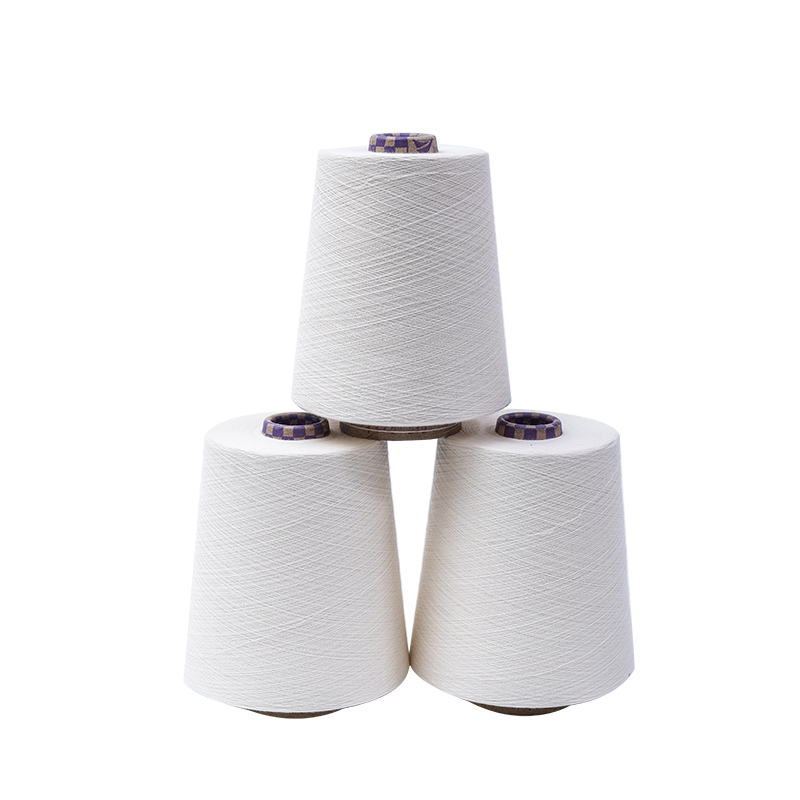
Produced from polyester staple fibers. It offers a textile surface with controlled hairiness and is widely used in knitted garments, woven fabrics, sewing applications and home textiles.

Main characteristicSoft, versatile and cotton-like
Important parametersCount, twist, hairiness and breaking strength
02

Fully Drawn Filament Yarn

A smooth and dimensionally stable filament yarn used where fabric regularity, surface clarity and consistent tensile properties are required.

Main characteristicSmooth surface and stable elongation
Important parametersDenier, filament count, shrinkage and intermingling
03

Draw Textured Polyester Yarn

Texturing introduces crimp and bulk into continuous filaments. The resulting yarn can improve fabric coverage, softness, thermal insulation and stretch recovery.

Main characteristicBulked structure with controlled elasticity
Important parametersCrimp, elongation, interlace and dyeing uniformity
04

High-Tenacity Polyester Yarn

Designed for applications requiring greater load resistance and dimensional control. It is used in technical fabrics, webbing, reinforcement structures and heavy-duty sewing threads.

Main characteristicHigh strength and fatigue resistance
Important parametersTenacity, elongation, thermal shrinkage and twist

04

Is 100% Polyester Fiber Good?

A 100% polyester construction can be a suitable choice when the finished product requires abrasion resistance, easy washing, quick drying, crease resistance and stable dimensions. The percentage alone does not determine quality. Yarn fineness, filament structure, spinning consistency, fabric density and finishing technology remain equally important.

Suitable for sports fabrics

Fine filaments, textured structures and moisture-management finishes can help move perspiration across the fabric surface.

Suitable for workwear

Polyester yarn provides abrasion resistance, shape retention and reduced care requirements for frequently washed garments.

Suitable for home textiles

Dimensional stability and color consistency support curtains, bedding, upholstery fabrics and decorative materials.

Suitable for technical textiles

High-tenacity and low-shrinkage specifications support industrial applications requiring controlled mechanical properties.

05

What Are the Disadvantages of Polyester Yarn?

The disadvantages depend on yarn construction, fabric design and use conditions.

01

Low Natural Moisture Absorption

Standard polyester absorbs less moisture than many natural and regenerated fibers. A tightly constructed fabric may feel less comfortable in hot conditions unless yarn cross-section, fabric porosity or moisture-management treatment is optimized.

02

Static Electricity in Dry Environments

Low moisture content can increase static accumulation during spinning, weaving and wearing. Controlled humidity, suitable spin finishes, antistatic treatments or conductive fiber blends can reduce this effect.

03

Heat Sensitivity

Polyester is thermoplastic. Excessive temperatures may cause shrinkage, glazing, deformation or melting. Heat-setting temperatures and end-use exposure should be evaluated before confirming the yarn specification.

04

Pilling or Snagging Risk

Staple yarn fabrics may pill when strong fibers hold loose surface fibers in place. Fine filament fabrics may snag on rough surfaces. Twist, fabric structure, singeing, shearing and finishing methods influence the final result.

05

Special Dyeing Conditions

Conventional polyester is commonly dyed with disperse dyes under controlled temperature and pressure. Poor temperature control or inadequate cleaning may lead to uneven color, surface deposits or insufficient colorfastness.

06

Does Polyester Yarn Have Plastic in It?

Polyester yarn is a fiber form of a synthetic polymer rather than yarn coated with loose plastic.

Polyester fibers and many polyester plastic products belong to the same broad polymer family. In yarn manufacturing, polyester polymer is melted and converted into extremely fine filaments. The material is then drawn, textured, twisted or cut into staple fibers.

It is therefore accurate to describe polyester yarn as a synthetic polymer fiber. It is not accurate to assume that separate plastic fragments are simply mixed into an ordinary textile yarn.

Virgin and Recycled Polyester

Polyester yarn may be produced from virgin polymer chips or suitably processed recycled polyester material. Recycled content does not automatically indicate the yarn's mechanical performance. Strength, elongation, color variation, contamination control and shrinkage still require testing.

07

Festival Mix Fiber Yarn Polyester Acrylic Applications

Blending polyester and acrylic can balance stability, bulk and wool-like softness.

The search phrase festival mix fiber yarn polyester acrylic commonly refers to decorative, multicolor or special-effect yarns made by combining polyester and acrylic fibers. These yarns may use mélange spinning, colored fibers, slub effects, multiple plies or controlled color intervals to create a distinctive knitted or woven surface.

Polyester contributes strength, abrasion resistance and shape retention. Acrylic contributes bulk, warmth and a soft wool-like hand. The final behavior changes with the blend ratio, fiber fineness, spinning method, twist and dyeing process.

How Blend Ratio Changes Performance

Higher polyester content

Greater dimensional stability, durability and reduced deformation

Balanced blend

Combination of strength, bulk, softness and decorative appearance

Higher acrylic content

Warmer, fuller and more wool-like surface characteristics

Knitted Accessories

Multicolor polyester-acrylic yarn can be used for hats, scarves, gloves and decorative knitwear requiring visible texture and color variation.

Sweaters and Cardigans

Controlled blends provide warmth and bulk while improving dimensional stability during repeated wearing and washing.

Blankets and Throws

Bulky yarn structures create surface coverage and thermal insulation for soft home-textile products.

Decorative Textile Products

Mélange, slub and multi-ply effects can produce visually distinctive fabrics for seasonal and decorative collections.

08

Polyester Yarn Specification Checklist

A complete inquiry should identify measurable requirements rather than only a general yarn name.

Basic Yarn Information

  • Staple, filament, textured or blended construction
  • Yarn count, denier or dtex
  • Number of filaments or fiber fineness
  • Single yarn, plied yarn or cabled structure
  • Twist level and twist direction
  • Raw white, dope dyed or package dyed condition

Performance Requirements

  • Breaking strength and tenacity
  • Breaking elongation
  • Boiling-water or dry-heat shrinkage
  • Evenness and variation control
  • Hairiness and pilling performance
  • Colorfastness and batch color consistency

Processing Information

  • Knitting, weaving, sewing or technical use
  • Machine type and production speed
  • Target fabric weight and construction
  • Dyeing and finishing temperature
  • Required package form and package weight
  • Special antistatic or low-shrinkage treatment

09

How to Match Polyester Fiber Yarn to the End Product

The same polymer can produce very different results through yarn engineering.

End Product Recommended Yarn Direction Properties to Confirm
Lightweight sportswear Fine-denier textured or functional filament yarn Moisture transport, stretch, dyeing uniformity and softness
Casual knitted tops Spun polyester or polyester blended staple yarn Hand feel, pilling grade, hairiness and dimensional stability
Linings and smooth woven fabrics Fully drawn polyester filament yarn Surface uniformity, shrinkage and filament defects
Sewing thread Spun polyester or high-tenacity filament construction Loop strength, twist balance, abrasion and heat resistance
Curtains and upholstery Filament, textured or decorative blended yarn Colorfastness, light resistance, coverage and fabric stability
Industrial woven material High-tenacity and controlled-shrinkage polyester yarn Tenacity, elongation, fatigue resistance and thermal behavior

10

Polyester Fiber Yarn Frequently Asked Questions

Is polyester filament yarn stronger than polyester staple yarn?

Polyester filament yarn commonly provides higher tensile strength, lower hairiness and greater uniformity at a comparable linear density. Staple yarn remains suitable when softness, bulk and a natural-looking surface are more important.

Can polyester yarn be used for summer clothing?

Yes. Fine filaments, open fabric structures, mesh constructions and moisture-management finishes can improve air movement and sweat transfer. A dense standard polyester fabric may feel less comfortable than a fabric engineered for warm conditions.

Why does polyester yarn shrink during heat treatment?

Residual molecular stress can cause filaments to contract when exposed to heat. Drawing, heat setting and yarn stabilization influence the final shrinkage rate. Yarn batches with different shrinkage values should not be mixed in the same fabric.

What information is needed for a customized polyester yarn specification?

Useful information includes yarn type, count or denier, filament number, twist, color, shrinkage, strength, elongation, package format, end-product application and planned processing method.

Can polyester and acrylic fibers be blended in one yarn?

Yes. Polyester-acrylic blended yarn combines the dimensional stability and wear resistance of polyester with the bulk and wool-like feel of acrylic. Blend ratio and spinning quality should be selected according to the required hand feel and durability.

Yarn Specification Support

Develop a Polyester Yarn Specification Around Your Fabric

Share the intended fabric structure, yarn count, raw material composition, color requirement, machine type and expected performance. A specification can then be developed around spinning stability, fabric appearance, shrinkage control and end-use performance.

Custom constructions Staple, filament, textured and polyester-acrylic blended yarn options
Controlled specifications Count, twist, strength, elongation, shrinkage and color requirements
Application matching Yarn selection for apparel, home textiles and technical textile processing
News & Media