 English
 русский
 Español
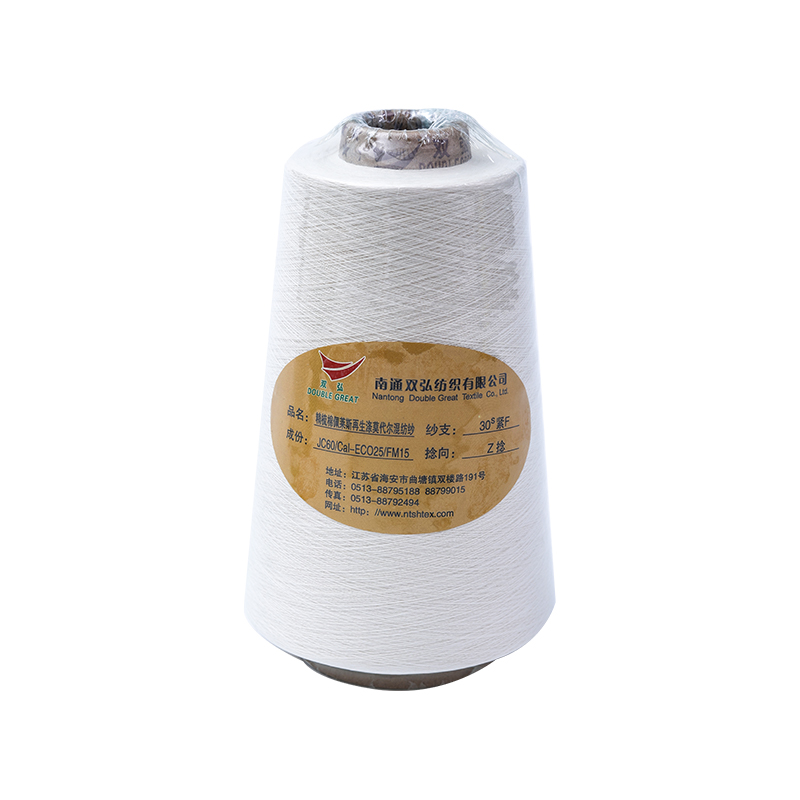
In the application field of Chemical Fiber Blended Yarn, Polyester/Viscose (TR) and Polyester/Acrylic blends are widely favored for their excellent wool-like feel, drape, and cost-effectiveness. However, pilling has always been a persistent issue for these fabrics. While traditional anti-pilling methods rely on chemical finishing, current mainstream solutions have extended to the upstream—transforming the Chemical Fiber through modified cross-section shapes to achieve "physical anti-pilling" via mechanical balance and fiber cohesion.
The Sliding Defect of Traditional Circular Cross-sections
Traditional Polyester and Acrylic fibers are mostly produced using circular spinneret holes, resulting in a regular round cross-section. While this shape ensures uniform stress distribution, the surface is overly smooth, leading to a low friction coefficient between fibers.
When driven by frictional forces, fibers inside the yarn easily slide toward the fabric surface. Because the breaking strength of Chemical Fiber is much higher than that of natural fibers, once the fiber ends extend to the surface to form fuzz, they do not break and fall off like cotton or wool. Instead, they entangle into stubborn pills due to a high-strength anchoring effect. Therefore, the first step in reducing pilling is breaking this smooth sliding tendency through modification technology.
Mechanical Interlocking Effect of Irregular Cross-sections
Current modified fiber technologies utilize precision non-circular spinnerets to create Chemical Fiber with trilobal, cross-shaped, flat, or pentalobal cross-sections. This geometric variation fundamentally improves the anti-pilling performance of Chemical Fiber Blended Yarn through several mechanisms:
Increased Cohesion: Irregular fibers possess larger surface areas and non-uniform edges, allowing for a mechanical interlocking effect similar to a mortise and tenon joint between fibers. This enhanced internal friction keeps fiber ends firmly locked within the yarn core, making it difficult for external forces to pull them to the surface.
Alteration of Fuzz Morphology: Even if some fiber ends are exposed, fibers with irregular cross-sections tend to bend rather than stay straight due to uneven stress distribution. This significantly reduces the probability of fibers entangling with each other to form pills.
Synergy of Flat and Grooved Sections for TR Blends
In TR blends, Viscose fibers are relatively soft and hygroscopic, while polyester provides structural support. Advanced anti-pilling Polyester modification technology often adopts flat or grooved cross-section designs.
This design not only simulates the roughness of natural fibers and increases the effective contact area with viscose fibers but also changes the flexural rigidity of the fiber. When the yarn undergoes friction, the fiber ends are less likely to produce directional sliding due to uneven stress distribution. This cuts off the path of fuzz evolving into pills at the source, allowing TR fabrics to maintain a delicate hand feel while significantly improving anti-pilling ratings by 1.5 to 2 levels.
Combining Matte Aesthetics with Profiled Shapes for Polyester/Acrylic
Polyester/Acrylic blends usually pursue a voluminous feel and cashmere-like effect. However, the bulky structure of expanded acrylic fibers easily leads to fiber looseness. Modern modification technology implements simultaneous profiling for both Acrylic and Polyester.
By using triangular or trilobal cross-sections, the fibers produce diffuse reflection of light, which reduces the plastic luster characteristic of synthetic fibers and increases a premium matte appearance. More importantly, the lateral support generated by these shapes makes the yarn structure tighter. For Polyester/Acrylic blends, this compact physical structure directly limits the free movement space of fibers, making it difficult for pills to form due to a lack of anchoring fibers.
The Balance Between Modification and Breaking Strength
Beyond changing the shape, modern Chemical Fiber modification often incorporates low-strength and low-elongation processes. While increasing friction through irregular cross-sections, the molecular weight or crystallinity of the chemical fiber is moderately adjusted to slightly lower its breaking strength.
When a small number of pills still form under severe friction, these weakened irregular fibers cannot support the gravity and pulling force of the pills for long, causing them to fall off naturally during daily wear and washing. This dual strategy of increasing sliding resistance and promoting pill shedding is the core secret of high-end international Chemical Fiber Blended Yarn in managing pilling issues.
Starting from the geometric morphology of the fiber cross-section marks the transition of the textile industry from chemical intervention to structural mechanics. Irregular cross-section modification technology not only grants TR and Polyester/Acrylic blended yarns superior anti-pilling performance but also achieves a qualitative leap in visual texture and wearing comfort.